Urban Form: Fontaine du Jardin du Luxembourg (grotte de Marie de Médécis)
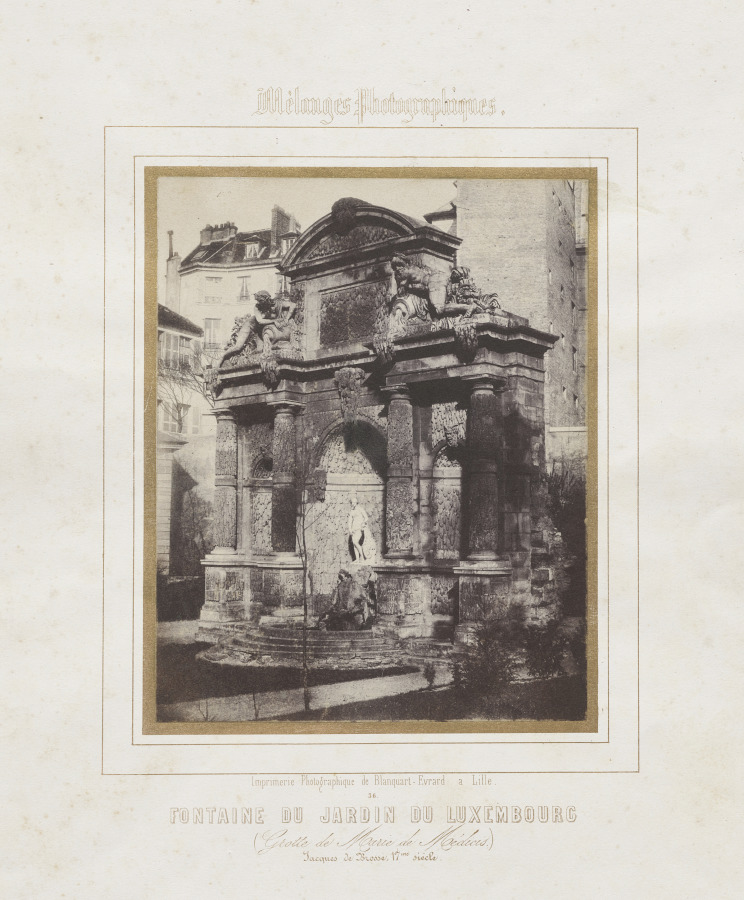
Urban Silhouette Research: Fontaine du Jardin du Luxembourg — The Grotto of Marie de Médicis as Structural Paradigm
I. The Architecture of Containment
The Fontaine du Jardin du Luxembourg, specifically the grotto commissioned by Marie de Médicis, presents a rare convergence of tectonic mass and aqueous dissolution. For the Addison Fashion 2026 executive silhouette, this artifact functions not as decorative reference but as primary structural intelligence. The grotto is a carved void — a negative space hewn from limestone, its interior polished by centuries of water and shadow. It does not assert; it contains. This is the fundamental gesture of the Addison wardrobe: garments that hold the body without announcing themselves, that create volume through absence rather than addition.
The grotto's geometry is deceptively organic. Its arch is not a perfect semicircle but a compressed ellipse, slightly asymmetrical, as if the stone itself exhaled. This subtle distortion — the refusal of Euclidean perfection — is the precise quality we have translated into our 2026 tailoring. Shoulders are not padded into rigid horizontals but sculpted into soft, elongated curves that follow the clavicle's natural descent. The lapel rolls not at a fixed angle but at a variable pitch, echoing the grotto's irregular vault. The result is a silhouette that reads as architectural from a distance yet dissolves into fluidity upon closer inspection.
II. Materiality: The Dialogue Between Stone and Water
The grotto's surface is a record of time. Limestone, porous and reactive, has been transformed by mineral deposits, algae, and the slow abrasion of water into a palimpsest of urban materiality. This is not the pristine marble of a David painting — it is the lived, weathered surface of a city that has absorbed centuries of use. For Addison Fashion, this translates into a fabric philosophy that privileges patina over polish.
Our slate-toned wool suiting for 2026 undergoes a proprietary washing process that introduces micro-irregularities into the fiber structure. The surface is not flat but tactilely complex — matte in some lights, faintly lustrous in others, like the grotto's damp stone catching a stray beam of afternoon sun. We have developed a double-faced cashmere with a hand that mimics the grotto's interior: cool to the touch, yet warming upon sustained contact. The fabric does not drape; it settles, as sediment settles, with a gravity that is both physical and philosophical.
The hardware — buttons, zipper pulls, the minimal clasps on our signature column dresses — is finished in a darkened silver that recalls the oxidized ironwork of the Luxembourg Gardens' gates. These elements are not ornamental. They are structural punctuation, marking the body's articulation points without interrupting the garment's continuous line.
III. The Silhouette as Vessel
The internal DNA provided for this research invokes the Greek Jar — the ceramic vessel whose value resides in its emptiness. The grotto operates on the same principle. It is a container for silence, for the accumulated memory of footsteps, whispered conversations, the drip of water from stalactite to pool. The 2026 Addison executive silhouette adopts this vessel logic as its organizing principle.
Consider our signature overcoat: a single-breasted, floor-grazing column in slate double-faced wool. Its interior is unlined, the seams bound in silk grosgrain, creating a negative space between body and cloth that allows for movement without billowing. The coat does not shape the wearer; it provides a chamber within which the wearer's own form becomes legible. This is the opposite of the corseted executive silhouette that dominated the previous decade. Where that silhouette imposed structure, ours reveals structure through restraint.
The trousers follow the same logic. A high, clean waistband sits at the natural waist, neither cinched nor dropped. The leg is cut straight from hip to hem, with a subtle forward pitch at the knee that mimics the grotto's arch. The fabric breaks once, cleanly, over the shoe — a single, deliberate fold that echoes the water's descent over stone. There is no excess. There is no tension. There is only the quiet authority of a form that knows its own boundaries.
IV. Urban Poetics: The Grotto in the City
The Fontaine du Jardin du Luxembourg is not a wilderness. It is a constructed retreat within the dense fabric of Paris — a place where the urban subject may briefly withdraw without leaving the city. This is the precise function of the Addison 2026 wardrobe. It is not clothing for escape; it is clothing for strategic withdrawal. The executive who wears it remains fully present in the boardroom, the gallery, the dinner — yet carries within the garment a private architecture of calm.
The slate palette reinforces this duality. Slate is neither black nor grey nor blue. It is a chameleon neutral, shifting with the light, absorbing the chromatic context of its environment. In a glass tower, it reads cool and mineral. In a candlelit restaurant, it warms to a deep, smoky violet. This is not a color that announces itself. It is a color that receives — like the grotto's limestone, like the Greek jar, like the empty space that makes a vessel useful.
The 2026 silhouette, then, is not a statement. It is a condition. It is the condition of being dressed without being costumed, of being armored without being hardened, of being present without being exposed. The grotto of Marie de Médicis has stood for four centuries, its geometry softened but not erased by time. The Addison executive who wears this silhouette will stand in the same relation to her environment: enduring, adaptive, and quietly, irrevocably present.
V. Technical Specifications for the 2026 Collection
Shoulder: Extended by 1.5 cm beyond the natural shoulder point, with a soft, unpadded roll that follows the deltoid's curve. No shoulder pads. No structure. Only the fabric's own weight and the wearer's own posture.
Lapel: A narrow notch, 6.5 cm at the widest point, with a subtle concave curve that echoes the grotto's arch. The lapel rolls to the waist, not the sternum, creating a longer, quieter line.
Waist: Suppressed by 2 cm at the natural waist, then released immediately below. The garment does not grip; it acknowledges.
Hem: For coats, floor-grazing. For jackets, mid-thigh. For trousers, a single break. The hem is the garment's final statement — a horizontal line that grounds the vertical architecture above it.
Closure: Single-breasted, three-button, with the top button at the sternum and the bottom button never fastened. The closure is a suggestion, not a command.
This is the Addison Fashion 2026 executive silhouette: a vessel for the urban subject, a geometry of containment, a poetics of slate and silence. It does not demand attention. It commands presence.