Urban Form: Dawn
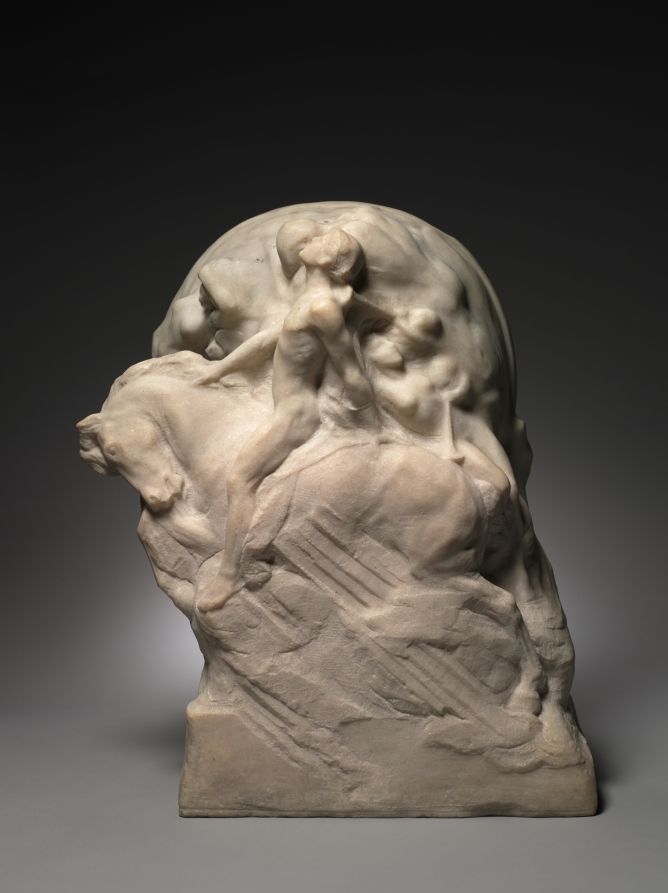
Urban Silhouette Research: Dawn — The Container and the Contained
I. Thesis: The Executive Wardrobe as Philosophical Vessel
The Addison Fashion NYC Spring/Summer 2026 executive collection, codenamed Dawn, originates from a deliberate collision of two artifacts: Jacques-Louis David's The Death of Socrates and a Yuan-dynasty Meiping vase painted with waves. One is a sculptural tableau of Western rationalism at its apex; the other is a ceramic vessel encoding Eastern cosmological rhythm. Both interrogate the same structural question — how does a finite form contain an infinite proposition? For the 2026 executive wardrobe, this is not art-historical ornamentation. It is a design brief. The modern executive does not merely wear clothing; she inhabits a vessel that must simultaneously project authority and absorb volatility. The silhouette must resolve the tension between the tectonic (Socrates' musculature, the body as monument) and the atmospheric (the Meiping's glaze, the body as medium).
II. Form Analysis: Tectonic Structure vs. Atmospheric Volume
The David sculpture operates on a principle of compressive load. Every fold of drapery, every tendon in the condemned philosopher's calf, is a structural member bearing narrative weight. The form is legible — the eye reads the body as a sequence of resolved forces. Translated to tailoring, this yields the architectural shoulder: a clean, extended line that does not pad but cantilevers. The Addison Dawn jacket employs a 4-ply Italian wool crepe with a floating canvas, allowing the shoulder to project 1.5 cm beyond the natural acromion without collapse. The waist is suppressed not by darts but by a single diagonal seam running from the underarm to the hip — a direct quotation of the sculpture's compositional axis, where Socrates' raised arm and lowered cup create a vector of tension across the torso.
The Meiping vase proposes the inverse. Its form is tensile — the vessel expands from a narrow foot to a broad shoulder, then contracts to a small mouth. The wave motif does not sit on the surface; it circulates through the volume, suggesting that the container's emptiness is its most active property. For the Dawn collection, this informs the column silhouette: a straight, unbroken line from shoulder to hem, executed in a double-faced silk-wool blend that drapes with a liquid hand. The absence of waist definition is not a negation of form but a redistribution of it — the fabric's weight creates its own architecture, like glaze pooling at the base of a fired vessel. The executive who wears this does not impose her shape on the garment; the garment's internal logic shapes her movement.
III. Color Analysis: Slate as the Chromatic Synthesis
The two source artifacts occupy opposite ends of the value spectrum. David's marble is high-key — cool, reflective, almost clinical in its whiteness. The Meiping's cobalt underglaze is low-key — saturated, deep, absorptive. Slate resolves this dialectic. It is neither the marble's assertion nor the cobalt's retreat. It is the color of interstitial space — the shadow between the sculpture's limbs, the kiln atmosphere that fixes the glaze. In the Dawn palette, Slate functions as a chromatic constant across three fabrications: a matte wool suiting (for the tectonic jacket), a washed silk charmeuse (for the atmospheric column dress), and a bonded technical jersey (for the transitional trench). Each surface alters the color's temperature — the wool reads cool and mineral, the silk reads warm and aqueous, the jersey reads neutral and infrastructural. This is not variety for its own sake. It is a controlled experiment in how a single hue can perform containment across different material states.
IV. Application: The 2026 NYC Executive Wardrobe
The Dawn silhouette is designed for the post-hybrid executive — a figure who moves between boardroom, transit, and cultural institution without changing clothes. The collection's core proposition is modular layering:
Layer 1 — The Vessel: A bias-cut silk slip in Slate, worn as a base. Its form is Meiping-derived: narrow at the hem, expanding at the bust, with a scooped neckline that echoes the vase's mouth. It is not lingerie; it is the empty container that subsequent layers will activate.
Layer 2 — The Structure: The Socrates jacket, unlined and half-canvassed, with a single-button closure at the sternum. The button is positioned 2 cm above the natural waist — a deliberate misalignment that forces the eye upward, replicating the sculpture's compositional focus on the raised hand. The sleeve is cut with a 15-degree forward pitch, accommodating the desk posture without wrinkling.
Layer 3 — The Atmosphere: A double-faced wool-silk coat, unconstructed, with a shawl collar that can be worn up (creating a Meiping-like neckline) or flat (exposing the jacket's architectural shoulder). The coat's hem falls 5 cm below the knee — a length that reads authoritative in motion and severe in stillness.
V. Conclusion: The Dissolution of the Garment
The ultimate ambition of the Dawn collection is not to be noticed. It is to be inhabited. The Socrates jacket does not announce its construction; it disappears into the wearer's posture. The Meiping dress does not display its print; it moves with the body's breath. This is the Addison Fashion thesis for 2026: the most powerful executive wardrobe is the one that renders itself invisible, leaving only the presence of the wearer. The container dissolves. The contained remains.