Urban Form: Woman in Profile
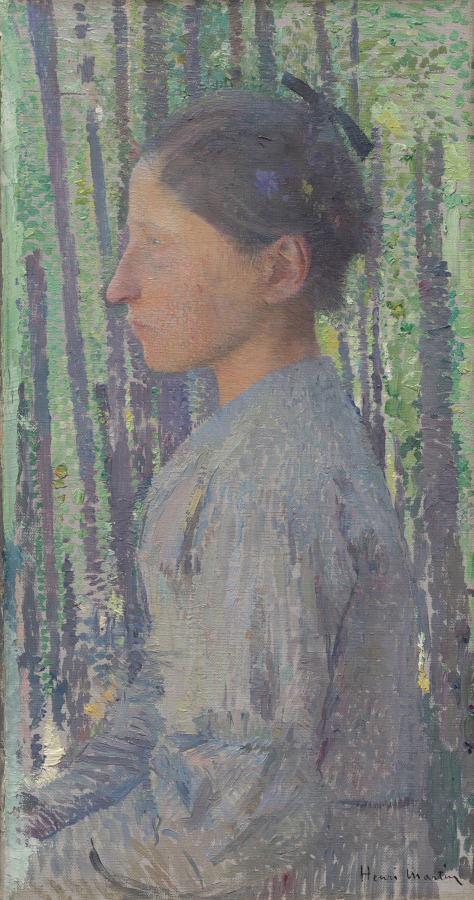
Technical Deconstruction of Form: The Architecture of the Pause
The aesthetic DNA sourced from Vermeer’s A Maid Asleep and Bingham’s A Vignette of Life on the Frontier presents a profound thesis for the 2026 urban silhouette: the elevation of the transitional moment through rigorous formal order. This is not a narrative of action, but of potent stasis. For the contemporary executive wardrobe, this translates into a sartorial philosophy where clothing becomes the architectural framework for the modern self, operating within the "in-between" spaces of the professional day. The core technical imperative is the construction of controlled repose—garments that project stability while containing dynamic potential, mirroring the tension between geometric rigor and human softness found in the source works.
Formal Syntax: Geometric Anchoring and Volumetric Calibration
The foundational lesson from both paintings is the supremacy of structure beneath apparent ease. Vermeer’s composition is a masterclass in implicit geometry: doorframes, tabletops, and picture frames create a stabilizing grid. Bingham arranges his frontier figures within a harmonious, rhythmic balance against the horizontal flow of the river. For the 2026 silhouette, this mandates a move beyond mere tailoring into architectural drafting.
The executive jacket, therefore, is re-engineered. Its shoulder line is not merely padded; it is precisely cantilevered, creating a clean, horizontal datum from which the garment hangs—a direct analogue to Vermeer’s tabletop or Bingham’s riverbank. Seam lines are rationalized and reduced, functioning as essential structural vectors rather than decorative elements. Darts are eliminated or seamlessly integrated into panel constructions, resulting in a façade of uninterrupted, planar simplicity. This creates the "stable, rational structure" that anchors the individual, much like the paintings’ compositions anchor their subjects in a moment of transition. Silhouettes will favor clean, vertical extensions, but with a critical nuance: controlled volume. A wide-leg trouser or a softly pleated skirt derives its power not from excess fabric, but from the precise calibration of its sweep—its geometry is calculated to create a dignified, flowing line that implies movement within stillness, echoing the "dynamic balance" of Bingham’s frontier scene.
The Poetics of Surface and Edge: Slate as the Color of Potential
The prescribed color, Slate, is the chromatic embodiment of this analysis. It is neither static black nor neutral grey. Slate possesses a mineralogical depth, a subtle chromatic shift depending on the angle of light—directly mirroring Vermeer’s psychological illumination. It represents the "transitional" state between color and achromatism, solidity and fluidity. In application, Slate functions as a unifying field, much like the broad, tonal river in Bingham’s painting or the shadowed interior of Vermeer’s room.
Material selection becomes paramount to activate this color. Tech-wool with a faint, brushed finish captures light as a soft glow, not a sharp reflection. Double-faced cashmere and silk matte jerseys provide a sense of tactile depth and restrained luxury. The treatment of edges—collars, cuffs, hemlines—is critical. They must be definitive yet soft; a raw, laser-cut edge on a Slate wool coat can achieve a modern, crisp line that avoids severity, suggesting the "unfinished" yet orderly frontier. The overall surface treatment rejects gloss in favor of luminous matte, absorbing and diffusing the urban lightscape to create a personal, contemplative space around the wearer.
Wardrobe as Curated Interval: The 2026 Executive Uniform
This form-language constructs a wardrobe for the "edge temporalities" of executive life: the pause between meetings, the commute as interstitial reflection, the moment of quiet before a presentation. Each piece is designed for the purposeful pause.
The core uniform system comprises a limited series of interoperable layers. A Slate, architecturally-seamed tunic dress operates as a singular, monolithic piece—a modern version of the maid’s dress, simplified to its essential form. It can be anchored by a precisely structured, hip-length vest, creating the layered geometric interplay of Vermeer’s interior. Wide-leg, high-waisted trousers in a matching Slate hue extend the vertical line, their movement calibrated to Bingham’s sense of rhythmic flow. Outerwear is treated as a mobile sanctuary—a long, minimally detailed coat in a wool-cashmere blend that functions as a portable private space, a shield against the chaotic "frontier" of the city.
Details are forensic in their reduction yet potent in symbolism. Seamless pockets are integrated into side panels or princess seams. Fastenings are hidden or rendered as minimalist magnetic closures. The only permissible hardware is in darkened, brushed metal—Silver as an accent, never a highlight—acting like the faint gleam on Vermeer’s pitcher or a button on a frontiersman’s shirt. The result is a wardrobe that performs the central function identified in the art: it invites a contemplative stance. It removes visual noise, allowing the wearer’s intention and presence to become the focal narrative, framed by impeccable, silent form.
In conclusion, the 2026 Addison Fashion NYC executive silhouette is a study in form as existential framing. By deconstructing the aesthetic principles of controlled stillness and transitional order found in Vermeer and Bingham, we arrive at a minimalist lexicon built on architectural precision, volumetric intelligence, and the profound depth of Slate. This wardrobe does not shout; it contains. It provides the rational structure—the doorframe, the riverbank—within which the complex, dynamic, and often transitional reality of contemporary executive life can unfold with clarity, dignity, and a resonant, quiet poetry.