Urban Form: Tea Service
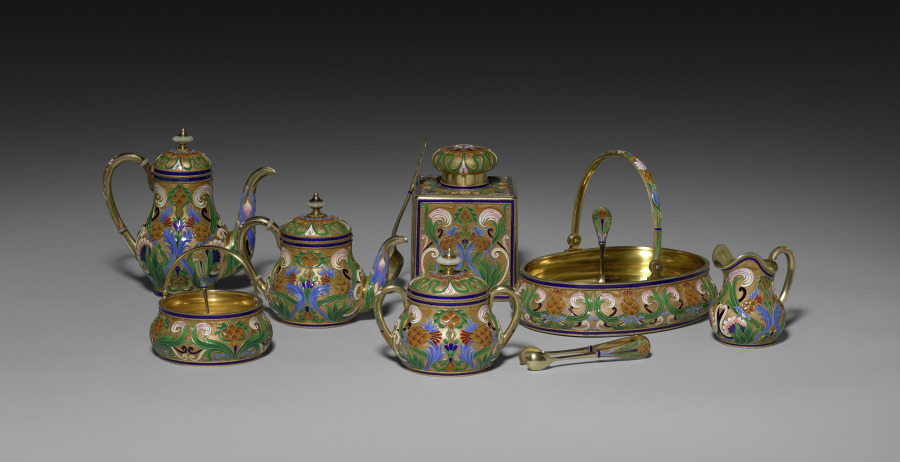
Urban Silhouette Research: Tea Service as Dialectical Form
I. The Plaque and the Canvas: Two Ontologies of the Silhouette
The Addison 2026 executive wardrobe begins not with fabric but with a philosophical antagonism. The Udumbara plaque—a temple artifact depicting the legendary flower that blooms once every three thousand years—operates through subtractive restraint. Its visual economy is one of near-erasure: pale ink contours, parasitic clusters rendered as abstracted umbels, the negative space of aged wood functioning as the primary compositional agent. The flower is not depicted; it is invoked. This is an aesthetic of the threshold, where form emerges only to dissolve into the ground from which it came.
Against this, The Hunt—whether Rubens' baroque convulsions or the neoclassical chase—asserts additive violence. The canvas is saturated: diagonal vectors of pursuit, the chromatic tyranny of blood-orange skies, bodies locked in spasmodic entanglement. Where the plaque withdraws, the hunt advances. Where the plaque whispers, the hunt screams. Both, however, share a single operational principle: the weaponization of negative space. In the plaque, emptiness is the message; in the hunt, emptiness is the prey—that which must be filled, captured, consumed.
II. Formal Deconstruction: The Tea Service as Dialectical Object
The tea service—vessel, cup, tray, the ritual choreography of pouring—occupies the precise interstitial zone between these two visual regimes. Consider the silhouette of the teapot: its spout is a vector of controlled aggression (the hunt's diagonal), while its body is a study in volumetric containment (the plaque's meditative closure). The handle is neither: it is pure function made ornamental, a bridge between interior and exterior, between the contained and the containing.
In chromatic terms, the tea service demands a palette that refuses both the plaque's monochrome austerity and the hunt's saturated heat. Onyx—the color selected for this research—operates as the chromatic equivalent of the plaque's aged wood: a near-black that absorbs rather than reflects, that signals depth without declaring it. Onyx is the color of the void made wearable. It is the executive's answer to the hunt's blood-orange: not its negation, but its subsumption. The hunt's violence is metabolized into onyx's stillness.
III. The 2026 NYC Executive Wardrobe: Form as Dialectical Resolution
The Addison 2026 silhouette translates this dialectic into wearable architecture. The shoulder is the site of primary tension: a structured, slightly extended line that references the hunt's diagonal energy while refusing its chaos. This is not the aggressive power shoulder of the 1980s—that was pure hunt. This is the plaque shoulder: a line that suggests capacity without declaring conquest. The shoulder seam sits precisely at the acromion, neither padded into caricature nor softened into dissolution.
The torso follows the logic of the teapot's body: a controlled volume that tapers at the waist without cinching. The fabric—a matte wool-silk blend in onyx—absorbs light rather than reflecting it, creating a silhouette that reads as presence without performance. This is the wardrobe of the executive who understands that authority is not asserted but inhabited. The hunt's energy is present in the precision of the cut, the exactness of the seam, the refusal of excess. The plaque's stillness is present in the garment's chromatic depth, its tactile restraint, its willingness to recede.
The trouser extends this logic downward: a straight leg with a subtle break, neither the hunt's athletic compression nor the plaque's monastic drape. The fabric is identical to the jacket—onyx wool-silk—creating a monolithic chromatic field that eliminates the visual noise of contrast. This is the tea service's tray: a flat, neutral ground upon which the ritual unfolds.
IV. The Accessory as Ritual Object
The final element—the accessory—completes the dialectical circuit. A single, sculptural piece: perhaps a silver pin at the lapel, its form abstracted from the udumbara's umbel cluster. Silver, not gold: the color of the plaque's pale ink, not the hunt's gilded frame. The pin is the point of contact between the two visual regimes—the moment where the plaque's emptiness and the hunt's intensity briefly touch, acknowledge each other, and separate.
This is the Addison 2026 proposition: that the executive wardrobe is not a uniform but a philosophical instrument. It does not resolve the tension between stillness and violence, between the plaque and the hunt. It wears that tension. It makes the dialectic visible, tactile, wearable. The tea service—that most civilized of rituals—becomes the model: a ceremony that contains both the hunter's precision and the monk's patience, poured into a single, onyx vessel.
The silhouette is the argument. The color is the conclusion. The wardrobe is the evidence.