Urban Form: The Yellow Evening
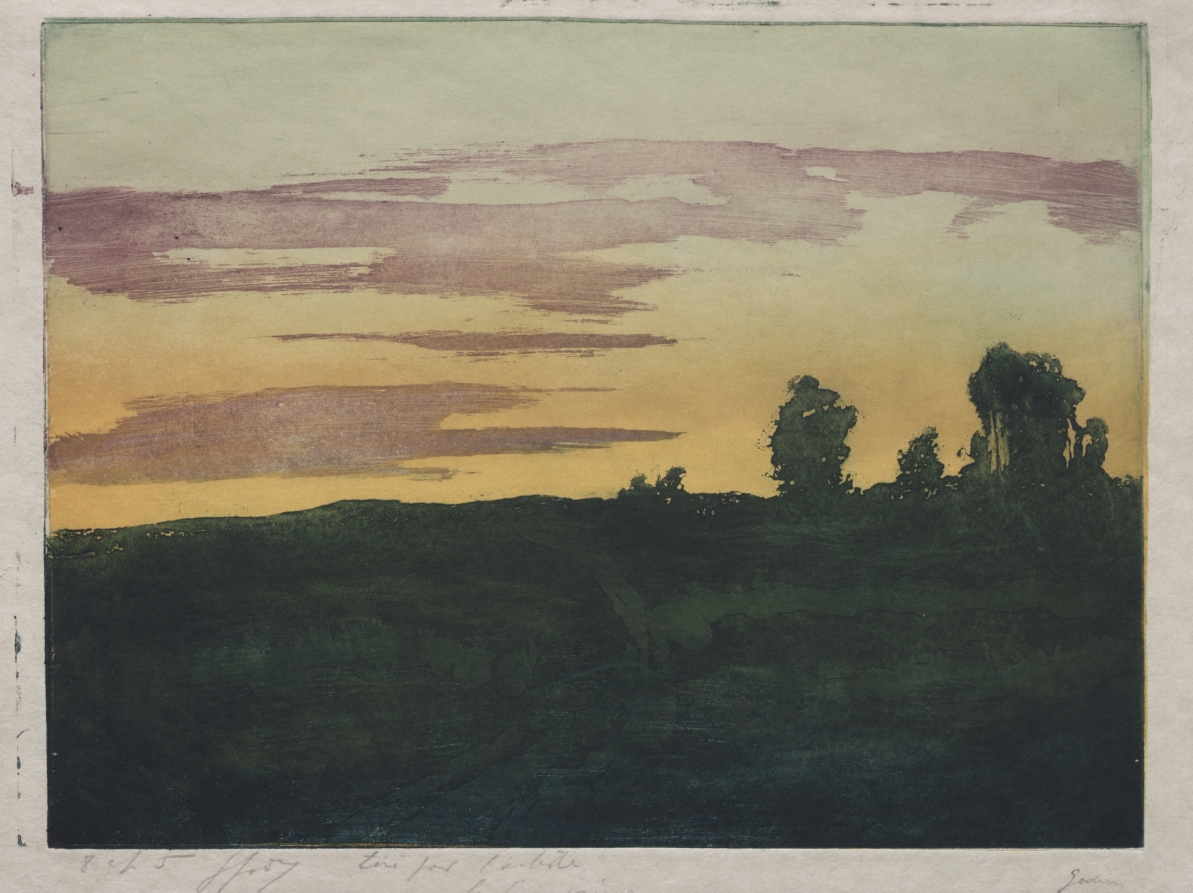
The Yellow Evening: Structural Poetics of the Divided Silhouette
I. Geometric Integrity: The Architecture of Moral Gravity
The compositional armature of The Yellow Evening derives its authority from a singular geometric proposition: the vertical axis of ascension counterbalanced against the horizontal plane of material dissolution. Jacques-Louis David's Death of Socrates establishes this dialectic with surgical precision—the philosopher's raised hand creates an unbroken vertical line that bisects the canvas, while the descending weight of his body and the surrounding figures anchors the composition in gravitational resignation. For Addison Fashion's 2026 executive silhouette, this translates into a garment architecture defined by controlled verticality: a columnar torso interrupted only by the deliberate gesture of a single articulated element—a raised shoulder seam, a cantilevered collar, or a precisely engineered sleeve cap that points upward like Socrates' finger toward an immaterial truth.
The Chinese Wave-Pattern Plum Vase offers the countervailing geometric logic. Its silhouette is continuous, unbroken, a single curve that swells and tapers without the interruption of anatomical articulation. The wave pattern incised upon its surface operates as a rhythmic system—repetitive, non-hierarchical, and infinitely extendable. Where David's painting imposes a hierarchy of focal points (the hand, the cup, the grieving disciples), the plum vase distributes visual interest across the entire surface with democratic evenness. The 2026 Addison executive silhouette must synthesize these two geometries: the vertical authority of the Western column and the continuous, non-hierarchical flow of the Eastern vessel. The result is a form that commands space without aggression, that asserts presence through surface integrity rather than structural interruption.
II. Materiality: The Weight of Ivory and the Fluidity of Cobalt
The material dialectic of The Yellow Evening is equally instructive. David renders Socrates' robe in a white that is simultaneously luminous and heavy—a fabric that drapes with the gravity of marble yet catches light with the translucence of linen. This is Ivory as moral substance: a color that refuses the neutrality of pure white, carrying instead the accumulated weight of philosophical conviction. The surrounding figures are rendered in earth tones—ochres, umbers, and muted reds—that ground the composition in the material world even as the central figure aspires toward the immaterial.
The plum vase operates in an entirely different material register. Its cobalt blue is not a color applied to a surface but a color fused into the ceramic body through the alchemy of high-temperature firing. The blue is the vessel; the vessel is the blue. There is no separation between surface and substance, between decoration and form. For Addison's 2026 executive collection, this suggests a radical proposition: garments whose color is not applied but inherent—textiles dyed at the fiber level, where the hue penetrates the material so completely that it becomes indistinguishable from the fabric's structural integrity. The Onyx palette of The Yellow Evening must function similarly: not a black applied to wool or silk, but a black that is the wool, that is the silk, that resists the superficiality of surface treatment.
III. The Temporal Dimension: Arrested Gesture and Infinite Repetition
David's painting captures a single, irreversible moment—the instant before death, the gesture that will never be repeated. This is the Western aesthetic of the decisive instant, the belief that eternity can be accessed through the intensity of a single, unrepeatable event. The plum vase, by contrast, depicts waves that have no beginning and no end, that repeat across the surface in a pattern that could extend infinitely in any direction. This is the Eastern aesthetic of cyclical return, the conviction that meaning resides not in the exceptional moment but in the eternal recurrence of the ordinary.
The 2026 executive silhouette must negotiate between these temporalities. The garment must possess the decisive clarity of a Davidian gesture—a shoulder line that reads as inevitable, a hem that falls with the finality of a philosophical conclusion. Yet it must also embody the infinite adaptability of the plum vase's waves: a design that functions across contexts, that does not exhaust its meaning in a single wearing, that reveals new dimensions with each iteration. This is the paradox of the Addison executive: a garment that is simultaneously a statement and a system, a singular event and an ongoing process.
IV. The Yellow Evening: Chromatic Resolution
The title The Yellow Evening introduces a chromatic element absent from both source works—a color that mediates between David's ivory and the plum vase's cobalt. Yellow, in this context, is not the yellow of optimism or warmth but the yellow of twilight: the final, amber light before darkness, the color of a moment suspended between day and night, between the known and the unknown. It is the color of Socrates' final hour and the color of the kiln's fire that transforms clay into porcelain. For the 2026 executive silhouette, this yellow manifests as an accent of transience—a lining, a stitch, a subtle iridescence that catches light only at certain angles, reminding the wearer that all structures, however monumental, exist within the flow of time.
The geometric integrity of The Yellow Evening thus resolves into a tripartite architecture: the vertical authority of the Western column, the continuous surface of the Eastern vessel, and the chromatic mediation of twilight. The 2026 Addison executive silhouette is neither purely tailored nor purely fluid; it is structurally poetic—a garment that holds its shape through the integrity of its construction rather than the rigidity of its interfacing, that drapes with the weight of philosophical conviction, and that carries within its seams the quiet, persistent rhythm of waves that have been breaking since the beginning of time.