Urban Form: Head of Beethoven
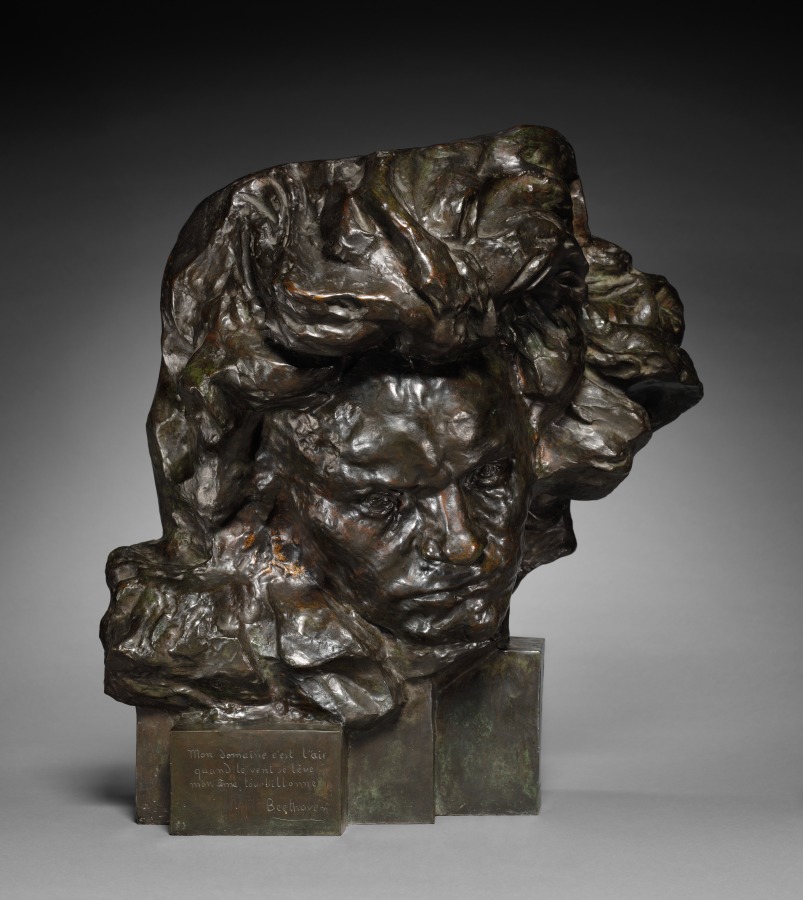
Urban Silhouette Research: The Beethoven Head as Architectural Precedent
I. The Cranium as Load-Bearing Structure
The Addison 2026 executive silhouette begins not with the shoulder but with the skull. The Beethoven head presents a volumetric proposition that is fundamentally architectural: a broad, unyielding frontal plane, a pronounced occipital mass, and a jawline that resolves into a decisive horizontal. This is not portraiture. This is a geometric integrity that anticipates the tailored torso—a mass that refuses apology, that occupies space with the cold confidence of poured concrete.
The head’s silhouette is defined by three primary vectors: the vertical rise of the forehead, the lateral expansion at the temples, and the abrupt, almost brutal termination at the chin. These vectors do not soften. They intersect. They create a structural poetics of containment—a sealed volume that suggests interiority without revealing it. For the 2026 executive, this translates into a garment that does not drape but stands. The shoulder line must echo the cranial vault: broad, flat, and uninflected. The lapel must mirror the jaw: sharp, horizontal, and final.
II. Mineral Pigment and Urban Materiality
The internal DNA of this research draws from two ancient sources: the geometric austerity of Greek vase painting and the mineral-laden surfaces of Indian relief sculpture. The Beethoven head, in its onyx patina, synthesizes both. Its surface is not skin but stone —a materiality that rejects the organic in favor of the geological. The 2026 Addison executive will wear this logic: fabrics that behave like mineral deposits, not textiles. Heavy-gauge wool suiting with a dry, chalky hand. Matte silks that absorb light rather than reflect it. Leathers that have been tanned to a near-obsidian density, their surfaces cool to the touch.
This is urban materiality as philosophical stance. The city is not a backdrop; it is a quarry. The executive who wears Addison in 2026 does not blend into the metropolis—she crystallizes within it. The Beethoven head’s refusal of ornament, its reliance on plane and shadow, becomes the template for a wardrobe that operates through subtraction. No hardware. No visible stitching. No excess. The garment is a monolith, and the body within it is a load-bearing element.
III. The Geometry of Interiority
What distinguishes the Beethoven head from mere brutalism is its interior tension. The brow is furrowed—not with emotion, but with the weight of thought. The lips are sealed. The eyes are recessed, creating a shadowed void that reads as both absence and profundity. This is the geometry of interiority: a surface that conceals a volume, a form that implies a void.
For the 2026 silhouette, this translates into a new relationship between garment and body. The Addison executive does not wear clothing that reveals. She wears clothing that contains. The torso is encased in a structured shell—a double-faced wool overcoat with a concealed placket, a column dress with an internal corsetry that redistributes mass without constriction. The silhouette is not hourglass or rectangle; it is monolithic, a single continuous form from shoulder to hem, interrupted only by the precise geometry of a seam.
This is the death of the body as spectacle. The birth of the body as architecture.
IV. The 2026 Executive: A Silhouette of Finality
The Beethoven head does not gesture. It does not turn. It is. This ontological stillness is the ultimate luxury. In a culture of perpetual motion—of scrolling, of swiping, of endless reinvention—the Addison 2026 executive silhouette offers something radical: finality. The garment is not a season. It is a statement. It does not adapt; it asserts.
The color palette follows suit. Onyx dominates—not black as absence, but black as density, as the color of compressed time. Slate and silver appear as accents: the cool gray of a winter sky, the metallic sheen of a blade. Ivory is used sparingly, as a single note of contrast, a reminder that even stone can catch light. Sand is the ground note—the color of the quarry, the color of the city’s bones.
The 2026 Addison executive does not dress for the office. She dresses for the agora —the public space where ideas are tested and verdicts are rendered. Her silhouette is a philosophical proposition: that form can contain meaning, that surface can imply depth, that a woman can walk through the world as a self-contained, unassailable monument.
The Beethoven head is not a portrait. It is a precedent. And the 2026 Addison collection is its inevitable consequence.