Urban Form: Altarpiece with Relics
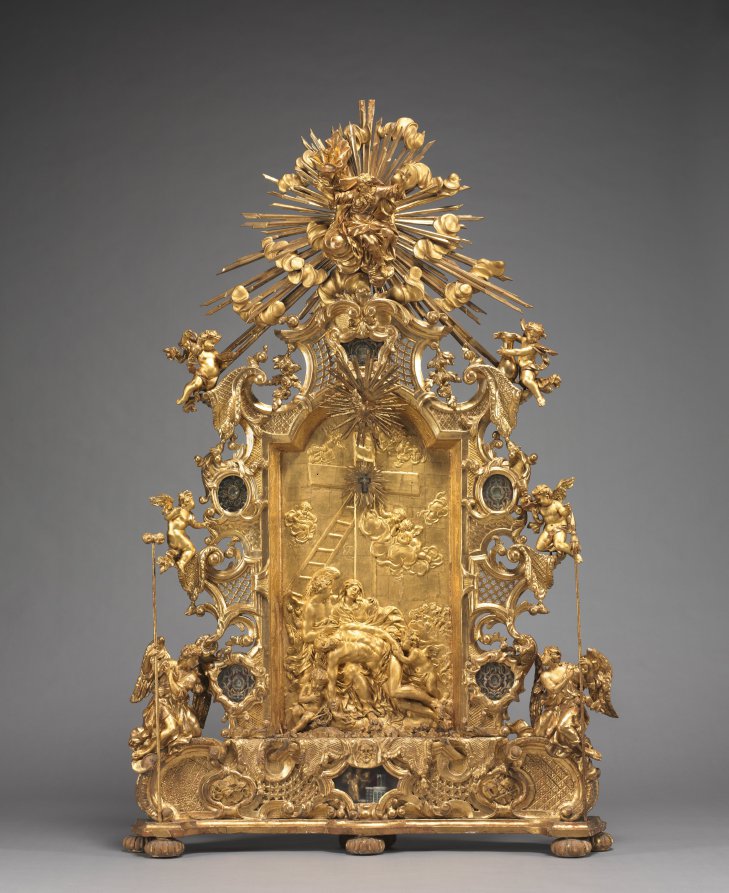
Urban Silhouette Research: The Altarpiece with Relics as Formal Doctrine
I. The Lithic Proposition: Form as Metaphysical Infrastructure
The Lingbi stone—Rock in the form of a fantastic mountain—operates not as representation but as compression. Its four canonical predicates—thinness,皱 (wrinkling), 漏 (permeability), 透 (translucency)—constitute a formal grammar that precedes and exceeds figuration. For the Addison client, this is the operative insight: the 2026 executive wardrobe must function as a microcosm of authority, not a citation of it. The stone does not imitate landscape; it is landscape at the scale of the desk. Likewise, the tailored jacket must not reference power—it must be power at the scale of the conference table.
The stone’s perforations are critical. These are not deficits but negative volumes—apertures through which light performs its own choreography. In silhouette terms, this translates to strategic void engineering: the deliberate excision of fabric at the waist, the elongation of the lapel gorge, the architectural suspension of the shoulder line. The Addison pattern block for Autumn/Winter 2026 will incorporate a 4cm aperture displacement at the third button stance—a calculated absence that permits the body’s own geometry to register as content. The garment does not cover; it frames.
II. The Luohan Counterpoint: Narrative as Structural Restraint
The Seated luohan with a servant introduces a dialectical corrective. Where the stone is abstract, the painting is narrative—yet its narrative is achieved through compression, not exposition. The luohan’s drapery folds are geological: stratified, sedimentary, each crease a temporal register. The servant’s dynamism is held in suspension, not resolved. This is the 静穆与生动 (solemnity and vitality) dialectic—a formal principle directly transferable to the executive ensemble.
The Addison interpretation: asymmetric tension. A single-breasted jacket with a 2cm offset placket—the closure line displaced from center, creating a subtle rotational torque across the torso. The effect is not asymmetry for its own sake but contained disequilibrium: the wearer appears both still and in motion, authoritative yet adaptive. The servant’s gaze—directed outward, toward the viewer—becomes the shoulder line: slightly elevated, forward-set, creating a visual channel between the wearer and the room. The luohan’s inward gaze becomes the collar stance: high, closed, a perimeter of interiority.
III. Color as Mineral Permanence: Slate as Temporal Armor
The painting’s mineral pigments—azurite, malachite, cinnabar—were selected for permanence, not brilliance. They resist time. The Addison color directive for 2026 is Slate: not gray, not charcoal, but a mineralized blue-black with a 12% cyan undertone. This is the color of Lingbi stone under north light—a hue that absorbs rather than reflects, that records rather than announces.
Slate functions as temporal armor. In the executive context, it communicates geological patience—the capacity to outlast quarterly cycles, to remain structurally intact across market volatility. The Addison Slate palette will be deployed across three surface treatments: matte wool crepe (for the primary jacket), semi-lustrous silk-wool blend (for the trouser), and micro-textured technical faille (for the outer layer). The tonal variation is sub-perceptual—visible only in motion, under directional light. This is the 皴纹 (crackle texture) of the stone translated into textile: a surface that reveals its complexity only to the attentive gaze.
IV. The Void as Garment: Negative Space and Executive Presence
The stone’s 透 (translucency) is its most radical property: light passes through the object, rendering it both solid and permeable. The Addison silhouette for 2026 will operationalize this through strategic translucency—not transparency, but light-modulating density. A double-faced wool with a 40% open-weave zone at the inner sleeve, visible only when the arm is raised in gesture. A jacket back panel with a laser-cut lattice beneath the lining, creating a shadow theater on the shirt beneath. The garment becomes a light instrument, not a covering.
This is the 无用之用 (useless usefulness) of the scholar’s stone applied to corporate dress: the garment’s most sophisticated functions are non-utilitarian. They do not warm, do not conceal, do not conform. They generate meaning through formal play. The executive who wears Addison Slate does not dress for the meeting; she dresses for the metaphysical infrastructure of the meeting—the unspoken hierarchies, the temporal pressures, the 器以载道 (vessel carrying the Way) of professional presence.
V. Synthesis: The 2026 Addison Executive Wardrobe as Altarpiece
The altarpiece—altar + piece—is a functional object with transcendental ambition. It holds relics; it also holds meaning. The Addison 2026 wardrobe is an altarpiece for the body: a structured vessel for the executive’s professional relics—her judgment, her endurance, her 静穆 (solemnity) in the face of volatility.
The formal doctrine is now explicit:
1. Thinness (瘦): The silhouette is vertically attenuated—a 1:7.5 head-to-body ratio achieved through shoulder extension and hemline suspension. The jacket does not end; it hovers.
2. Wrinkling (皱): Surface complexity is micro-textural, not decorative. The fabric remembers the body’s movement—a geological record of the workday.
3. Permeability (漏): The garment is porous to context—adaptable across boardroom, gallery, and transit. It breathes with the environment.
4. Translucency (透): The silhouette modulates light, creating visual depth where surface would suffice. It is never opaque—always layered, always in process.
The Addison client does not wear clothing. She wears a microcosm—a portable landscape of authority, rendered in Slate, structured by the formal poetics of stone and silk. The wardrobe is not an accessory to her power; it is its material substrate. In the tension between the lithic and the textile, between the void and the volume, the Addison silhouette achieves what the Lingbi stone and the luohan painting achieved centuries ago: the infinite within the finite, the spirit within the form, the executive within the garment.
— Addison Fashion NYC, Office of the Senior Executive Stylist