Urban Form: Estérel Village
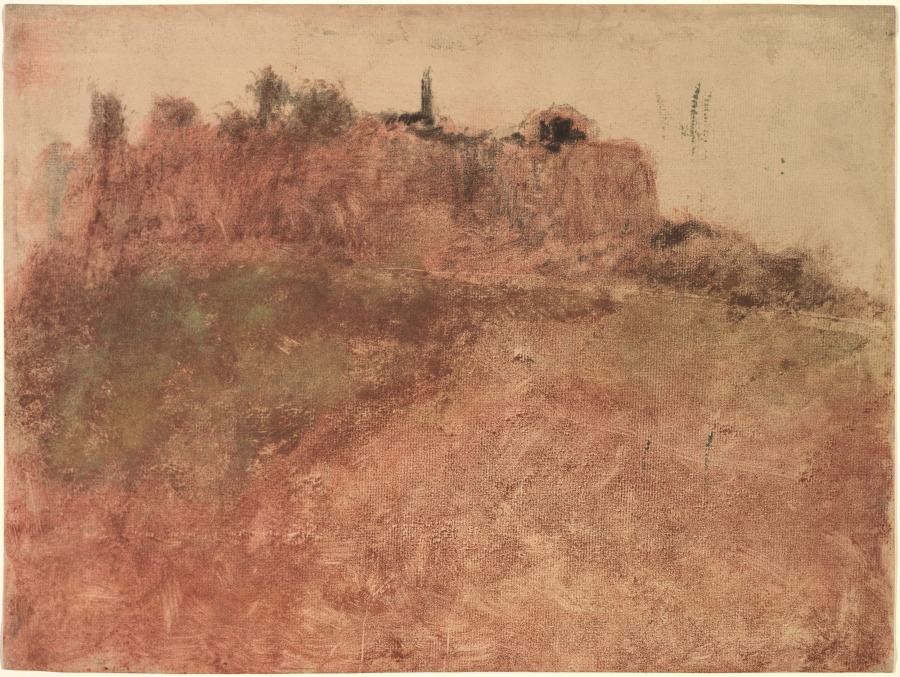
The Geometry of Mortality: Estérel Village and the 2026 Executive Silhouette
I. The Architectural Body: David's Neoclassical Armature
The compositional logic of Jacques-Louis David's The Death of Socrates (1787) operates as a closed system of structural tension. The philosopher's torso forms a near-perfect column—vertical, load-bearing, unyielding—anchored at the bed's edge like a cornerstone. His right arm ascends at a precise diagonal, creating a triangulated vector that stabilizes the entire pictorial field. This is not merely painting; it is architectural engineering rendered in pigment. The drapery falls in disciplined folds, each crease a calculated decision, each shadow a load-bearing wall. For Addison Fashion's 2026 executive silhouette, this geometric integrity translates into garments that function as wearable architecture—structured shoulders that echo Socrates' unbroken posture, seams that trace the body's load lines with the precision of a structural engineer's blueprint.
The bed itself operates as a horizontal counterweight, a plinth upon which the drama of mortality unfolds. Note how David positions the cup-bearer's back—a curved, organic interruption within the rectilinear grid. This tension between the orthogonal and the organic defines the collection's core proposition: the executive body as a site of controlled contradiction. The 2026 silhouette must accommodate both the rigidity of institutional power and the fluidity of human vulnerability. Tailoring becomes a negotiation between these forces—shoulders sharpened to architectural precision, waists softened just enough to permit breath, movement, the quiet evidence of life persisting within structure.
II. The Jar as Counter-Form: Silence, Crack, and Material Honesty
Against David's triumphant rationalism stands the Jar—a vessel that refuses narrative, rejects heroism, and exists only in its own quiet materiality. Where the painting imposes meaning through composition, the jar withdraws meaning into surface. Its curvature is not geometric but gravitational, shaped by the physics of clay and fire rather than the ideology of neoclassical proportion. The jar's cracks—those hairline fractures where time has inscribed itself—function as material testimony, evidence that endurance is not the same as permanence.
For Addison Fashion, the jar offers a critical counterpoint to the painting's heroic verticality. The 2026 executive wardrobe must incorporate this logic of material honesty: textiles that reveal their construction, finishes that acknowledge wear as patina rather than defect. The jar's unglazed surface—porous, tactile, unidealized—suggests a palette of raw silks, matte wools, and unpolished leathers. Its asymmetry, the slight irregularity of hand-thrown form, argues against the tyranny of perfect symmetry. In the urban context, this translates to garments that age with their wearer, developing character through use rather than demanding preservation through care.
The jar holds water, grain, flowers—the stuff of daily survival. It does not philosophize; it contains. This is the poetics of the vessel: to be useful without being utilitarian, to be beautiful without being decorative. The 2026 executive silhouette must embody this same paradox—clothing that serves the body's needs while transcending mere function, that carries the wearer through the city's demands while preserving a private interiority.
III. The Gap Between: Urban Materiality and the Wounded Executive
The true insight of Estérel Village lies not in either object but in the irreconcilable gap between them—the space where David's idealized body confronts the jar's honest fracture. This gap is the site of modern executive identity: a subject who aspires to Socratic composure while knowing, intimately, the jar's truth of eventual breakage. The 2026 silhouette must be constructed to acknowledge this wound—not to hide it, but to give it form.
Structurally, this means garments that combine the painting's geometric rigor with the jar's material vulnerability. Consider a coat whose shoulders are engineered with military precision but whose hem is left raw, unfinished, exposing the weave. Consider trousers with a knife-sharp crease that nonetheless wrinkle at the knee, recording the body's movement through urban space. The silhouette becomes a document of tension—between ambition and acceptance, between the vertical thrust of aspiration and the horizontal weight of mortality.
In terms of urban materiality, the collection draws from the city's own surfaces: the slate grey of wet pavement, the onyx of glass towers at dusk, the ivory of marble lobbies, the silver of steel scaffolding, the sand of concrete under construction. These are not colors but material conditions—each carrying associations of permanence and transience, of institutional power and individual erosion. The executive who wears Addison in 2026 wears the city itself: its hardness and its weathering, its geometry and its cracks.
IV. The 2026 Silhouette: A Provisional Conclusion
The definitive urban silhouette for 2026 emerges from this dialectic: the body as both monument and vessel, both Socrates and jar. The shoulder line remains the primary architectural gesture—sharp, extended, load-bearing—but the torso softens into the jar's gravitational curve. Lengths are precise but not rigid; fabrics are substantial but not heavy. The overall effect is one of controlled dissolution: a silhouette that appears, at first glance, perfectly resolved, but reveals upon closer inspection the hairline fractures of its own construction.
This is not weakness. This is the honesty that David's painting suppresses and the jar embodies. The 2026 executive does not need to choose between the philosopher's composure and the vessel's vulnerability. She wears both—the tailored armor and the visible seam, the geometric certainty and the material doubt. In the gap between painting and jar, between the ideal and the actual, Addison Fashion locates its definitive proposition: clothing as the architecture of a wound that refuses to close.