Urban Form: Fang Xuanling Pedestal
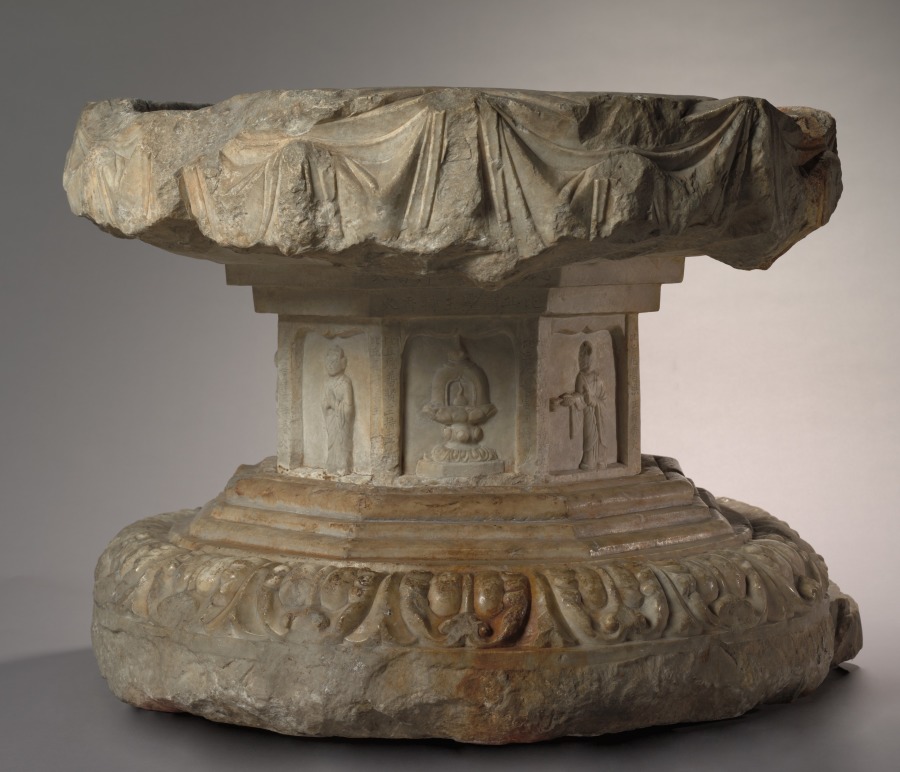
Technical Analysis: The Fang Xuanling Pedestal as a Blueprint for the 2026 Executive Silhouette
The Fang Xuanling Pedestal, as a scholar’s rock embodying the principles of shou, zhou, lou, tou (thinness, wrinkling, perforation, transparency), presents a non-mimetic, abstracted geological architecture. Its value lies not in representation but in the articulation of negative space, tectonic tension, and a profound dialogue between mass and void. For Addison Fashion’s 2026 executive lexicon, this artifact is not an inspiration but a structural manifesto. It dictates a shift from the corporeal to the conceptual silhouette, where the body is not adorned but framed within a constructed, metaphysical landscape of cloth and cut.
Geometric Integrity and Structural Poetics
The rock’s form rejects utilitarian morphology in favor of a purely aesthetic, rhythmically abstract geometry. This translates directly into our silhouette engineering. The 2026 executive form is defined by calculated perforation and deliberate asymmetry. Seams are not merely functional closures but become the "wrinkling" (zhou) of the garment—lines that record imagined pressures and tensions, akin to geological strata. Darts evolve into architectural creases, creating shadow plays that contour the body not through constriction, but through the poetic suggestion of form beneath.
The principle of lou (perforation, penetrability) is critical. We interpret this not as literal cut-outs, but as the strategic deployment of negative space within the garment’s architecture. Deep, engineered armholes that reveal the stark line of a shoulder. Asymmetric necklines that carve a void against the collarbone. The back of a jacket, segmented by a vertical seam that parts to reveal a sliver of the shirt beneath, creating an "aperture" for light and shadow. These are not decorative gestures; they are structural interventions that fracture the monolithic nature of traditional suiting, introducing a dynamic, breathable geometry. The silhouette becomes a frame for the moving body, much as the rock’s cavities frame shifting light.
Urban Materiality and the Slate Chromatic Doctrine
The material response to this geometric analysis is one of absolute rigor. The chosen Slate palette is not a mere color but a material state. It references the mineral origin of the scholar’s rock—cool, dense, and possessing a latent, textural intelligence. We deploy fabrics that hold their own tectonic memory: heavyweight, minimally finished Japanese woolens that fall with the gravity of a rock face; double-faced technical cashmere with a matte, stony hand; and sculptural blends of silk and metal-core yarns that capture light like wet stone.
Surface treatment is paramount. The zhou (wrinkling) principle informs our development of permanent, three-dimensional texturing. Heat-set pleating is engineered to mimic stratified rock, creating permanent, non-collapsible volume. Laser-etching on leather replicates the subtle, time-worn fissures of the artifact’s surface. The materiality must feel geological rather than textile—a second skin that is both protective and profoundly expressive of its own constructed nature. Hardware is eliminated or reduced to flushed, tonal closures of brushed gunmetal, becoming mere seams in the mineralogical form.
The 2026 Executive Silhouette: A Constructed Spiritual Topography
The ultimate translation lies in the silhouette’s philosophical stance. The scholar’s rock is a "microcosm," a portable landscape for metaphysical wandering. The 2026 Addison executive is similarly encased in a personal, architectural landscape. The jacket, with its asymmetrical fastening and internal boning that creates a subtle, non-conforming shape, is a "fantastic mountain" for the urban environment. Trousers are cut with a slight, permanent curvature through the leg—a "lean" (shou) that suggests poised motion, a readiness for contemplation amidst chaos.
This silhouette performs the core DNA tenet of "useless utility". It rejects overt signaling of power through broad shoulders or aggressive waist suppression. Instead, power is communicated through the silent authority of impeccable, unconventional geometry and the self-possessed luxury of absolute material integrity. It is armor for the intellect, not the battlefield. The wearer inhabits a space between the garment’s planes and apertures, engaging in a continuous dialogue with the urban environment—the play of city light through a perforated seam, the reflection of glass towers on a slate-colored, matte surface.
In conclusion, the Fang Xuanling Pedestal provides the definitive blueprint for a post-ornamental, post-narrative luxury. The 2026 silhouette is minimalist only in its rejection of the extraneous; it is, in fact, highly complex in its structural poetics. It is an exercise in urban materiality that prioritizes the experience of wearing a constructed, spiritual topography. It does not follow the body; it re-frames it within a new set of architectural principles derived from stone, void, and shadow. This is the new executive uniform: a garment that is less an article of clothing and more a habitable, metaphysical proposition for the contemporary world.