Urban Form: Evening Mood-Lidingö
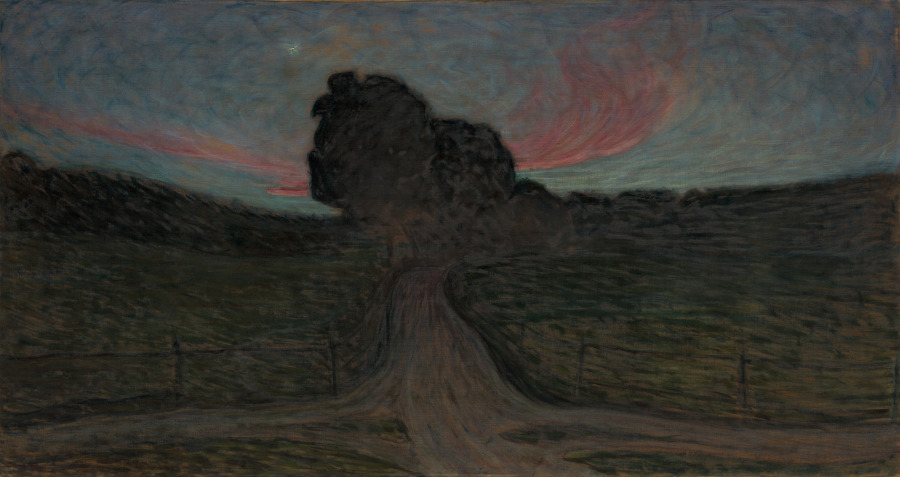
Urban Silhouette Research: Evening Mood-Lidingö
I. The Geometry of Arrested Time
The Addison 2026 executive silhouette does not negotiate with the body; it architects it. The subject under examination—Evening Mood-Lidingö—presents a dual geometric proposition: the carved wooden plaque of the Udumbara flower and the painted ceramic vessel of Jar. Both objects operate as closed systems of formal restraint, and both dictate the structural vocabulary for the forthcoming executive wardrobe.
The plaque’s geometry is one of compression and emergence. The carved petals, arrested mid-unfurling, occupy a shallow relief plane. There is no projection beyond the frame; the flower exists within the thickness of the wood itself. This is the logic of the inset shoulder—a seam that does not sit atop the body but carves into it, creating a negative space where the arm meets the torso. For 2026, Addison eliminates the padded shoulder entirely. In its place: a sculpted armhole that reads as a single continuous line from clavicle to wrist, the fabric’s grain following the body’s architecture without embellishment.
The Jar, by contrast, offers a geometry of containment without disclosure. Its silhouette is a closed curve—a volumetric promise that refuses to reveal its interior. The vessel’s mouth is the only aperture, a precise circular threshold between inside and outside. Translated to tailoring: the columnar coat with a single, unbroken front placket. No visible buttons. No lapel roll. The closure is internal, a hidden placket that transforms the garment into a sealed architectural volume. The neckline is the jar’s mouth: a clean, high crew or a narrow shawl that curves without collapsing.
II. Materiality as Temporal Record
The plaque’s wood grain is not decoration; it is evidence of duration. Each ring records a year, each knot a disruption. The carver’s knife follows the grain, not against it. This is the principle of grain-aligned cutting for Addison’s 2026 outerwear. Wool does not resist the body; it follows the warp and weft of the wearer’s movement. The result is a garment that appears to have grown rather than been constructed.
The Jar’s surface—its mottled glaze, its subtle shifts from matte to sheen—speaks to oxidation and patina. In fabric terms: the washed silk-wool blend in Onyx, a black that is never flat but shifts between charcoal and ink depending on the light. This is not a fashion color; it is a material condition. The executive who wears it does not announce arrival; she records presence.
The plaque’s carved petals are matte; the jar’s glaze is semi-lustrous. Addison’s 2026 collection exploits this tension. A single ensemble may pair a matte double-faced cashmere coat with a liquid satin column beneath—the former absorbing light, the latter refracting it. The effect is not contrast for its own sake but temporal layering: the matte surface belongs to the past, the lustrous to the present moment of observation.
III. The Silhouette as Vessel and Reliquary
The Udumbara plaque is a miniature temple—a portable sacred space. The Jar is a domestic reliquary—a vessel that holds what cannot be seen. Both objects propose that the highest function of a container is not to display but to preserve. For the 2026 executive silhouette, this translates to garments that function as architectural envelopes.
The cocoon coat returns, but stripped of its softness. Its volume is not rounded but faceted—a series of planar breaks that recall the carved facets of the plaque’s petals. The hem is not curved but angled, a single diagonal cut that suggests the jar’s mouth without mimicking it. The sleeve is a tube, untapered, ending in a raw edge that exposes the fabric’s internal structure—the warp threads visible, like the grain of the wood.
Beneath the coat: a column dress in Onyx, its surface interrupted only by a single horizontal seam at the hip—a reference to the jar’s widest point, the moment before it curves inward toward the base. This seam is not a design detail; it is a structural hinge, allowing the fabric above to drape and the fabric below to fall with different tensions. The body is thus divided into two temporal zones: the upper, active, present; the lower, still, eternal.
IV. Urban Poetics and the Executive Gaze
The plaque and the jar both demand slow looking. They resist the glance; they require the gaze. Addison’s 2026 executive does not dress for the glance. She dresses for the sustained regard—the moment when a colleague, a client, a stranger on the street pauses not because the garment is loud but because it is legible. Every seam is a sentence; every fold a paragraph.
The urban context—Lidingö’s quiet streets, the archipelago light, the Nordic winter’s low sun—demands garments that hold their shape in wind and release their warmth in stillness. The Onyx palette is not a retreat into darkness but an absorption of light, a way of making the wearer a still point in a turning city. The geometric integrity of the plaque and the jar is not a historical reference; it is a survival strategy for the executive who must move through the world without being moved by it.
The Udumbara blooms once every three thousand years. The jar holds nothing and everything. The Addison 2026 silhouette does not wait for the flower; it is the flower—already open, already contained, already eternal in the present moment of its wearing.