Urban Form: Temple of Ramesses II, Abu Simbel
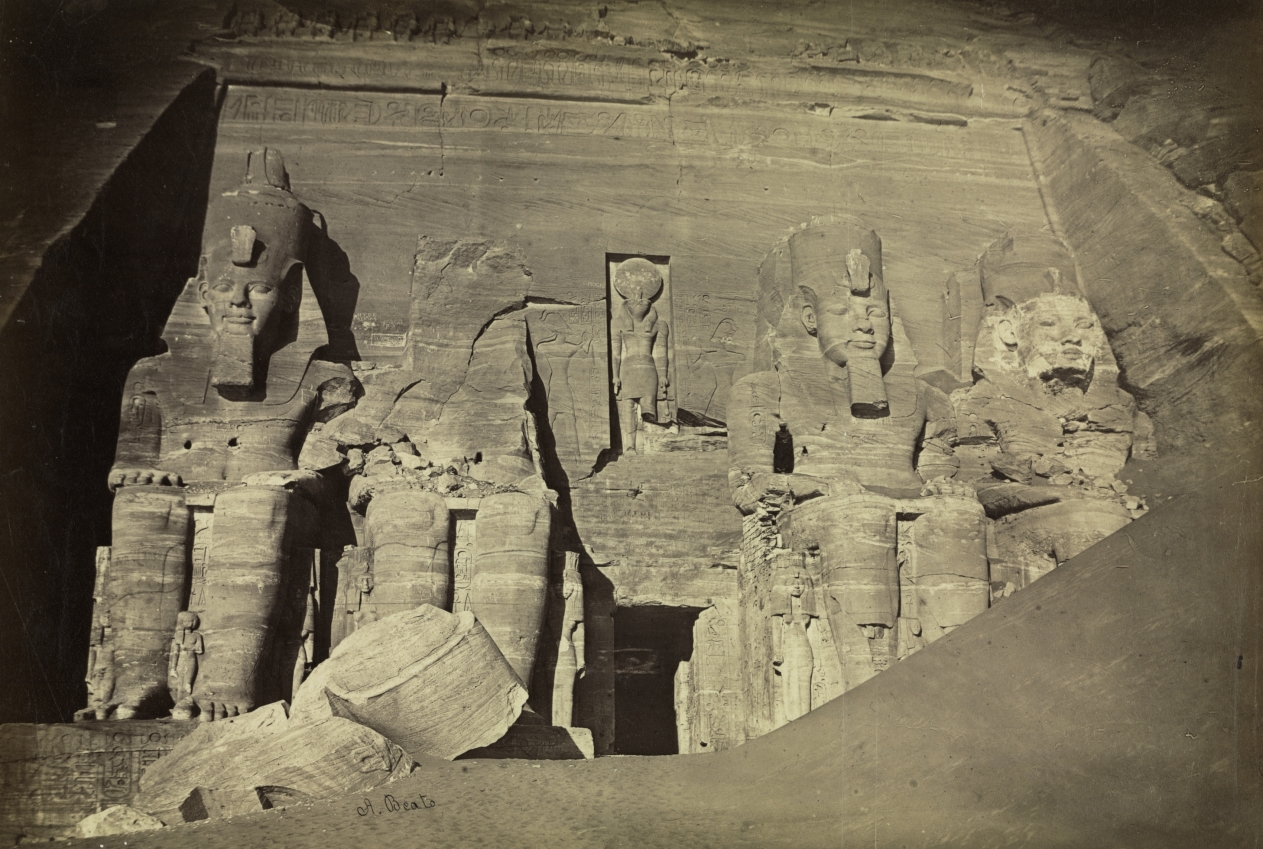
Urban Silhouette Research: The Abu Simbel Facade as Architectural Precedent for the 2026 Executive Form
I. The Geometry of Command: Colossal Scale and the Tailored Shoulder
The Temple of Ramesses II at Abu Simbel is not, strictly speaking, a building. It is a declaration—a manifesto carved into living rock, a silhouette imposed upon the desert with the indifference of geological force. For the Addison Fashion 2026 executive wardrobe, the temple's facade offers a masterclass in what we term structural poetics: the translation of absolute power into geometric certainty. The four seated colossi, each some twenty meters in height, do not merely decorate the cliff face; they are the cliff face, their squared shoulders and rigid verticals establishing a rhythm of repetition that transforms mass into measure. This is the logic of the tailored jacket at its most uncompromising.
Consider the shoulder line. In the Abu Simbel colossi, the shoulders are not rounded or organic—they are architectural planes, flat-topped and perpendicular to the torso, creating a silhouette that reads as pure geometry from any angle. The 2026 Addison executive shoulder must achieve the same effect: a line that is not merely constructed but decreed. The shoulder pad becomes a structural element, not a soft augmentation. It extends the wearer's presence horizontally, claiming space with the same territorial confidence as the colossi claim the Nile valley. The armhole is cut high and close, allowing the sleeve to fall in a clean vertical column—a direct quotation of the temple's engaged columns, which stand half-released from the rock face, neither fully free nor fully embedded.
II. The Recessed Portal: Negative Space and the Minimalist Interior
The temple's entrance is not a door but a void—a dark rectangle cut into the facade, flanked by the colossi and surmounted by the sun god Ra-Horakhty. This recessed portal is the architectural equivalent of the Addison minimalist category: the power of the garment resides not in ornament but in the precision of its negative space. The 2026 executive silhouette must understand that a closed jacket, buttoned to the throat, creates a similar portal—a vertical opening that frames the wearer's face and torso as the temple entrance frames the sanctuary within.
The interior of the temple, carved deep into the rock, is a sequence of halls diminishing in scale, each darker than the last, until the innermost sanctuary where the deified Ramesses sits beside the gods. This progression from light to shadow, from monumental to intimate, is the urban materiality of the executive wardrobe: the outer layer (the coat, the jacket) is public, declarative, monumental; the inner layers (the shirt, the knit) are private, recessive, intimate. The Addison designer must construct this gradient with the same deliberateness as the temple's architects. A sand-colored wool overcoat, its surface matte and dense, gives way to an ivory silk shirt, its luster subdued. The contrast is not chromatic but textural—a dialogue between the rough and the refined, the exterior and the interior, the rock and the sanctuary.
III. The Axis of Symmetry: Bilateral Order and the Executive Gaze
The Abu Simbel facade is governed by a strict bilateral symmetry, an axis that runs from the sun disk at the top through the portal to the Nile below. This symmetry is not decorative but cosmological: it mirrors the order of the universe, the balance of Ma'at. For the 2026 executive silhouette, symmetry is a form of authority. The Addison jacket must be cut on a perfect vertical axis, with lapels that mirror each other precisely, pockets that align with mathematical exactness, and a center front that closes without deviation. This is not rigidity for its own sake; it is the visual language of control—the wearer's command over their own form, and by extension, over their environment.
Yet the temple also teaches us that symmetry requires a focal point. The sun god above the portal, the colossi flanking it—these elements create a hierarchy within the symmetry, a centralized gaze that draws the eye inward. The executive wardrobe must achieve the same effect: a single, decisive element—a sharply peaked lapel, a precisely placed pocket square, a monochromatic tie—that anchors the symmetry and prevents it from becoming monotonous. The 2026 Addison silhouette is not a uniform; it is a composition, and every composition requires a dominant note.
IV. The Materiality of Eternity: Stone, Wool, and the Weight of Time
The temple is carved from Nubian sandstone, a material that has withstood three millennia of wind, sand, and sun. Its surface is not smooth but weathered—pitted, striated, marked by the passage of time. This is the urban materiality that Addison Fashion must emulate in its 2026 fabrics: not the pristine surface of the showroom, but the lived surface of the city. Wool that has been brushed to a soft nap, cashmere that shows the faint halo of wear, leather that creases at the elbow and knee—these are the textures of authority, not because they are new, but because they have endured.
The sand color of the temple, warmed by the desert sun, is the palette for this collection. It is not beige, not taupe, but a mineral sand—the color of stone at noon, of dust at dusk, of the linen suit that has been worn through a long day of negotiations. It is a color that does not call attention to itself but rewards the eye that lingers. In the Addison wardrobe, this sand tone becomes the foundation: a sand-colored wool coat, a sand-colored silk shirt, a sand-colored leather belt. The monochrome is not a limitation but a discipline—a refusal of distraction, a commitment to form over fashion.
V. Conclusion: The Silhouette as Monument
The Temple of Ramesses II at Abu Simbel is a monument to a single idea: that power, to be enduring, must be geometric. It must be reducible to lines, planes, and axes. It must be legible from a distance and inexhaustible up close. The 2026 Addison executive silhouette is not a garment; it is a portable monument—a structure of wool and silk that the wearer carries into the boardroom, the gallery, the street. It is tailored, yes, but its tailoring is not a matter of fit alone. It is a matter of architecture: the shoulder as cornice, the lapel as portal, the hem as foundation. The wearer does not simply put on a jacket; they inhabit a form. And in that inhabitation, they become—like the colossi—a figure of stone, of sand, of time itself.