Urban Form: Dancing Figure
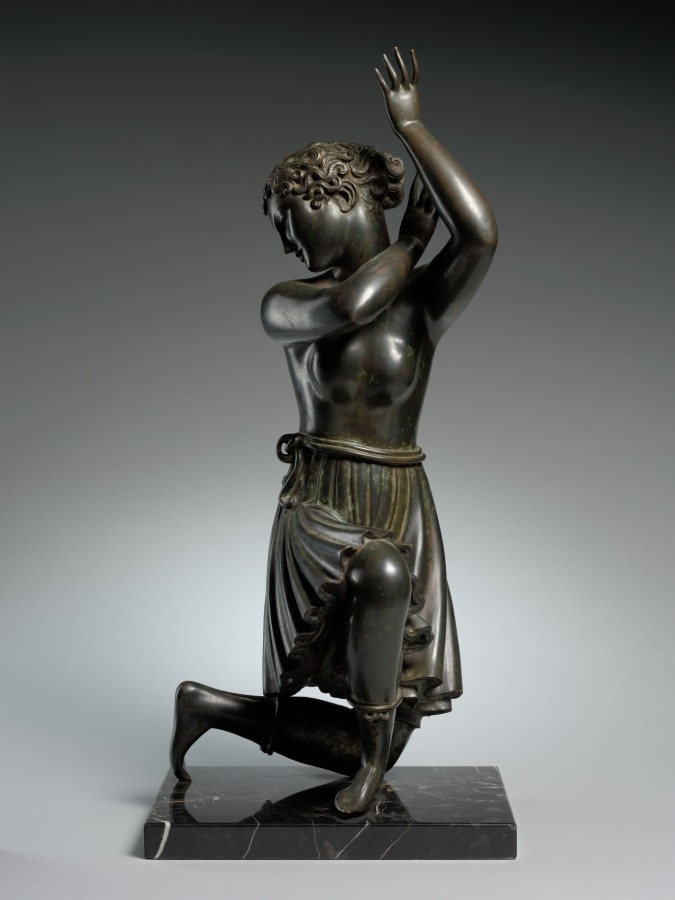
Urban Silhouette Research: The Dancing Figure as Negative Space
I. Geometric Integrity: The Fragment as Structural Principle
The Dancing Figure does not exist. It is inferred. This is the first and most consequential observation for the 2026 executive wardrobe. The Mold Fragment with Musicians presents us with a ceramic shard whose surface bears the impressed memory of a body in motion—a musician, a dancer, a figure whose limbs were once pressed into soft clay by a craftsman's palm. What remains is not the figure itself but its negative imprint, a void shaped like movement. The geometric integrity of this artwork resides precisely in what is absent. The silhouette is defined by its perimeter of loss.
For Addison Fashion, this translates into a radical proposition: the 2026 executive silhouette must be constructed around strategic absence. Not emptiness—emptiness is passive. Absence is architectural. The Dancing Figure teaches us that a garment's most powerful gesture may be the space it refuses to occupy. The shoulder line of the forthcoming collection will echo the fractured edge of the ceramic mold: clean where it meets the body, irregular where it releases into air. The result is a silhouette that reads as complete only in motion, when the wearer's body fills the negative space with gesture.
II. The Mortuary Ox: Mass, Stillness, and the Weight of Order
Counterbalance arrives via the Mortuary Figure of the Zodiac Sign: Ox. Where the mold fragment is all aperture and implication, the ox is dense, frontal, and unyielding. Its geometry is that of the compressed volume—the sculptor has folded the animal's bulk, its terrestrial weight, its astrological fixity into a single vertical mass. The ox does not dance. It endures. Its silhouette is a column: shoulders squared, haunches grounded, gaze directed into the void beyond the living.
The 2026 executive silhouette must reconcile these two geometric impulses. The Dancing Figure proposes permeability; the Ox proposes mass. Addison's answer is a layered architecture in which the outer shell carries the ox's stillness—a long, slate-toned overcoat with a shoulder that sits like carved stone—while the interior layers echo the mold fragment's fractured lyricism. A silk underlayer, cut on the bias, moves against the body like fingers pressing into clay. The contrast is not decorative. It is structural poetics: the tension between what holds and what flows.
III. Materiality: From Fired Clay to Urban Armor
The material intelligence of both artifacts is instructive. The mold fragment is terracotta—earth transformed by fire into something that outlasts the hand that shaped it. The ox figure, whether Han dynasty earthenware or Tang sancai glaze, carries the same paradox: soft material, hardened into permanence. Both objects are essentially about the alchemy of firing, the moment when the ephemeral becomes durable.
For the urban executive, materiality must perform the same transformation. The 2026 collection will employ bonded wool crepe with a dry, almost ceramic hand—fabric that holds a pressed edge like a fired shard. Slate tones will dominate: not the flat gray of corporate convention but the variegated slate of kiln surfaces, where heat has left mineral shifts and subtle iridescence. Linings will be cut from washed silk in the color of unfired clay, a private warmth against the body. Hardware will be minimal and matte—no shine, no reflection, only the quiet authority of oxidized metal.
This is urban materiality as archaeological practice: each garment a fragment that implies a larger structure, each seam a record of pressure applied and released.
IV. The Silhouette in Motion: Choreography as Tailoring
The Dancing Figure is, finally, a study in choreography. The musician's arm is raised; the fingers press strings; the torso twists. The mold captures not a pose but a transition—the body between one position and the next. This is the essential insight for the 2026 executive silhouette: it must be designed for the interval, not the endpoint.
Addison's tailoring will therefore prioritize articulated volume. Sleeves will be cut with a slight forward rotation, acknowledging the body's natural gesture toward the desk, the screen, the handshake. Jackets will feature a concealed back pleat that opens with movement and closes into a clean line at rest. Trousers will carry a subtle break at the ankle, a fracture line that echoes the mold fragment's broken edge. The silhouette is never static. It is always becoming.
V. Conclusion: The Executive as Artifact
The Dancing Figure and the Mortuary Ox are not opposites. They are two states of the same inquiry: how does a fleeting life become a lasting form? The mold fragment answers with negative space and implied motion. The ox answers with mass and cosmic order. The 2026 Addison executive wears both answers at once—a slate column of wool that moves like fired clay, a silhouette that is complete only when inhabited, a garment that functions as portable archaeology, carrying the memory of the body that wore it into the permanent record of the city.
This is not fashion. This is the continuation of an ancient practice: pressing the human form into durable material so that something of the gesture survives.