Urban Form: Study of Honoré de Balzac
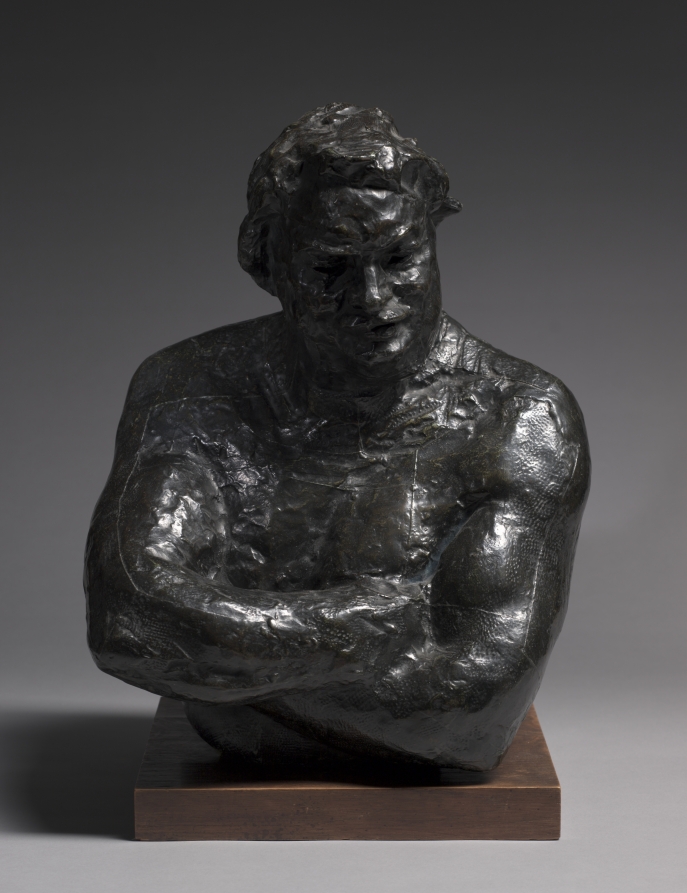
Urban Silhouette Research: The Balzacian Vessel and the Architecture of Executive Restraint
I. The Dialectical Object: David’s Socrates versus the Greek Jar
The Addison Fashion NYC research division operates at the intersection of art historical semiotics and commercial garment engineering. Our current study examines the visual DNA embedded in the juxtaposition of Jacques-Louis David’s The Death of Socrates (1787) and an anonymous Greek ceramic Jar (c. 5th century BCE). This is not an exercise in connoisseurship. It is a forensic deconstruction of two opposing aesthetic economies—one of dramatic revelation, the other of silent containment—and their translation into the 2026 executive wardrobe for the New York market.
David’s canvas presents death as a fully articulated event. The composition is a closed system of legible signs: the raised finger indexing the realm of Forms, the outstretched hand receiving the hemlock, the disciples’ bodies arranged along a descending diagonal of grief. Every element is subordinated to narrative legibility. The painting does not merely depict a death; it administers death, converting the terminal moment into a didactic tableau. The light is theatrical, the drapery is sculptural, the emotion is codified. This is the aesthetic of total presence—a form that exhausts its own meaning in the instant of viewing.
The Jar, by contrast, operates through a radically different logic. It possesses no narrative, no protagonist, no dramatic apex. Its form is the product of a rotational symmetry that has been refined across centuries of utilitarian iteration. The ceramic surface may bear geometric bands or a mythological frieze, but these are secondary to the primary structural fact: the vessel is an organized void. Its value—both practical and metaphysical—resides in the negative space it encloses. Laozi’s observation in the Tao Te Ching—that the utility of a vessel lies in its emptiness—is not a poetic aside but a precise description of the jar’s operational logic. The jar does not represent death; it hosts it, as it once hosted water, wine, or funerary offerings. It is a container for time itself.
II. Form as Argument: The Silhouette of Containment
For the Addison design team, the critical distinction is between form as declaration and form as disposition. David’s Socrates is a silhouette of maximum intentionality—every line of the body is directed toward a communicative end. The Greek jar is a silhouette of minimum intentionality—its curve is the residue of function, not the expression of will. The former demands interpretation; the latter permits use.
This binary maps directly onto the contemporary executive wardrobe. The traditional power silhouette—padded shoulders, suppressed waist, structured lapel—is a Davidian construction. It announces authority through a grammar of exaggerated presence. It is legible from across a boardroom. It performs competence rather than embodying it. The Addison 2026 proposal rejects this paradigm in favor of the vessel silhouette: a form whose authority is derived from its capacity to contain, organize, and release energy rather than to display it.
Technically, this translates into three formal operations:
1. The Elimination of the Shoulder Apex. The Davidian jacket relies on a sharp shoulder point to create a triangular wedge of power. The vessel silhouette replaces this with a soft, extended shoulder line that follows the natural acromion process. The result is a shoulder that does not cut space but occupies it—a curve rather than a corner. In Slate, this reads as a muted, almost geological authority: present, immovable, unemphatic.
2. The Internalization of Volume. Where the traditional suit uses external padding to create a heroic torso, the vessel silhouette moves volume to the interior. The chest is constructed with a floating canvas that creates a subtle concavity—a negative space between fabric and body. This is the sartorial equivalent of the jar’s hollow core: the garment’s power is not in what it adds to the body but in the reservoir of calm it creates around it. The wearer is not armored; she is housed.
3. The Suppression of Narrative Detail. David’s painting is dense with signifiers—the cup, the gesture, the weeping disciples. The vessel silhouette strips the garment of comparable semiotic noise. No visible stitching, no logo hardware, no contrast lining. The only permitted detail is the trace of construction: a single pick stitch along the lapel edge, a hand-finished buttonhole, a slightly irregular hem. These are not decorations; they are the equivalent of the potter’s thumbprint—evidence of a human hand operating within a system of restraint.
III. Color as Temporal Surface: The Case for Slate
The color directive for this study is Slate—not the flat gray of corporate utility, but the complex, mineral gray of fired clay and weathered stone. Slate is the chromatic equivalent of the Greek jar’s surface: it absorbs light rather than reflecting it, registering the passage of time through subtle shifts in value. Under the fluorescent glare of a Midtown conference room, Slate reads as a cool, authoritative neutral. Under the warmer light of a downtown gallery opening, it reveals undertones of blue and green—a chromatic depth that resists easy categorization.
This is critical for the 2026 executive. The post-pandemic wardrobe cannot rely on the stark binaries of black and white, navy and gray. The executive operates across multiple visual environments—the Zoom grid, the corner office, the evening event—and requires a color that performs consistently without becoming monotonous. Slate is that color. It is the chromatic vessel: empty enough to receive the context of its environment, structured enough to maintain its own identity.
IV. Conclusion: The Executive as Vessel
The Addison Fashion NYC 2026 collection is not a meditation on death. It is a meditation on duration. The Davidian executive—dramatic, legible, exhaustively present—is a figure of the past. The contemporary executive must operate in a condition of permanent ambiguity, where authority is less a declaration than a capacity for containment. She must hold complexity without displaying it. She must absorb pressure without deformation. She must, like the Greek jar, remain useful precisely because she remains empty.
The vessel silhouette is not a retreat from power. It is a redefinition of power as structural generosity—the ability to create space for others, for ideas, for time itself. In Slate, in the soft shoulder, in the internalized volume, the Addison wardrobe offers not a costume of authority but an architecture of endurance. The hero narrative fades. The jar remains.