Urban Form: Geometric Abstraction
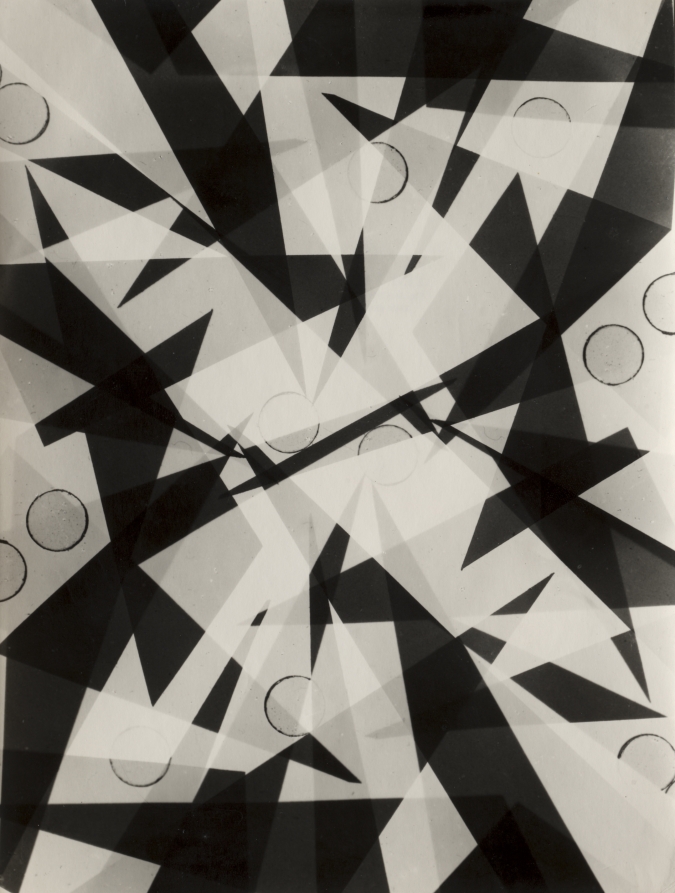
Urban Silhouette Research: Geometric Abstraction as Structural Poetics
I. The Architecture of the Liminal Moment
The Addison Fashion atelier does not design garments. It engineers spatial propositions for the body in motion. The 2026 executive silhouette emerges not from trend forecasting but from a rigorous interrogation of two artifacts that share a single obsession: the geometric containment of the uncontainable. Jacques-Louis David's The Death of Socrates and the Song Dynasty meiping vase with wave motifs are not historical curiosities. They are structural precedents—blueprints for how form negotiates with void, how surface resists dissolution.
Our research begins with the recognition that both objects operate at the threshold of annihilation. Socrates reaches toward the hemlock cup; the ceramicist incises eternal waves onto fragile clay. Each is a geometry of the临界—a term we use internally to describe the precise moment when structure must hold against collapse. The 2026 Addison executive does not dress for the boardroom. She dresses for this threshold.
II. David's Triangle: The Rational Corset
David's composition is a masterclass in compressive geometry. The philosopher's body forms the apex of a triangle whose base is anchored by the grieving disciples—a visual hierarchy that transforms emotional chaos into architectural order. The white robe is not fabric; it is a load-bearing plane, a surface that absorbs the weight of the narrative and redistributes it as formal clarity. Light enters from the left, carving the figure into zones of illumination and shadow that correspond precisely to the Cartesian grid.
For Addison's 2026 silhouette, we translate this into what we term the rational corset: an internal architecture of seams and darts that imposes order on the body's softness without constricting movement. The shoulder line is extended, squared, and slightly elevated—a direct quotation of David's triangular apex. The waist is not cinched but geometrically resolved, achieved through a single diagonal seam that runs from the left clavicle to the right hip, echoing the painting's compositional diagonal. The result is a silhouette that reads as monolithic from the front and dynamic from the side—a two-dimensional stability with three-dimensional intent.
III. The Meiping Wave: Repetition as Armor
The Song Dynasty meiping presents the inverse problem. Here, the vessel's form is already a study in restraint—a controlled arc, a vertical ellipse that tapers to a narrow foot. But the surface erupts with wave patterns: dense, continuous, self-referential spirals that refuse resolution. The ceramicist has fixed motion onto stillness, trapping turbulence within a fragile skin.
This is the second pillar of the 2026 silhouette: surface as structural armor. Addison's fabrication team has developed a jacquard weave that mimics the meiping's wave density—not as decoration but as tensile reinforcement. Each thread follows a sinusoidal path, creating a fabric that distributes stress across its entire surface rather than along a single grain line. The visual effect is one of controlled agitation: from a distance, the textile reads as solid slate; at close range, it reveals a topography of interlocking curves that absorb light and movement.
The silhouette itself borrows the meiping's proportions: a narrow base (achieved through a tapered trouser or a column skirt with a weighted hem) expanding into a rounded shoulder that suggests containment rather than aggression. The neckline is high, almost monastic, forcing the eye downward along the body's central axis—precisely as the meiping's neck directs the gaze toward the swelling belly of the vessel.
IV. Materiality: The Weight of Silence
Both artifacts share a material paradox. David's oil paint is opaque and matte, yet it renders the transparency of philosophical detachment. The meiping's glaze is glossy and reflective, yet it contains the opacity of eternal return. Addison's 2026 collection operates in this same material ambiguity.
We have developed two primary textiles for the executive silhouette. The first is a double-faced wool crepe in Slate—a color that absorbs light without reflecting it, creating a visual silence that recalls the shadowed portions of David's canvas. The second is a bonded silk twill with a micro-embossed wave pattern, visible only under raking light. This is not ornament. It is tactile information—a surface that rewards proximity, that demands the viewer's attention be earned rather than commanded.
The hardware is minimal: matte onyx buttons that disappear into the fabric, hidden plackets that eliminate visual interruption, seamless shoulder construction that presents the body as a single geometric volume. Every element is subordinated to the integrity of the whole.
V. The 2026 Executive: A Silhouette for the Threshold
The Addison 2026 executive does not signal authority through excess. She does not require logos, hardware, or aggressive tailoring. Her power is structural—embedded in the geometry of the garment, in the way a single diagonal seam resolves the tension between shoulder and hip, in the way a wave-patterned textile absorbs the chaos of the urban environment and returns it as composed silence.
She is Socrates at the threshold: poised, rational, aware of the void but not consumed by it. She is the meiping: fragile in material, eternal in form. The 2026 silhouette is not a costume for success. It is a philosophical position—a statement that form can hold meaning, that geometry can absorb grief, that the executive body can be both armor and aperture.
This is the Addison proposition: dress for the临界. Dress for the moment when everything might collapse—and hold.