Urban Form: Enthroned Virgin and Child
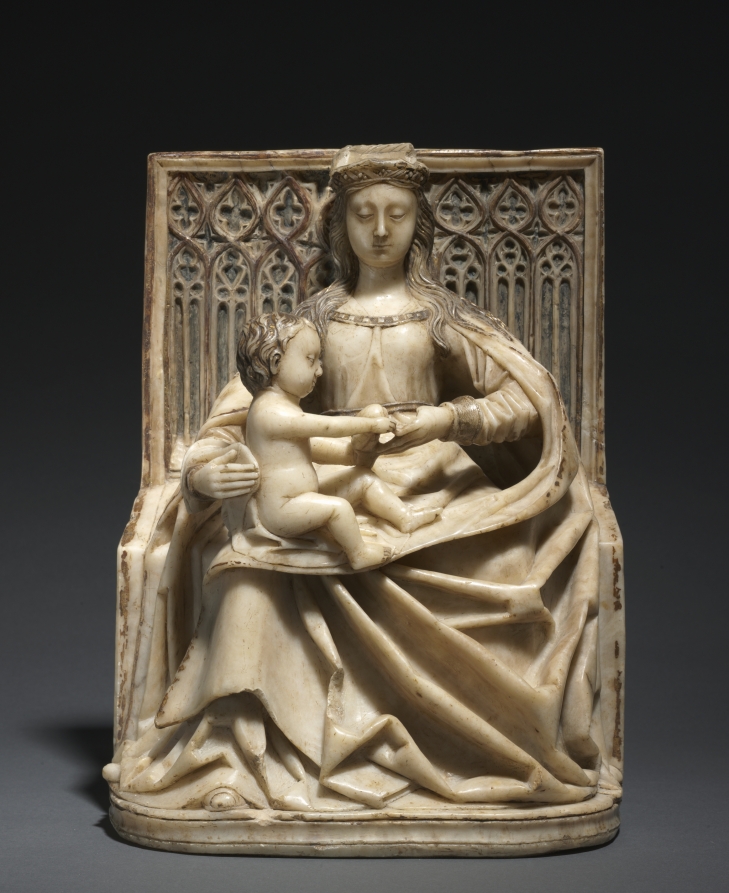
Urban Silhouette Research: The Enthroned Virgin and Child as Structural Archetype
I. Formal Deconstruction: The Throne as Architectural Armature
The Enthroned Virgin and Child—whether rendered in the Byzantine Sedes Sapientiae tradition, the Gothic courtly inflection, or the early Renaissance volumetric consolidation—presents a singular formal proposition: the human body as a load-bearing column within a rigid, hierarchical frame. This is not portraiture. This is infrastructure. The Virgin does not sit; she is installed. The throne does not furnish; it legitimizes. For the Addison executive wardrobe, this distinction is operative: the 2026 silhouette must function as a portable throne—an armature that confers authority through geometry rather than ornament.
Consider the frontal plane. The Virgin’s torso is rendered as a near-perfect isosceles triangle, apex at the crown, base at the lap. This is the primary silhouette vector—a stable, self-referential form that resists lateral distortion. In tailoring terms, this translates to a structured shoulder line (the apex) descending into a controlled, non-clinging waist and a flared or columnar lower volume (the base). The Child, positioned off-axis and often at a smaller scale, introduces asymmetrical counterweight—a secondary form that disrupts the monolith without destabilizing it. This is the design logic of the asymmetric closure, the offset lapel, the single sculptural detail that prevents the executive silhouette from reading as uniform or bureaucratic.
II. Color Logic: Ivory as Chromatic Neutrality and Moral Authority
The Ivory designation is not a retreat into pallor. It is a strategic deployment of chromatic neutrality as power. In the iconographic tradition, the Virgin’s mantle is typically ultramarine—expensive, imported, semiotically loaded. But the Enthroned compositions that endure are those where the underlayer—the tunic, the flesh, the throne’s stone—operates in the ivory-to-sand spectrum. This is the grounding tone: the color that does not compete with the throne’s gold or the Child’s flesh but supports them. For 2026, Ivory is the executive’s neutral field—a surface that absorbs the ambient light of the boardroom and reflects composure rather than aspiration.
Technically, Ivory presents specific material challenges. It demands fabric with sufficient weight to avoid transparency—double-faced wool, bonded crepe, dense cotton-silk blends. It requires seam engineering that minimizes bulk, because ivory reveals every topological irregularity. The Enthroned Virgin’s drapery is never chaotic; it is systematized into folds that read as intentional, almost architectural. The 2026 wardrobe must apply the same discipline: princess seams that channel volume, dart placement that sculpts without pinching, finishings that are invisible but structural.
III. The Throne as Silhouette: From Ecclesiastical to Corporate
The throne’s formal properties—vertical back, horizontal seat, rigid arms—constitute a three-dimensional bounding box around the figure. The Virgin does not overflow this box; she fills it. This is the principle of contained volume: the silhouette is defined not by what it reveals but by what it refuses to exceed. For the Addison executive, this translates to outerwear as throne—the coat, the blazer, the structured tunic that establishes a perimeter of authority. The 2026 iteration abandons the aggressive shoulder pad in favor of internal canvassing and strategic interlining, creating a line that is rigid without being armored.
The Child—the secondary form—offers a lesson in scale hierarchy. The executive wardrobe must accommodate the primary garment (the suit, the column dress) and the secondary accessory (the bag, the shoe, the piece of jewelry) without allowing the latter to dominate. In the Enthroned compositions, the Child is smaller, off-center, and often partially occluded. This is not diminishment; it is compositional discipline. The 2026 wardrobe applies this through proportional restraint: a bag that sits within the body’s vertical line, a shoe that extends the leg without interrupting the column, a necklace that echoes the neckline rather than competing with it.
IV. Materiality and the 2026 Executive Context
The Enthroned Virgin is a composite object: wood, pigment, gold leaf, textile, stone. Its authority derives from the hierarchy of materials—the throne’s hardness, the drapery’s softness, the flesh’s warmth. The 2026 executive wardrobe must operate on the same principle. Ivory is the unifying field, but it is activated by contrast in hand: a matte wool crepe against a subtly lustrous silk, a dense gabardine against a fluid georgette. The silhouette remains Minimalist—no superfluous detail, no decorative excess—but the material narrative provides the complexity that the form refuses.
This is the Addison proposition for 2026: the executive as enthroned figure, not through literal regalia but through formal rigor, chromatic neutrality, and material intelligence. The throne is internalized. The authority is structural. The silhouette is Ivory—and it does not ask for permission.