Urban Form: The Fall of the Angels
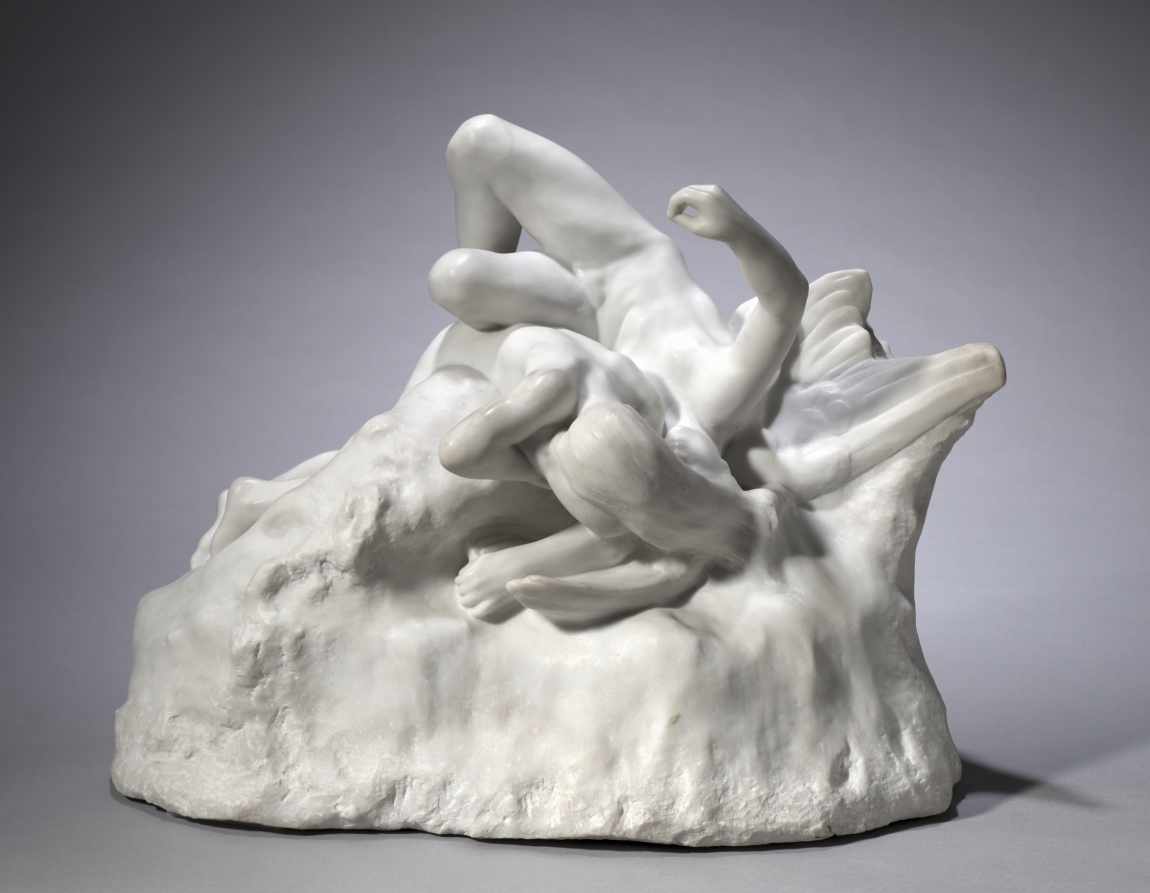
The Fall of the Angels: Geometric Integrity and the 2026 Executive Silhouette
I. The Binary Axis: Stele and Slaughter as Structural Archetypes
The Fall of the Angels is not a narrative. It is a geometric proposition—a binary axis upon which the 2026 executive silhouette is suspended. The curatorial DNA presents two poles: the Senusret Stele, a limestone monolith of Ma'at-ordered permanence, and Goya's Los Desastres de la Guerra, a canvas of visceral dissolution. Between these poles, Addison Fashion locates its architectural vocabulary for the coming season.
The Stele operates on grid logic. Its composition is governed by the Egyptian canon of proportion—a modular system wherein every figure, every hieroglyph, every register is locked into a predetermined ratio. The silhouette is vertical, planar, and self-contained. The shoulder line is absolute. The waist is a mathematical certainty. There is no drape, no gesture, no deviation. This is the Tailored impulse in its most ancient form: the body as architectural column, the garment as load-bearing structure.
Goya's Slaughter operates on entropic logic. The composition collapses inward. Figures overlap, limbs splay at impossible angles, the horizon dissolves into a smear of ochre and umber. There is no grid—only the chaotic pressure of bodies in extremis. The silhouette is Fluid, not by intention but by catastrophe. The fabric of the painting—its literal canvas—is stretched to the point of rupture. This is the anti-structure, the dissolution of form under the weight of human violence.
The 2026 executive silhouette does not choose between these poles. It inhabits both simultaneously. The Addison woman is a walking contradiction: her shoulders are carved from the Stele's grid, her hemline dissolves into Goya's entropic drift. The result is a silhouette that is neither purely Tailored nor purely Fluid, but Minimalist in its reconciliation of opposites—a single, decisive line that contains both order and its undoing.
II. Geometric Integrity: The Shoulder as Load-Bearing Wall
The geometric integrity of The Fall of the Angels resides in its axial tension. The Stele's verticality and Goya's diagonal chaos create a structural cross—a load-bearing intersection that defines the 2026 shoulder.
Consider the Stele's silhouette: a rectilinear envelope that refuses to acknowledge the body beneath. The shoulders are not rounded; they are corners. The garment does not follow the arm; it contains it. This is the logic of the Onyx palette—absolute, non-negotiable, a black that absorbs light rather than reflecting it. The 2026 Addison blazer adopts this logic: a shoulder that extends beyond the natural deltoid, creating a cantilevered plane that reads as both armor and architecture. The seam is not a seam; it is a joint, a point of structural articulation.
Now consider Goya's Slaughter: the diagonal thrust of the composition, the way bodies fall across the picture plane like collapsed beams. The 2026 silhouette absorbs this diagonal energy not through chaos but through controlled asymmetry. A single lapel extends; the other recedes. A hemline drops at the back, exposing the Achilles tendon—a gesture of vulnerability that is also a structural release. The garment is not falling apart; it is falling into place.
The geometric integrity, therefore, is not symmetry. It is balance through opposition—the Stele's grid and Goya's entropy held in a single, wearable tension. The executive silhouette of 2026 is a dialectical garment: it argues with itself, and in that argument, it achieves poise.
III. Urban Materiality: Limestone, Oil, and the Weight of Surface
The materiality of The Fall of the Angels is a study in surface as meaning. The Stele is limestone—cold, dense, impervious to time. Its surface is matte, non-reflective, a void that absorbs the gaze. Goya's canvas is oil—layered, impastoed, tactile. Its surface is a record of the brush's violence, a topography of gesture.
The 2026 Addison collection translates this material dialectic into urban fabric. The Stele's limestone becomes double-faced wool in Onyx—a textile with the density of stone but the drape of cloth. The surface is bonded, not woven, creating a monolithic hand that resists the body's movement even as it accommodates it. This is the fabric of the Tailored impulse: a material that holds its shape, that refuses to collapse.
Goya's oil becomes washed silk in the same Onyx—a textile that moves like liquid, that catches light in unpredictable ways, that reveals the body's motion as a series of chromatic events. The silk is not a contrast to the wool; it is its shadow, its entropic double. Worn together—the wool blazer over the silk column—the silhouette becomes a material argument: order and dissolution, stone and oil, Stele and Slaughter.
The urban context is critical. The 2026 executive navigates a city that is itself a collision of grids and entropies—glass towers and graffiti, subway maps and unplanned intersections. The Addison silhouette must be legible in both registers. The Onyx palette ensures this: it is the color of the Stele's shadow and the Slaughter's smoke. It is absolute, and therefore adaptable.
IV. Structural Poetics: The Garment as Visual Inscription
The Fall of the Angels is, finally, a poem about inscription. The Stele inscribes memory into stone; Goya inscribes trauma into paint. Both are acts of marking—of making the transient permanent, or the permanent transient.
The 2026 Addison silhouette is an inscription on the body. The shoulder seam is a hieroglyph—a mark that signifies structure, authority, permanence. The asymmetric hem is a brushstroke—a mark that signifies movement, risk, the possibility of undoing. Together, they form a visual language that is neither purely Tailored nor purely Fluid, but Minimalist in its refusal to resolve.
This is the structural poetics of the collection: the garment does not represent the body; it argues with it. It does not follow the form; it proposes a form. The executive woman of 2026 does not wear Addison; she inhabits it—as one inhabits a Stele, as one inhabits a Goya. The silhouette is not a shape; it is a position.
In the end, The Fall of the Angels is not about angels at all. It is about the geometry of power—the power to order, the power to destroy, and the power to hold both in a single line. The 2026 Addison silhouette is that line. It is Onyx. It is Minimalist. It is the Stele and the Slaughter, worn on the body of a woman who walks through the city as if she were inscribing herself into its stone.