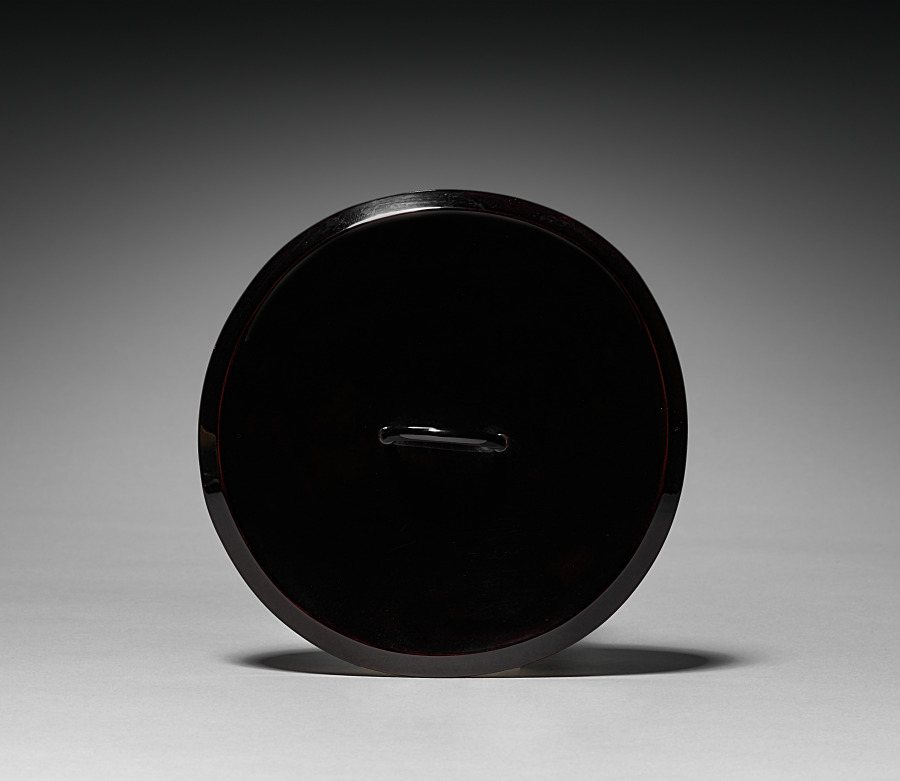
Urban Form: Water Container (Mizusashi) with Riverscape (lid)
Urban Silhouette Research: The Vessel as Architectural Precedent
I. Geometric Integrity: The Vessel as Structural Proposition
The Addison 2026 executive silhouette does not derive from the runway. It derives from the vessel—specifically, from the Mizusashi with Riverscape lid, an object whose formal logic anticipates the architectural demands of the coming season with uncanny precision. The water container presents a closed geometric system: a cylindrical body, a planar lid, a continuous surface unbroken by ornament. Its integrity is not decorative but structural. The silhouette it proposes is one of contained volume—a column of quiet authority that neither tapers nor flares, but holds its ground with the indifference of fired clay.
This is the geometry of the executive column: a vertical proposition that refuses the hourglass, rejects the peplum, and eliminates the waist as a site of visual interest. The Mizusashi's profile—slightly compressed at the shoulder, perfectly vertical through the body, terminating in a clean circular base—translates directly into the 2026 tailored coat and the columnar dress. The lid, with its riverscape incised in shallow relief, functions as the conceptual crown: a horizontal plane that closes the form and introduces narrative without compromising the purity of the whole.
II. The Riverscape Lid: Surface as Cartography
The lid's riverscape is not illustration. It is topography. The incised lines—wave patterns abstracted to their essential rhythm—operate as a cartographic system, mapping movement across a static plane. In Addison's 2026 vocabulary, this translates to engineered surface treatment: laser-cut leathers that suggest current without depicting water, jacquard weaves whose repeat patterns evoke tidal logic, matte-finish hardware that reads as sediment rather than shine.
The lid teaches a critical lesson for urban materiality: narrative must be embedded, not applied. The riverscape is not a print. It is a structural intervention—the surface itself is the story. For the executive wardrobe, this means garments whose interest resides in the weave, the cut, the seam architecture, not in applied embellishment. A slate wool coat whose surface reveals, upon close inspection, a subtle wave-patterned weave. A column dress whose matte jersey is engineered with directional ribs that catch light like ripples on dark water. The lid's riverscape is the anti-logo: meaning without branding, depth without decoration.
III. The Socrates Reference: The Column as Moral Geometry
The internal DNA of this object—the Socrates of David's canvas, the Longquan celadon of the Song-Yuan kilns—establishes a dialectic that Addison resolves in fabric. David's Socrates is a column of moral certainty: the body vertical, the gesture upward, the drapery falling in unbroken folds that anticipate the neoclassical column. The Mizusashi is the same column, but emptied of drama. It does not argue. It contains.
For 2026, the executive silhouette must perform this same double operation: it must project authority (the Socrates column) while remaining inwardly directed (the Mizusashi vessel). The result is a silhouette that is at once monumental and intimate—a coat that stands away from the body with architectural confidence, yet whose interior lining (should one glimpse it) reveals a quieter, more personal logic. The slate palette is essential here: it is the color of stone, of storm, of the space between certainty and doubt. It is the color of the vessel before it is filled.
IV. Urban Materiality: The Patina of Use
The Mizusashi is a used object. Its surface bears the marks of handling—the subtle sheen of repeated touch, the micro-abrasions of daily ritual. This is the patina of the executive life, and Addison's 2026 materials must anticipate it. Slate wool that softens at the elbow. Matte leather that burnishes at the pocket. Silk that creases at the fold and holds the memory of the body's movement.
The urban environment is the kiln. The executive is the vessel. The silhouette is the fired form—hardened by pressure, purified by use, and ultimately defined not by its original perfection but by its capacity to endure. The Mizusashi does not resist time. It absorbs it. The 2026 Addison silhouette must do the same: not a statement of the moment, but a structure for the decade.
V. Conclusion: The Vessel as Silhouette
The definitive urban silhouette for 2026 is not a shape. It is a proposition about containment. The Mizusashi—with its riverscape lid, its celadon composure, its quiet reference to Socrates and the Song—offers the executive wardrobe its most rigorous precedent: a form that holds meaning without announcing it, that endures without resisting, that transforms the chaos of the city into the rhythm of a surface. Addison's 2026 collection will not dress the executive. It will vessel her—in slate, in structure, in silence.