Urban Form: The Grotto of Posillipo
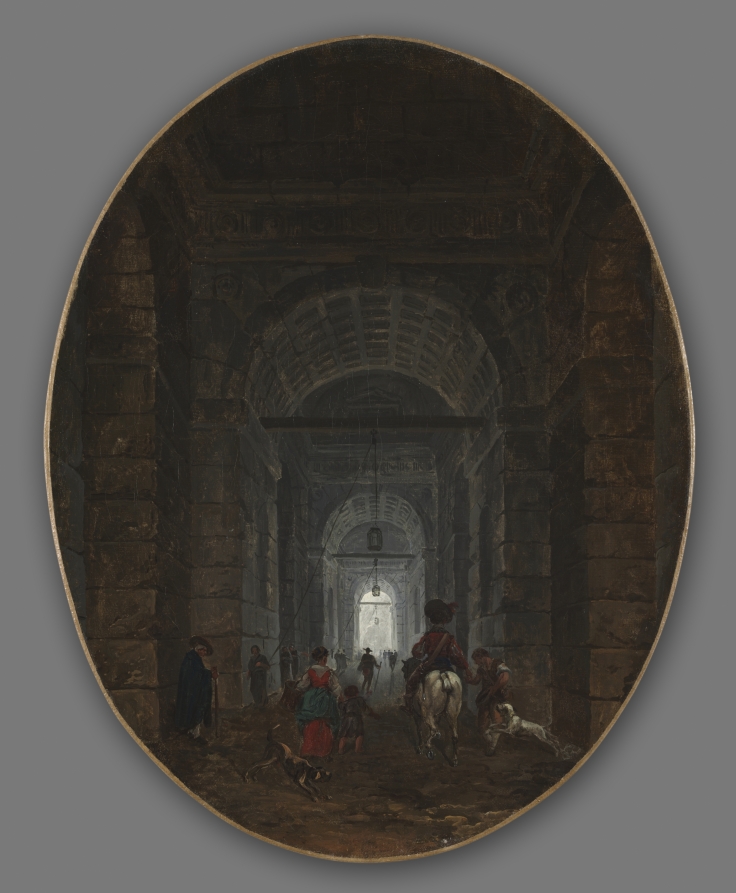
The Grotto of Posillipo: Structural Poetics of the Liminal Silhouette
I. Geological Frame as Architectural Armature
The Grotto of Posillipo—the Crypta Neapolitana—operates not as landscape but as void architecture. Its silhouette is defined by absence: a tunnel bored through tuffaceous rock, a negative volume carved by Roman engineers circa 37 BCE. For Addison Fashion's 2026 executive silhouette, this is the foundational gesture. The grotto presents a load-bearing void, a passage whose structural integrity derives from what has been removed rather than what has been added. The geometric proposition is severe: a trapezoidal aperture, approximately 705 meters in length, whose walls converge toward a vanishing point that refuses resolution. This is not perspective as Renaissance convention but perspective as existential condition—the corridor of institutional power, the artery of commerce, the throat through which all urban movement must pass.
The silhouette that emerges is columnar yet porous. The grotto's cross-section suggests a tailored overcoat whose shoulders are cut wide—not for volume, but for structural clearance. The wearer does not occupy the garment; the wearer traverses it. This distinction is critical for 2026. The executive silhouette must function as infrastructure: a system of passage rather than a display of surface.
II. The Death of Socrates: Static Mass and the Weight of Decision
Jacques-Louis David's The Death of Socrates (1787) provides the first internal DNA strand. The composition is a closed geometric system: the vertical of the philosopher's raised hand, the horizontal of the bed, the diagonal of the descending body. Every element is locked into a grid of moral certainty. The cup of hemlock—that small, cylindrical vessel—functions as the point of singularity, the object around which all vectors converge. For Addison Fashion, this translates into a silhouette governed by single-point gravity. The 2026 executive jacket must possess a similar centripetal logic: lapels that angle toward a fixed sternum point, a waist suppressed not for fashion but for philosophical compression. The fabric must behave as stone behaves under pressure—dense, unyielding, yet capable of holding a fold that reads as both drapery and fissure.
The palette here is Onyx: not black as absence, but black as compressed time. The grotto's interior, lit by occasional shafts from above, produces a chiaroscuro that is architectural rather than pictorial. The executive silhouette must replicate this: matte surfaces that absorb light, punctuated by hardware—a single silver clasp, a precisely engineered zipper—that releases it. The effect is nocturnal authority, the uniform of one who operates in the intervals between public appearances.
III. The Hunt: Kinetic Tension and the Suspended Instant
The second DNA strand—the dynamic hunt narrative, whether rendered in tapestry or oil—introduces vectorial tension. The hunt is not a scene but a trajectory: the arrow's arc, the hound's leap, the prey's flight. Unlike the Socratic stillness, the hunt is defined by unresolved momentum. For the 2026 silhouette, this demands a garment that is structurally incomplete—not unfinished, but deliberately suspended. Consider a coat whose hem is cut on a bias so severe that it appears to be in motion even when stationary. Consider a shoulder seam that extends beyond the anatomical shoulder, creating a phantom limb of fabric that suggests forward propulsion.
The grotto's walls, worn smooth by centuries of passage, offer a material analogy: erosion as refinement. The executive silhouette must appear to have been worn into shape rather than constructed. This is the paradox of urban luxury—the patina of use without the evidence of labor. Technical fabrics—bonded wool, matte technical silk, laser-cut leather—must be manipulated to suggest geological time rather than manufacturing speed.
IV. The Liminal Corridor: Toward a Unified Silhouette
The Grotto of Posillipo synthesizes these two death-aesthetics into a single spatial proposition. The tunnel is both static mass (the rock) and kinetic passage (the traveler). The 2026 executive silhouette must embody this duality. The solution is a layered system: an inner column of Onyx jersey that moves with the body, an outer shell of structured wool that holds the architectural line, and a series of transitional apertures—slits at the wrist, vents at the spine, a collar that stands away from the neck—that allow the silhouette to breathe without losing its geometric integrity.
The grotto's most radical lesson is that enclosure and passage are not opposites. The executive who wears this silhouette is not armored against the city but channeled through it. The garment is a conduit. The silhouette is a corridor. And the body within it is neither static nor kinetic, but suspended in the perpetual threshold—the exact condition of urban power in 2026.
Addison Fashion's definitive urban silhouette for the coming season is therefore Onyx Minimalist: a study in compressed darkness, structural porosity, and the poetics of the liminal. It does not decorate the body. It excavates it.