Urban Form: Je T'aime (No. 632)
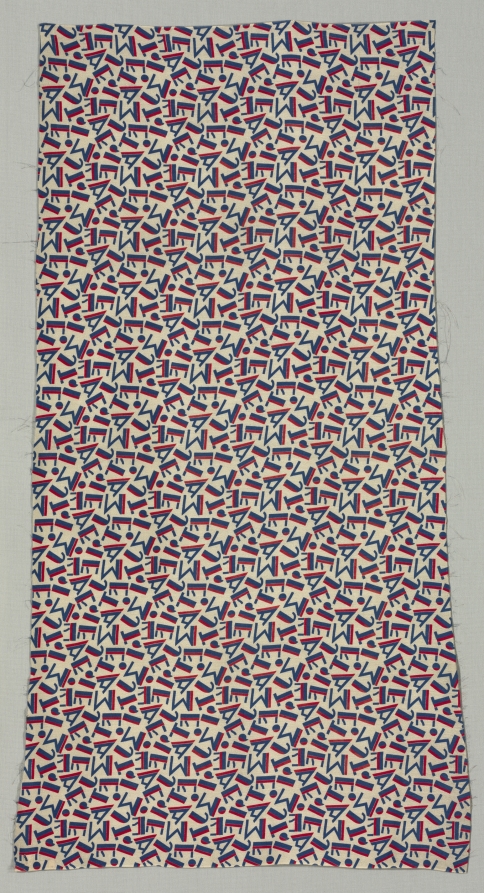
Urban Silhouette Research: Je T'aime (No. 632)
I. Formal Dialectics: The Monument and the Vessel
The design intelligence embedded in Je T'aime (No. 632) operates at the precise intersection of two irreconcilable aesthetic grammars: the Western narrative silhouette, which derives its authority from dramatic tension and corporeal legibility, and the Eastern ceramic silhouette, which achieves sovereignty through self-contained curvature and the suppression of anecdote. For the 2026 executive wardrobe, this tension is not decorative—it is structural. The silhouette must negotiate between the declarative and the implicit, between the boardroom's demand for presence and the modern executive's requirement for interiority.
The Davidian reference—The Death of Socrates—supplies the architectural armature. Note the philosopher's seated posture: a pyramidal stability that nonetheless vectors upward through the pointing hand. Translated into tailoring, this yields a shoulder line that is fixed but not aggressive, a torso that tapers with deliberate restraint, and a hem that anchors rather than flares. The garment does not argue; it asserts. The lapel, in this reading, functions as the pointing hand—a single directional gesture that organizes the entire visual field without recourse to ornament.
Conversely, the Meiping vase contributes the logic of the continuous curve. The Song dynasty vessel refuses the Western articulation of waist, hip, and hem as discrete zones. Its beauty resides in the unbroken transition from foot to shoulder—a single breath of form. For No. 632, this mandates the elimination of seam interruptions at the natural waist. The executive jacket must read as a unified volume, its suppression of the waistline not a concession to comfort but a philosophical position: the body is not to be segmented for display but enveloped in a coherent field of intention.
II. Chromatic Restraint: Slate as Mediating Surface
The color designation—Slate—is not incidental. It is the chromatic equivalent of the glaze that seals the Meiping's wave pattern: a surface that absorbs light rather than reflecting it, that reveals depth through tonal variation rather than saturation. In the context of the 2026 executive environment, Slate functions as a strategic neutral, capable of absorbing the visual noise of urban professional life while retaining sufficient complexity to avoid the anonymity of pure grey.
Technically, this requires a fabric with a matte finish and a subtle heathered structure—ideally a high-twist wool or a wool-silk blend with a dry hand. The objective is a surface that reads as monolithic from three meters but reveals micro-texture at conversational distance. This mirrors the Meiping's underglaze decoration: invisible until the viewer commits to proximity, at which point the wave pattern emerges as a reward for attention. The executive who wears No. 632 does not announce; she discloses.
The Socrates painting contributes a secondary chromatic principle: the discipline of chiaroscuro. In the canvas, light is not distributed evenly but concentrated at the point of narrative significance—the hand, the face, the cup. Applied to the wardrobe, this suggests that No. 632 should incorporate a single zone of tonal contrast: a slightly deeper Slate at the collar and cuff, or a subtle shift in the weave direction at the shoulder yoke. The eye is thus directed upward, toward the face and the voice—the executive's primary instruments of authority.
III. Silhouette Engineering: The 2026 Executive Context
The 2026 urban executive operates in an environment of hybrid spatial demands: the glass-walled conference room, the transit corridor, the informal standing meeting, the evening cultural event. The silhouette must therefore perform across multiple registers without modification. Je T'aime (No. 632) addresses this through a dual-length strategy: a jacket that terminates at the high hip—preserving the Meiping's compact proportion—paired with a trouser or skirt that extends the vertical line without introducing narrative distraction.
The critical technical intervention is the shoulder-to-hem ratio. The Socrates pyramid demands a shoulder width that exceeds the hip by a controlled margin—approximately 1.15:1—creating a stable visual base without the aggressive V of conventional power dressing. The Meiping influence then softens this geometry through a slight A-line release below the waist, ensuring that the silhouette does not read as armor but as architecture. The distinction is essential: armor defends; architecture accommodates.
Sleeve construction warrants particular attention. The Davidian gesture—the raised arm, the pointing hand—suggests that the sleeve must permit full range of motion without collapsing at the elbow. A two-piece sleeve with a slightly forward-pitched elbow seam achieves this while maintaining the clean line required by the minimalist brief. The cuff should be narrow, almost austere, echoing the Meiping's restrained foot ring.
IV. The Aesthetic Proposition: Silence as Authority
What Je T'aime (No. 632) ultimately proposes is a wardrobe philosophy grounded in the productive tension between assertion and reticence. The Socrates reference supplies the former: the conviction that form must carry meaning, that the executive presence is a moral as well as professional statement. The Meiping reference supplies the latter: the understanding that the most durable statements are those that do not exhaust themselves in a single utterance.
For the 2026 executive, this translates into a garment that functions as a permanent background—a Slate field against which the wearer's own narrative unfolds. It does not compete with the voice; it amplifies it. It does not demand attention; it rewards it. In the final analysis, No. 632 is not a costume for power but a condition for its exercise: a silhouette that, like the Song vessel, contains the wave without spilling a drop.