Urban Form: The Yellow Evening
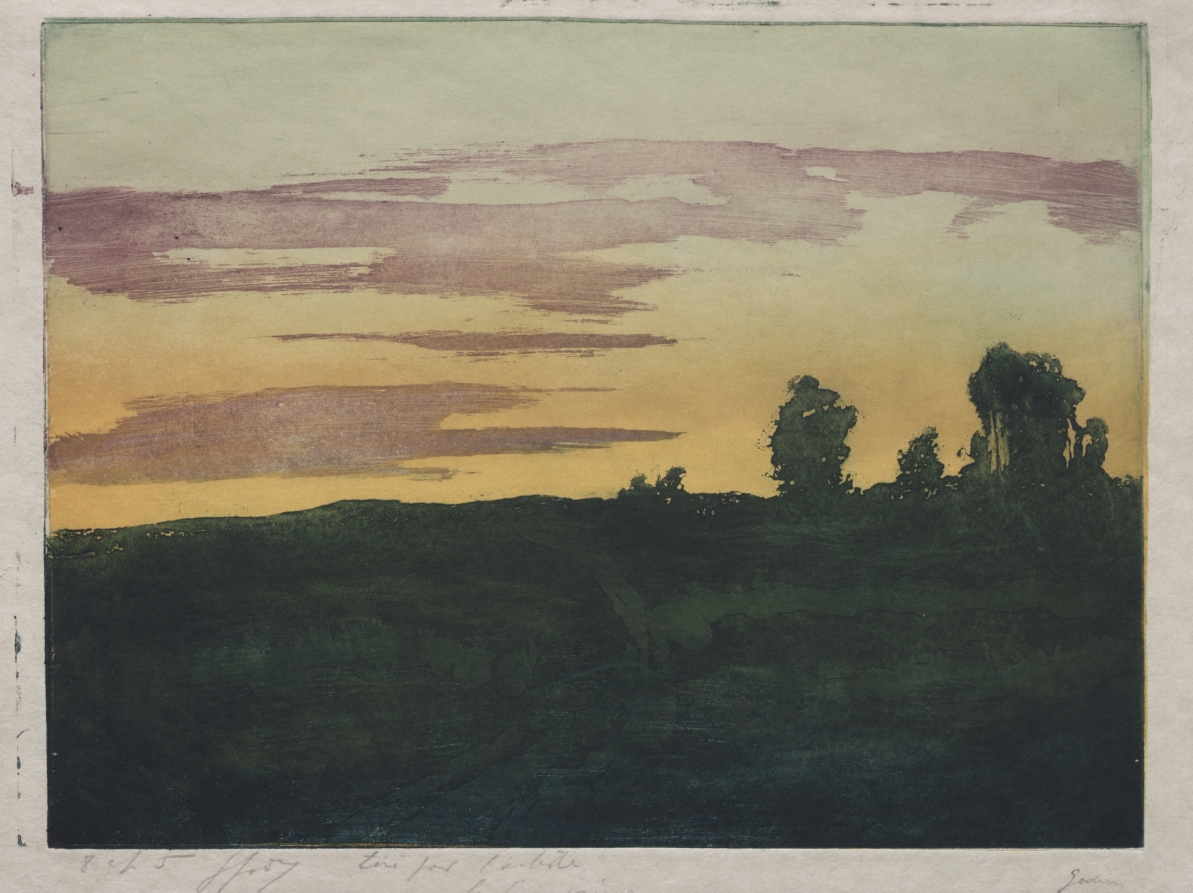
Urban Silhouette Research: The Yellow Evening — Structural Poetics of the Liminal Instant
I. Geometric Integrity: The Architecture of Suspension
The compositional armature of The Death of Socrates operates as a closed structural system. The triangular configuration—Socrates at the apex, his disciples distributed along the base—functions not as narrative arrangement but as load-bearing geometry. Every figure is a vector; every gesture is a joint. The white robe does not drape; it constructs. It establishes a vertical axis of moral gravity that anchors the entire pictorial field. For Addison Fashion, this is the foundational principle of the 2026 executive silhouette: the body as a column, the garment as a structural envelope that refuses ornamentation in favor of tectonic clarity.
The leftward light source introduces a secondary geometric system—a diagonal shear that cuts across the triangular mass, creating tension between stability and directional force. This is the precise mechanism we translate into tailoring: a shoulder line that holds horizontal integrity while the lapel rolls on a subtle diagonal, generating controlled asymmetry. The result is a silhouette that appears immovable yet is perpetually on the verge of departure. The executive does not occupy space; she organizes it.
II. The Meiping Vase: Surface as Temporal Archive
The Meiping vase presents an inverted structural logic. Where the Neoclassical painting builds from the base upward, the vase descends from the shoulder—a single, unbroken arc that tapers to a narrow foot. This is the silhouette of containment, of internal pressure held by external restraint. The wave pattern, rendered in continuous underglaze blue, operates as a two-dimensional skin stretched over a three-dimensional volume. The motif does not decorate; it records. Each涡纹 (vortex) is a temporal unit, a moment of turbulence frozen into ceramic permanence.
For the 2026 executive wardrobe, this translates into fabric as document. Surfaces must carry information—not through print or embellishment, but through the inherent memory of the material itself. A double-faced cashmere that reveals its structure at the seam. A bonded wool that holds a crease as if carved. The Addison principle: the garment should read as an artifact that has already survived something. The wearer does not purchase newness; she acquires patina.
III. The Liminal Instant: Between Dissolution and Form
Both artworks converge on a single problem: how to give form to the unrepresentable. Socrates reaches for the cup; the wave reaches for its own origin. Neither gesture completes. The painting and the vase are both studies in arrested motion—the moment before, the moment after, but never the moment itself. This is the aesthetic of the threshold, and it is the defining temporal condition of the urban executive in 2026.
The contemporary executive exists in permanent transition: between meetings, between cities, between identities. The silhouette must accommodate this liminality without collapsing into shapelessness. The solution is a garment that functions as a portable architecture—structured enough to impose order on chaos, fluid enough to move through it. Consider a coat with a self-fabric belt that can be cinched to create a waist or released to form a column. A trouser with a hidden gusset that allows for the stride of transit while maintaining a razor-sharp break. These are not features; they are philosophical positions rendered in cloth.
IV. Urban Materiality: The Weight of Silence
The internal DNA of this research insists on silence as a carrier of meaning. The Socratic white robe absorbs light; the ceramic glaze reflects it. Both are surfaces that do not announce themselves. They wait. This is the material ethic for Addison Fashion's 2026 output: fabrics that require proximity to be understood. A matte ivory wool that reveals its weave only under direct inspection. A slate silk that moves without rustle. A silver hardware that is felt rather than seen.
The urban environment is loud. The executive silhouette must be quieter than its surroundings. This is not minimalism as absence but minimalism as density—every element present, nothing extraneous. The geometric integrity of the artwork teaches us that structure is not restriction; it is the condition of freedom. The triangle holds because its angles are precise. The vase endures because its curve is resolved. The 2026 silhouette will be defined by the same principle: a form so considered that it becomes inevitable.
V. Conclusion: The Discipline of the Threshold
The Yellow Evening—the title itself suggests a moment of transition, the hour when day surrenders to night. This is the temporal register of the Addison executive: always at the threshold, never fully arrived. The silhouette must therefore be a garment of departure. It must hold the body with the clarity of a Neoclassical composition and the continuity of a ceramic wave. It must be structured enough to withstand the gaze and silent enough to disappear into the wearer's intention.
The final proposition: the 2026 executive silhouette is not a shape but a system. It is a set of geometric decisions—shoulder angle, waist suppression, hem volume—that function together as a closed argument. The argument is this: form is not the enemy of feeling. Form is the only vessel strong enough to carry it. Socrates drank; the wave turned; the garment holds. This is the Addison method.