Urban Form: Clog-shaped Teabowl
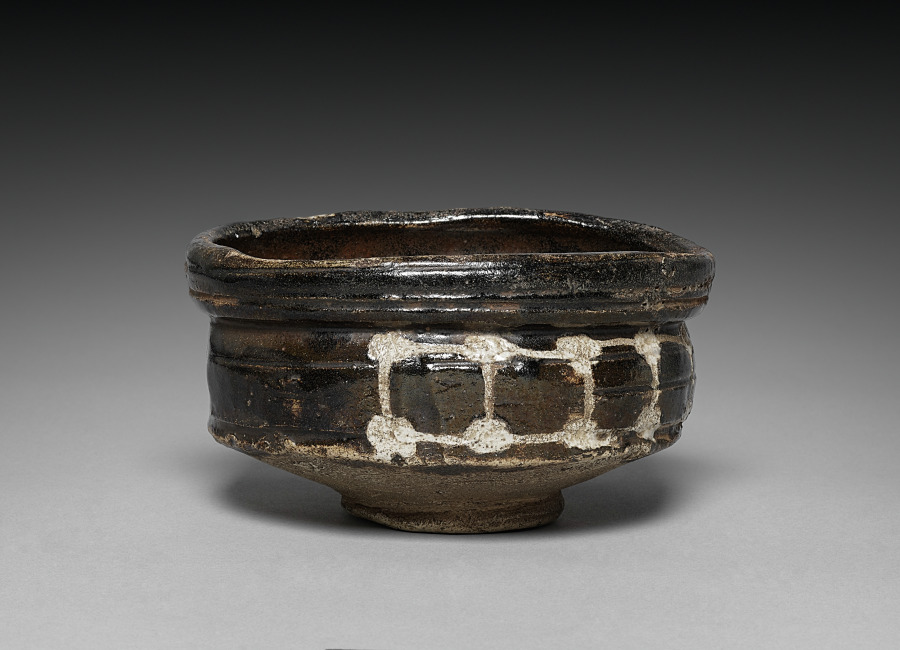
Urban Silhouette Research: The Clog-Shaped Teabowl as Structural Paradigm
I. Geometric Integrity: The Architecture of Containment
The clog-shaped teabowl presents a deceptively austere geometry. Its silhouette is defined by a truncated cone—a form that narrows at the base and expands with controlled restraint toward a lipped rim. This is not the voluptuous curve of the Song meiping, nor the heroic contrapposto of David's Socrates. It is a geometry of compression and release: the foot ring anchors the form with architectural finality, while the walls rise with a subtle, almost imperceptible outward flare. The profile is neither symmetrical nor asymmetrical in any obvious sense; it occupies a liminal zone where functional necessity and aesthetic intention converge.
For the 2026 executive silhouette, this geometry translates into a vocabulary of contained expansion. The teabowl does not shout its presence; it asserts itself through proportion. The ratio of height to rim diameter—approximately 1:1.2 in the classical clog form—establishes a golden mean of domestic scale that, when scaled to the body, produces a silhouette both grounded and aspirational. The executive jacket for 2026 will echo this: a shortened, slightly flared hem that releases from a fitted waist, creating a trapezoidal volume that suggests authority without aggression.
II. Structural Poetics: The Dialectic of Stillness and Flow
The teabowl's surface, when glazed in celadon or slate, carries the memory of the kiln. The wave pattern—whether incised, carved, or subtly molded—introduces a temporal dimension to a static object. The waves do not crash; they undulate with the rhythm of breath. This is the same dialectic that the internal DNA identifies between David's Death of Socrates and the meiping: the tension between narrative arrest and cyclical return.
In the teabowl, this dialectic is more intimate. The vessel is held in two hands. Its warmth radiates. The wave pattern, when present, is felt as much as seen—a tactile poetics that resists the purely visual. For Addison Fashion, this translates into materiality that engages the hand: brushed wool that invites touch, silk-cotton blends that drape with a weighted fluidity, hardware that is felt before it is seen. The 2026 executive silhouette will not be a spectacle; it will be an experience of proximity.
The clog-shaped teabowl also embodies the aesthetics of repair. Its form is ancient, its function unchanged for centuries. Yet within its modest parameters, infinite variation exists: the angle of the foot, the thickness of the lip, the depth of the carve. This is minimalism as generative constraint—a principle that will define the 2026 wardrobe. The executive will not require more options; she will require better proportions. A single jacket, cut with the precision of a teabowl's rim, will outperform a dozen approximations.
III. Urban Materiality: From Kiln to Concrete
The teabowl's materiality is a study in transformation under pressure. Clay, dug from the earth, is shaped by hand, dried, and subjected to the violence of the kiln. What emerges is not a record of that violence but its transcendence: a surface that is smooth, cool, and seemingly inevitable. The glaze pools in the carved waves, creating micro-tonal variations that reward sustained attention.
For the urban executive, this translates into fabrics that carry the memory of their making. Slate-toned wool with a subtle sheen. Technical silks that resist creasing. Leather that patinas rather than cracks. The 2026 silhouette will favor materials that age with dignity—that reveal their history without demanding attention. The clog-shaped teabowl does not advertise its firing; it simply is. The executive wardrobe must achieve the same quiet authority.
Furthermore, the teabowl's scale is instructive. It is not a monumental object. It fits the hand. It occupies a modest footprint on the table. Yet its presence is absolute. The 2026 executive silhouette will embrace this paradox of smallness and significance: a silhouette that is not oversized for the sake of drama, but precisely scaled to the body's architecture. The shoulder line will be exact. The sleeve will fall with intention. The hem will hover at the knee with the same calculated suspension as the teabowl's rim above its foot.
IV. The 2026 Silhouette: A Synthesis
Drawing from the clog-shaped teabowl, the Addison Fashion 2026 executive silhouette will be defined by three principles:
1. Contained Volume. The silhouette will not balloon or constrict. It will expand and contract with the body's movement, maintaining a trapezoidal integrity from shoulder to hem. Jackets will feature a subtle A-line release; trousers will taper with architectural precision.
2. Tactile Poetics. Surfaces will invite touch. Wave-like textures—whether woven, pleated, or embossed—will introduce rhythm into stillness. The executive will be felt before she is seen.
3. Material Transcendence. Fabrics will carry the memory of their making. Slate, onyx, ivory, silver, sand—these are not colors but atmospheres. They will absorb light and return it with subtlety.
The clog-shaped teabowl is not a heroic object. It does not narrate death or triumph. It simply holds. And in its holding—water, tea, silence, time—it achieves what David's Socrates could only point toward: the eternal within the everyday. The 2026 executive silhouette will do the same. It will not shout. It will contain.