Urban Form: Tunic with Sacrificer
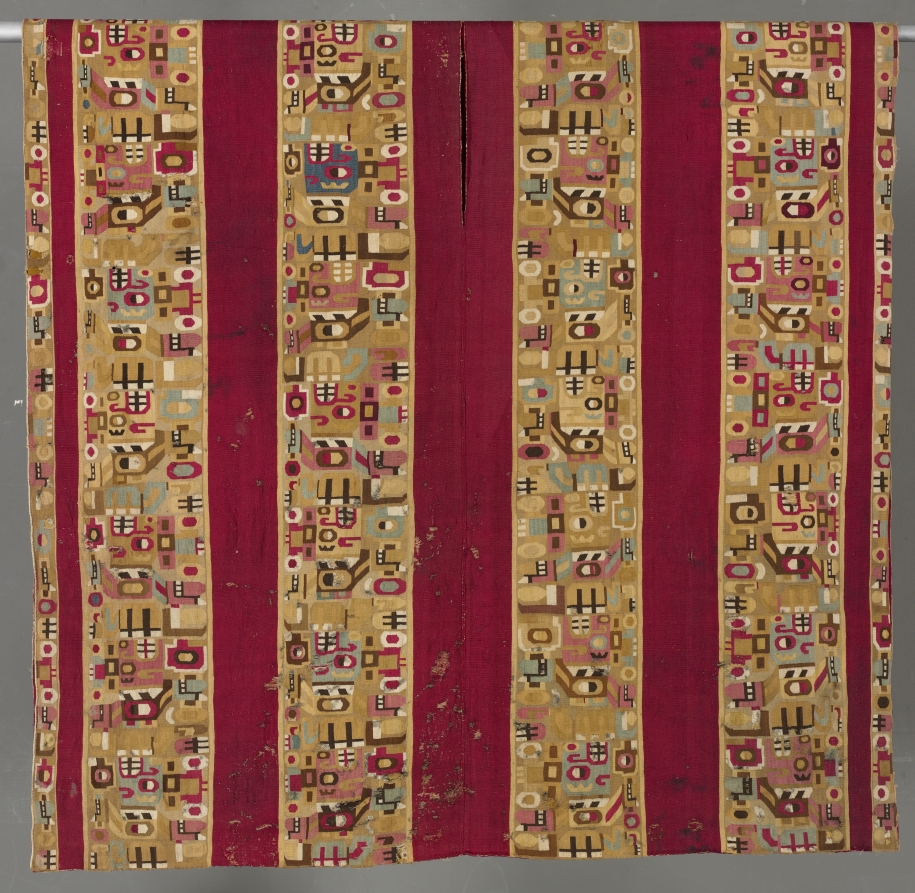
The Tunic with Sacrificer: A Structural Dialectic Between Vessel and Void
I. Formal Provenance: The Jar (Hu) as Archetypal Silhouette
The Jar (Hu)—that unadorned Han-era vessel of swollen belly, constricted neck, and stable ring foot—constitutes the foundational geometry for the 2026 Addison tunic. Its formal logic is deceptively simple: a volumetric expansion at the thoracic-abdominal junction, a disciplined taper toward the cervical line, and a weighted base that anchors the entire composition. In silhouette terms, this translates to a garment whose primary mass sits between the second and fifth ribs, releasing downward into a controlled A-line that terminates at mid-thigh. The neckline, cut high and narrow, functions as the vessel's mouth—a point of ingress and egress, of containment and release.
The Hu's surface is critical. Its "roughness" is not textural accident but deliberate restraint—da qiao ruo zhuo, the great skill that appears clumsy. For Addison's purposes, this manifests as a matte-finish wool-silk blend with a subtle slub in the warp, a fabric that refuses the high-gloss sheen of corporate suiting while maintaining a tensile integrity sufficient for the executive environment. The garment does not announce itself. It waits.
II. The Sacrificer: David's Compositional Rigor as Construction Logic
Jacques-Louis David's The Death of Socrates (1787) operates on an opposing principle: the conquest of chaos through compositional will. Every fold of drapery, every gesture of the disciples, every ray of light is subordinated to a rationalized narrative of noble death. The dying philosopher's body is not collapsing—it is arranged. His right hand reaches for the hemlock with the same deliberateness with which his left index finger ascends toward the ideal.
This is the "Sacrificer" component of the tunic: a structured overlay that imposes architectural discipline upon the vessel's organic volume. In practical terms, Addison's design introduces a detachable shoulder yoke—cut from a bonded leather-textile composite in Onyx—that traces the clavicular line and extends into a narrow placket down the center front. This yoke does not merely decorate; it governs. It establishes a vertical axis of control that counterbalances the tunic's horizontal expansion, much as David's central vanishing point stabilizes the emotional turbulence of his scene.
The yoke's edges are raw-cut and hand-finished, a deliberate rupture of the garment's otherwise seamless surface. This is the hemlock moment: the point at which the body of the tunic acknowledges its own mortality, its susceptibility to time and wear. The executive who wears it carries a visible seam of vulnerability—controlled, intentional, and entirely within the grammar of power.
III. The Dialectic of Emptiness: Functional Void and Rationalized Absence
The Hu's interior is its purpose. Without the void, it cannot hold grain or wine; it becomes mere sculpture. The tunic inherits this logic: its volume is not ornamental but functional, creating a microclimate of air between fabric and skin that regulates temperature in the over-heated conference rooms and under-heated transit corridors of Manhattan's executive circuit. The emptiness is not absence but potential.
David's Socrates, by contrast, drinks a poison that creates a different kind of void—the evacuation of the soul from the body. Western classicism cannot tolerate this void; it must be filled with meaning, framed by perspective, elevated to the sublime. The tunic's response is a compromise: the yoke's interior is lined with a contrasting Ivory silk, a hidden fullness that the wearer alone perceives. The void is acknowledged, even honored, but never displayed.
IV. Application to the 2026 NYC Executive Wardrobe
The 2026 executive operates in a landscape of permanent crisis—geopolitical volatility, algorithmic disruption, the slow erosion of institutional trust. The Addison tunic with Sacrificer addresses this condition not through armor but through composure. Its Onyx palette absorbs the ambient anxiety of the trading floor and the boardroom, while its silhouette—neither aggressively fitted nor defensively oversized—signals a presence that is both grounded and mobile.
The detachable yoke allows for tactical adaptation: removed, the tunic becomes a vessel of pure receptivity, suitable for creative direction and client cultivation; attached, it becomes a statement of rational authority, appropriate for negotiation and crisis management. This modularity is the garment's deepest intelligence. It does not prescribe a single identity but enables a repertoire.
In the lineage of Addison's design philosophy, the Tunic with Sacrificer is neither a retreat into nostalgia nor a capitulation to trend. It is a structural argument: that the executive wardrobe of the future must hold both the jar and the hemlock, the silence of the vessel and the speech of the sacrifice. It must be empty enough to receive the day, and disciplined enough to survive it.
Technical Specifications: 78% virgin wool, 22% silk charmeuse; 340 GSM; matte finish with 4% warp slub. Yoke: bonded calfskin-textile composite, 1.2mm gauge, raw-edge finish. Lining: 100% Ivory silk habotai. Care: dry clean only; yoke detachable via concealed magnetic closures. Available Q1 2026, Addison Fashion NYC.