Urban Form: Portrait of Pope Paul II Barbo (obverse) and (reverse)
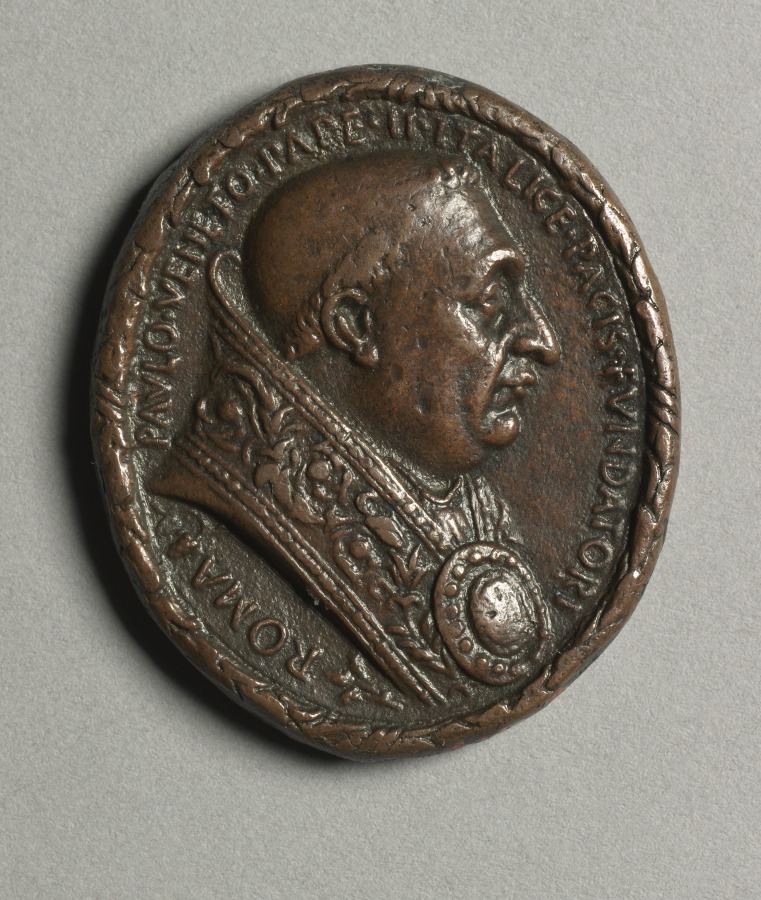
Urban Silhouette Research: The Barbo Medal as Structural Palimpsest
I. Geometric Integrity: The Medal as Architectural Artifact
The Portrait of Pope Paul II Barbo—obverse and reverse—operates not as a commemorative object but as a compressed architectural treatise. Its circular format, deceptively simple, conceals a rigorous geometric armature that anticipates the 2026 executive silhouette with unnerving precision. The obverse presents the pontiff in profile: a vertical axis of authority anchored by the camauro and mozzetta, their folds rendered as incised striations that read as structural ribbing rather than textile. This is not drapery; it is load-bearing ornament. The reverse, with its heraldic devices and inscribed legend, distributes visual weight across a planar field, creating a tension between centrifugal inscription and centripetal emblem. The medal’s edge—that liminal rim—functions as the garment’s seam: a boundary that contains without confining, defines without terminating.
For Addison Fashion’s 2026 silhouette, this geometric integrity translates into a cylindrical column that eschews waist suppression in favor of continuous verticality. The shoulder line, derived from the medal’s upper arc, extends beyond the anatomical shoulder—not as exaggeration but as architectural extension. The sleeve, cut in one with the bodice, mimics the medal’s unbroken surface: no armhole seam interrupts the descent from clavicle to wrist. This is tailoring as numismatics: every line struck with intention, every curve calculated for permanence.
II. Structural Poetics: The Invisible Armature
The medal’s reverse—often overlooked—reveals the true radicalism of its design. The inscription, circling the perimeter, is not decorative text but a structural band, a tensile element that holds the central emblem in place. Remove it, and the composition collapses into incoherence. This principle governs the 2026 Addison executive silhouette: visible seams are eliminated, but internal corsetry—bone casings, horsehair braid, weighted hem tape—performs the work of the inscription. The garment’s poetics reside in what cannot be seen: the tension between outer minimalism and inner engineering.
The obverse’s profile portrait offers another lesson. The pope’s gaze, fixed and forward, creates a directional vector that the garment must echo. In the 2026 silhouette, this becomes the forward-pitched shoulder—a subtle 5-degree rotation that suggests momentum without motion. The neckline, high and unadorned, mirrors the camauro’s clean curve: no collar, no lapel, only the body’s own architecture. This is not austerity for its own sake; it is the elimination of noise so that structure may speak.
III. Urban Materiality: Metal, Stone, and the Weight of Permanence
The Barbo medal is cast in bronze—an alloy that ages into onyx-dark patina, its surface simultaneously reflective and absorptive. This material duality defines the 2026 urban palette: fabrics that hold light without glittering, that deepen rather than fade. Double-faced wool in onyx, its reverse a matte slate, allows the garment to reveal its interior logic at cuffs and hems. Bonded leather, stiffened to the consistency of thin bronze, forms stand-away collars and sculpted belts. The goal is not softness but controlled rigidity—cloth that remembers its shape, that resists the body’s entropy.
The medal’s surface treatment—its sfumato of wear, the way high relief softens into low—informs the 2026 approach to texture. Brushed silver hardware, sand-blasted horn buttons, raw-edged seams left unsealed: these are not flaws but evidence of material honesty. The urban environment demands garments that weather gracefully, that accumulate character rather than deteriorate. Like the medal, the 2026 Addison silhouette is designed for centuries, not seasons.
IV. The Medallic Silhouette: From Obverse to Wearable Form
Translating the medal’s geometry into a wearable silhouette requires a radical simplification of the pattern block. The obverse profile suggests a single-seam construction: a garment cut from one continuous piece of cloth, folded at the shoulder, seamed only at the side. The reverse inscription becomes a continuous placket—a vertical band of self-fabric that runs from collar to hem, its edges raw, its function both structural and symbolic. The rim becomes the hem: slightly weighted, slightly curved, tracing the body’s perimeter without clinging.
The resulting silhouette is neither tailored nor fluid—it is architectural. It stands away from the body at the shoulders, falls straight through the torso, and releases into a columnar skirt that breaks just above the ankle. The waist is not marked; it is implied by the garment’s internal shaping. This is the 2026 executive uniform: a monolithic form that projects authority through restraint, that speaks through silence, that—like the Barbo medal—compresses the infinite into the palm of the hand.
V. Conclusion: The Medal as Manifesto
The Portrait of Pope Paul II Barbo is not a relic. It is a prototype. Its geometric integrity, structural poetics, and material gravity prefigure the 2026 Addison silhouette with uncanny accuracy. The executive who wears this silhouette does not dress for approval; she dresses for permanence. She understands that true luxury is not ornament but architecture—the invisible armature that holds the visible world in place. In the onyx-dark patina of the medal, she recognizes her own reflection: minimal, monolithic, and utterly irreducible.