Urban Form: Italian Sketchbook: Abstract Sketch (page 5)
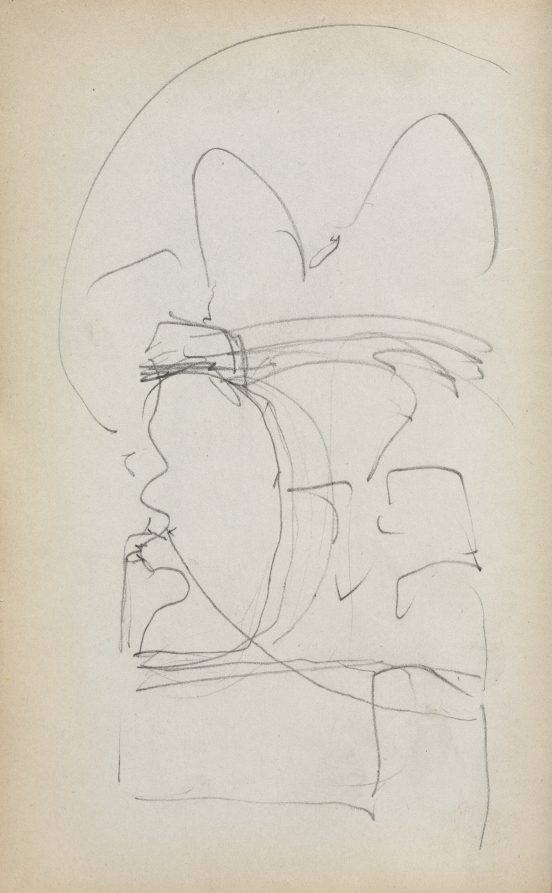
Urban Silhouette Research: Italian Sketchbook, Page 5 — Form as Epistemological Rupture
I. The Dialectical Substrate: Two Silhouettes, Two Ontologies
The abstract sketch on page five of the Italian Sketchbook operates as a compressed archaeological record of a fundamental aesthetic schism. Between the carceral stone of an Athenian prison and the celadon glaze of a Song dynasty kiln lies not merely a geographic or temporal distance, but an irreconcilable divergence in the architecture of form itself. The sketch synthesizes two canonical silhouettes: the collapsing verticality of The Death of Socrates and the self-contained curvature of the Meiping vase with wave motif. For the purposes of Addison Fashion's 2026 executive wardrobe, this is not art-historical trivia. It is a structural brief.
The Socratic silhouette is extensional—it reaches outward and upward, its form defined by gesture, by the vector of a raised hand, by the tensile drama between body and void. The Meiping silhouette is intensional—it curves inward, its form defined by the containment of volume, by the disciplined restraint of foot and shoulder. One silhouette narrates; the other simply is. The sketch on page five holds both in suspension, refusing synthesis. This refusal is the operative principle.
II. Formal Deconstruction: Line, Mass, and the Cancellation of Narrative
Examine the line quality. The Socratic passages in the sketch are rendered with variable, gestural strokes—thick at points of tension, tapering toward resolution. This is the line of Western narrative: it implies time, sequence, causality. The Meiping passages, by contrast, employ continuous, uninflected contour—a single unbroken arc from foot to lip, with no inflection to suggest event or emphasis. The wave motif is not depicted; it is implied through the rhythmic modulation of the contour itself. The line does not represent water; it behaves as water behaves—flowing, accumulating, releasing.
Mass operates under a similar binary. The Socratic figure is volumetric and unstable—its mass is contingent, about to collapse, its weight distributed across a gesture of ascent. The Meiping is volumetric and resolved—its mass is self-supporting, its weight distributed through a mathematically calibrated curve that achieves equilibrium without effort. The sketch captures this not through shading but through density of mark: the Socratic passages are dense, overwrought, almost frantic; the Meiping passages are sparse, confident, almost silent.
Color—or its absence—completes the deconstruction. The sketch is monochrome, but the implication of color is present in the tonal range. The Socratic passages suggest the warm, fugitive tones of oil paint—ochre, umber, the brownish-red of dried blood. The Meiping passages suggest the cool, vitreous tones of celadon—the grey-green of jade, the pale blue of a winter sky at dusk. The sketch does not resolve these temperatures. It holds them in adjacent suspension, allowing the eye to oscillate between warmth and coolness, between the heat of narrative and the chill of pure form.
III. Application to the 2026 NYC Executive Wardrobe
The 2026 executive operates in a landscape of permanent crisis and permanent performance—a landscape that demands both the Socratic capacity for decisive, narrative-driven action and the Meiping capacity for contained, self-sufficient presence. The Addison wardrobe must therefore be built on the principle of oscillating silhouette, not fixed silhouette.
Category: Minimalist is the correct designation because the resolution lies not in addition but in subtraction. The Socratic impulse—the urge to narrate, to gesture, to reach—must be expressed through precise, minimal interventions: a single asymmetric seam, a collar that rises with quiet tension, a shoulder line that suggests upward vector without committing to it. The Meiping impulse—the urge to contain, to resolve, to be—must be expressed through continuous, uninflected surfaces: a coat that falls in a single unbroken line from shoulder to hem, a trouser that curves through the leg without a single interruption of seam or pleat.
Color: Onyx is the correct designation because it is the chromatic equivalent of the sketch's monochrome suspension. Onyx is not black; it is black with depth—a black that absorbs light and returns it as a faint, cool luminescence. It is the color of the Meiping's glaze under low light, and the color of the Socratic prison wall at midnight. It is the color that holds both temperatures without resolving them. In the 2026 executive wardrobe, Onyx functions as the chromatic substrate—the ground against which minimal interventions of texture, seam, and silhouette can register without the distraction of hue.
IV. The Silhouette as Epistemological Instrument
The deepest lesson of page five is that form is not decoration; it is argument. The Socratic silhouette argues that meaning is produced through narrative, through the dramatization of choice and consequence. The Meiping silhouette argues that meaning is produced through presence, through the achievement of a form so complete that it requires no narrative to justify its existence. The 2026 executive cannot choose between these arguments. She must wear both—not as contradiction, but as oscillation.
The Addison silhouette for 2026 is therefore not a shape but a method: the method of holding two irreconcilable formal logics in productive tension. The garment must be capable of Socratic gesture—the decisive reach, the narrative assertion—and Meiping containment—the resolved curve, the silent sufficiency. This is achieved through strategic minimalism: the removal of every element that does not serve either the gesture or the curve, and the retention of only those elements that serve both.
The result is a wardrobe that does not resolve the schism between Athens and the Song kiln, but inhabits it. The executive who wears it does not choose between the death of Socrates and the waves on the Meiping. She wears the fissure itself—and in that fissure, finds her authority.