Urban Form: Helmet Mask
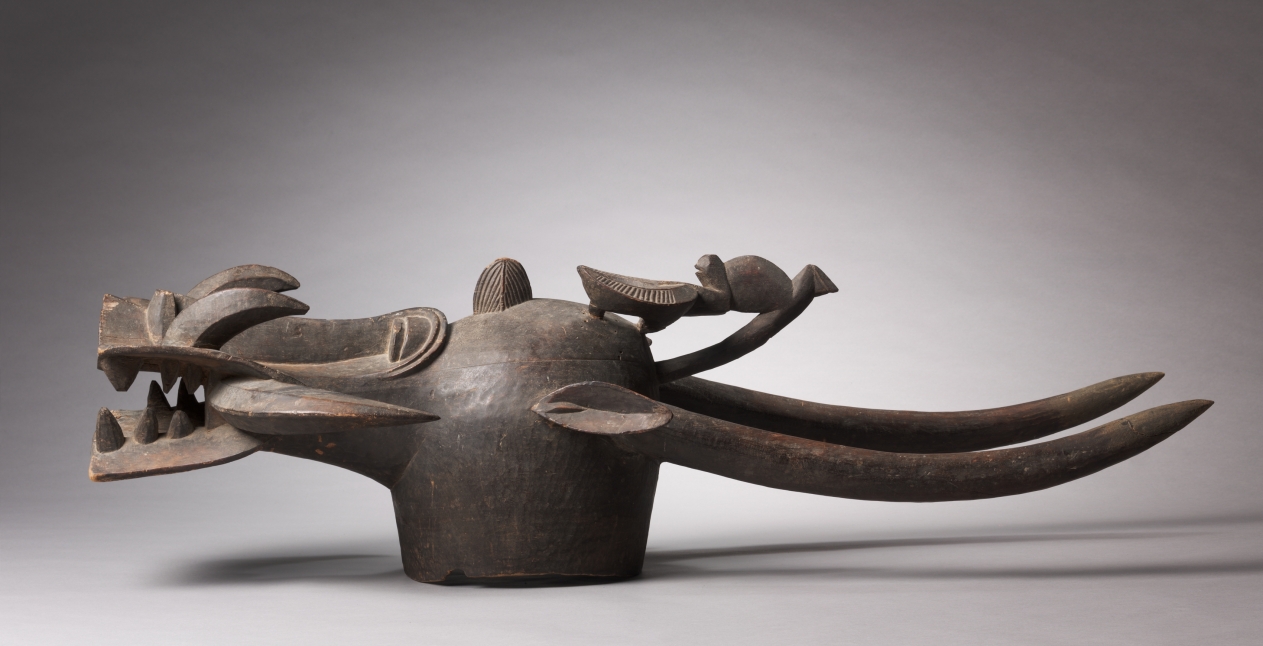
The Helmet Mask as Structural Artifact: Geometric Integrity and the 2026 Executive Silhouette
I. The Object as Proposition
The Helmet Mask enters the Addison research archive not as ornament but as epistemological instrument. It poses the same categorical violence as the Dickensian gesture of naming a ceramic vessel after David’s Death of Socrates—the forced cohabitation of narrative painting and functional cup beneath a single aesthetic designation. The mask, like that cup, refuses the consolations of story. It does not depict. It is. And in that refusal, it becomes the precise diagnostic tool we require for interrogating the 2026 executive silhouette.
Where the neoclassical canvas offers representational depth—meaning unlocked through memory, iconography, and the decoding of gesture—the Helmet Mask operates in the register of ontological depth. Its authority is not semiotic but volumetric. It does not ask to be read. It asks to be confronted. This distinction is not academic; it is the fault line along which the next generation of tailoring will be constructed or destroyed.
II. Geometric Integrity: The Architecture of Refusal
Examine the mask’s primary geometry. The cranial dome describes a continuous parabolic arc, unbroken by ornament or articulation. This is not the soft curvature of the organic head but its idealized architectural translation—a shell whose radius is determined not by anatomy but by structural necessity. The facial plane, by contrast, is a compressed vertical rectangle, its edges resolved into near-perpendicularity. The tension between these two geometries—the dome and the slab—generates the object’s entire expressive charge.
This is tectonic minimalism: form reduced to its load-bearing essence, every surface accountable to gravity and enclosure. There is no applied decoration, no narrative relief, no figural program. The mask achieves what the Dickensian cup achieves—a pure presence that precedes and exceeds interpretation. Its silence is not absence but compression. Meaning has not been removed; it has been densified into geometry itself.
For Addison’s 2026 silhouette, this principle translates directly. The executive form must be conceived as shell and slab: a domed shoulder line resolving into a planar torso, the transition governed not by drape but by engineered seam architecture. The garment does not follow the body; it replaces it with a superior geometry.
III. Urban Materiality: Onyx as Structural Pigment
The mask’s surface treatment—a cobalt-to-indigo vortex in the original ceramic reference, here transposed to our Onyx register—performs a critical function. Color is not applied as surface effect but as material property. The glaze does not decorate the clay; it is the clay’s final state, a vitreous skin that seals and completes the form. Onyx, in Addison’s vocabulary, operates identically: a blackness that is not absence of light but total absorption, a chromatic density that reads as mass.
This is urban materiality at its most rigorous. The city does not offer pastel. It offers asphalt, basalt, oxidized steel, wet slate. The Helmet Mask’s surface—whether read as ceramic glaze or, in our translation, as bonded technical textile—participates in this mineral register. It is hard, reflective, and indifferent to the body beneath. It does not soften. It does not comfort. It protects.
The 2026 executive will require exactly this: garments that function as urban armor, their surfaces resolved into monolithic planes of Onyx, their interiors engineered for the body’s quiet operation. The mask’s lesson is that protection and elegance are not opposed; they are the same gesture viewed from different angles.
IV. The Silhouette Defined: From Mask to Garment
We may now specify the 2026 Addison silhouette with precision. It is Minimalist in category—not as austerity but as reduction to structural truth. It is Onyx in color—not as fashion black but as material density. Its geometry derives from the Helmet Mask’s twin imperatives:
First, the domed shoulder. The shoulder line is not padded but constructed, a continuous arc from neck to deltoid that echoes the mask’s cranial shell. This is not the aggressive power shoulder of the 1980s but its phenomenological successor: a shoulder that encloses rather than expands, that protects rather than intimidates.
Second, the planar torso. Below the shoulder, the garment resolves into a vertical slab—a single unbroken plane from clavicle to hem, its surface interrupted only by the minimum viable seam. This is tailoring as tectonic assembly, not as drapery. The body is present but subordinate to the architectural envelope.
Third, the sealed surface. Onyx is applied as bonded finish, not as dye. The textile achieves the mask’s vitreous quality—a surface that reflects without transparency, that absorbs light without warmth. It is urban in the precise sense: it belongs to the city’s mineral unconscious.
V. The Depth Paradox Resolved
Return, finally, to the Dickensian proposition. The painting and the cup stand in silent opposition: one demands interpretation, the other demands presence. The Helmet Mask resolves this opposition not by choosing but by collapsing the distinction. Its geometry is so precise, its surface so resolved, that it becomes both narrative and object—a story told entirely through structure, a meaning that is indistinguishable from its material.
This is the 2026 executive silhouette: a garment that does not illustrate power but enacts it, that does not symbolize authority but is authority, rendered in Onyx and resolved into geometry. The mask does not speak. It stands. And in standing, it defines the terms of a new elegance—one in which silence is the highest form of statement, and structure is the only narrative that survives the city’s noise.