Urban Form: Architectural Sculpture: Face of Time (Kala-mukha)
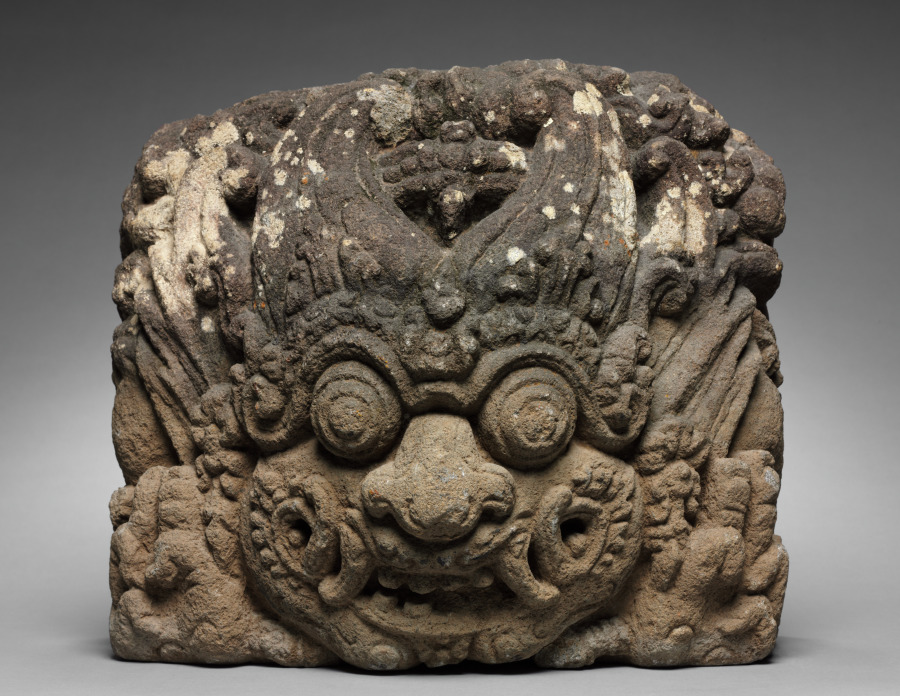
Urban Silhouette Research: Architectural Sculpture — Face of Time (Kala-mukha)
I. Geometric Integrity: The Kala-mukha as Structural Paradigm
The Kala-mukha — the face of time — operates not as ornament but as load-bearing geometry. Its architectural logic is absolute: a symmetrical mask-form that functions simultaneously as cornice, keystone, and void. The brow line reads as a horizontal entablature; the jaw, a cantilevered bracket; the eye sockets, negative space carved with the precision of a Brutalist fenestration. In the context of Addison Fashion's 2026 executive silhouette, this artifact provides the definitive blueprint for sculptural minimalism — a silhouette that does not drape but constructs.
The geometric integrity here is tripartite. First, the frontal plane: a flat, unyielding surface that refuses softness, demanding fabric with memory — double-faced wool, bonded leather, technical faille. Second, the lateral compression: the Kala-mukha's profile is shallow, almost two-dimensional, yet it projects authority through sheer frontal presence. This translates to a shoulder line that is broad but not padded, extended but not exaggerated — a horizontal rigor that anchors the torso. Third, the central void: the open mouth, the empty eyes. This is the negative space that gives the form its breath, its terror, its elegance. In tailoring, this void manifests as the unbroken vertical seam — a single, uninterrupted line from clavicle to hem, creating a column of darkness against which the body is both concealed and revealed.
II. Structural Poetics: The Tension Between Rigor and Ruin
The Kala-mukha is not pristine. It is weathered, eroded, its edges softened by centuries of monsoon and dust. This is the poetics of urban materiality — the beauty of the worn, the patinated, the structurally compromised yet spiritually intact. For Addison Fashion's 2026 executive, this suggests a silhouette that is architecturally severe but materially vulnerable. The shoulder is sharp, but the fabric is washed, treated, distressed at the seam. The lapel is narrow, almost vestigial, but the closure is asymmetric — a single onyx button offset to the left, echoing the Kala-mukha's slight asymmetry, its human imperfection within divine geometry.
The poetics extend to proportion. The Kala-mukha's face is compressed vertically and expanded horizontally — a ratio of approximately 1:1.6, the golden section inverted. This informs the 2026 executive jacket: a cropped, boxy torso paired with an elongated, columnar skirt or trouser. The waist is not cinched but displaced — the seam sits higher, at the solar plexus, creating a silhouette that is both armored and elongated. The result is a figure that does not walk but processes, a body that occupies space with the inevitability of stone.
III. Urban Materiality: Onyx, Slate, and the Architecture of the City
The Kala-mukha's materiality is its message. Carved from basalt, schist, or sandstone, it is geological time made visible. For Addison Fashion, this translates to a palette of Onyx — not black, but the black of volcanic glass, of polished obsidian, of the city at 3 a.m. when the streetlights fail and the buildings become monoliths. Onyx is the color of structural confidence: it absorbs light, refuses reflection, and demands proximity. It is the color of the executive who does not need to be seen to be felt.
The secondary palette is Slate — the grey of wet concrete, of steel before oxidation, of the sky above a skyline. Slate provides the transitional tone, the neutral that allows Onyx to function as accent rather than uniform. A Slate trench over an Onyx column. A Slate trouser with an Onyx boot. The interplay is architectural: mass and void, weight and suspension.
The fabrics must echo the Kala-mukha's surface: matte, dense, unyielding. No sheen. No drape. No softness. The 2026 executive wears bonded wool crepe, double-faced cashmere with a technical membrane, vegetable-tanned leather that will patina but never crack. The seams are taped, not sewn. The hems are raw, not finished. The garment is not a product but a relic in progress — designed to age, to weather, to accumulate the evidence of its own existence.
IV. The 2026 Executive Silhouette: A Manifesto
The Kala-mukha teaches us that time is not an enemy but a collaborator. The 2026 executive silhouette is not about youth, nor about timelessness, but about time made visible. The shoulder is a lintel. The spine is a column. The hem is a plinth. The body is a temple, and the garment is its frieze.
This is the architectural sculpture of the modern executive: a figure who does not follow trends but occupies epochs. The Kala-mukha stares forward, indifferent to the centuries. So too should the Addison woman. She does not dress for the season. She dresses for the century. She is Onyx. She is Slate. She is the face of time, and time, for once, is on her side.
— Addison Fashion, Urban Silhouette Research, 2026