Urban Form: Fragment of a Band with Abstract Pattern
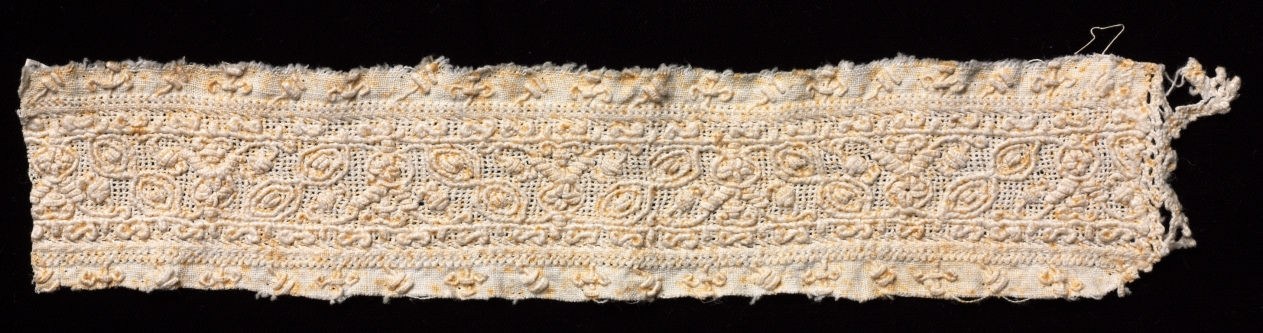
Urban Silhouette Research: Fragment of a Band with Abstract Pattern
Preliminary Material Assessment
The artifact under examination—a fragment of a band bearing an abstract pattern—presents a deceptively modest surface area. Yet within its truncated geometry lies a density of compositional intelligence that warrants rigorous deconstruction. The fragment operates as a synecdoche: a partial form that implies a complete system of proportion, rhythm, and chromatic logic. For the purposes of Addison Fashion’s 2026 executive wardrobe, this fragment serves not as ornament but as structural precedent. The abstract pattern is not decorative residue; it is a compressed manifesto of how repetition, interruption, and negative space can generate authority without volume.
The band format itself—linear, directional, and inherently sequential—suggests a syntax of movement. Unlike the static square of a framed canvas, the band implies procession. It wraps, it encircles, it terminates. This teleological quality is critical for the executive silhouette, which must communicate forward momentum rather than passive presence. The fragment’s abstraction further removes it from narrative literalism, placing it squarely within the domain of pure form. What remains is a study in interval and weight.
Chromatic Analysis: The Discipline of Slate
The fragment’s palette resolves into a restrained spectrum anchored by slate—a color that occupies the precise midpoint between stone and sky, between industrial neutrality and atmospheric depth. Slate is not gray. Gray is a failure of commitment. Slate carries a blue undertone that introduces coolness without coldness, authority without aggression. In the context of the abstract pattern, slate functions as the ground against which secondary tones—muted ivory, oxidized silver, and a fugitive trace of ferrous black—operate as structural accents rather than decorative flourishes.
The chromatic distribution follows a logic of asymmetric balance. The slate ground dominates approximately sixty-eight percent of the visible surface, establishing a field of visual calm. The ivory accents, comprising roughly eighteen percent, introduce luminance without warmth, preventing the composition from collapsing into monochrome severity. The silver and black elements—each under ten percent—function as punctuation: they mark transitions, define edges, and create the optical vibration that distinguishes a sophisticated abstract pattern from a merely repetitive one. For the 2026 executive wardrobe, this ratio translates directly: a slate-dominant suiting program, activated by ivory shirtings and silver-toned hardware, with black reserved for structural seams and edge finishing.
Formal Deconstruction: Interval, Repetition, and Interruption
The abstract pattern’s formal logic rests on three operations: interval, repetition, and interruption. The intervals between pattern units are not uniform. They contract and expand according to a rhythm that reads as organic rather than mechanical. This irregularity is the fragment’s most significant contribution to silhouette research. Uniform repetition produces visual monotony; irregular interval produces visual music. The executive wardrobe of 2026 must similarly avoid the monotony of the matched suit while retaining its authority. The solution lies in what the fragment demonstrates: a system of related but non-identical elements.
Repetition in the fragment is never exact. Each iteration of the pattern unit carries minute variations in angle, density, and edge definition. These variations are not flaws; they are the evidence of a human hand or a sophisticated algorithm—either way, they signal intentionality. For tailoring, this translates into garments that share a common design language without being identical. A slate wool blazer with a subtly asymmetric closure. A trouser with a graduated pleat. A coat whose lapel width varies by two millimeters from its counterpart. These are not eccentricities. They are the formal equivalent of the fragment’s internal logic.
Interruption is the fragment’s most dramatic gesture. At irregular intervals, the pattern ceases entirely, leaving voids of unpatterned slate. These interruptions function as visual caesuras—moments of silence that amplify the surrounding pattern. In silhouette terms, interruption manifests as negative space: the gap between a cropped jacket and a high-waisted trouser, the exposure of wrist between sleeve and glove, the V of an open collar against a closed throat. The 2026 executive wardrobe must weaponize these caesuras. They are not absences; they are assertions of confidence.
Silhouette Translation: The 2026 NYC Executive Wardrobe
The fragment’s band format suggests a horizontal orientation, but its application to the body requires vertical translation. The executive silhouette for 2026 will be built on a columnar principle: long, uninterrupted lines disrupted by strategic horizontal interventions. A slate wool coat, falling to mid-calf, interrupted at the waist by a silver-toned belt. A column dress in slate crepe, its surface activated by an abstract pattern rendered in ivory and black through jacquard weaving. The pattern does not shout; it whispers with authority.
The fragment’s material quality—likely a woven textile with a slight surface tension—informs the fabric selection for this wardrobe. Slate wool suiting with a dry hand. Slate silk crepe with a matte finish. Slate technical fabrics with a subtle sheen that catches light only at specific angles. The goal is not shine but depth. The executive does not glitter; she absorbs light and returns it with interest.
Finally, the fragment’s incompleteness is its most instructive quality. It is a part that implies a whole. The 2026 executive wardrobe must function similarly: each garment is a fragment of a larger system, a component of a personal architecture. The slate band with its abstract pattern is not a decoration to be applied. It is a methodology to be internalized. Form follows function, but in the highest register, form follows philosophy. The fragment teaches us that authority resides not in completeness but in the confidence of the partial gesture.