Urban Form: Standing Buddha
Urban Silhouette Research: The Standing Buddha as Architectural Prototype
I. The Geometry of Stillness
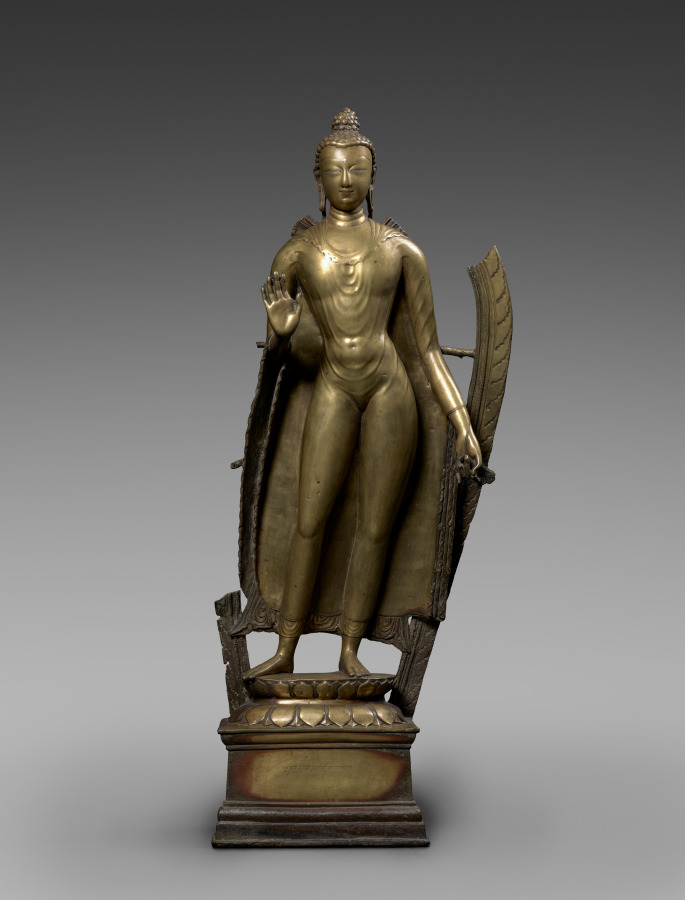
The Standing Buddha is not a figure. It is a column. A vertical axis rendered in flesh and drapery, its silhouette resolves into a single, unbroken line from the crown of the ushnisha to the hem of the robe. This is the geometry of compression—mass concentrated into a narrow vertical plane, the body reduced to its most essential architectural proposition: the load-bearing wall. For Addison Fashion's 2026 executive silhouette, this is the foundational premise. The shoulder line does not slope; it cantilevers. The waist does not cinch; it recedes. The hem does not flare; it terminates with the finality of a plinth meeting marble.
Consider the Udumbara Flowers plaque at the Tokyo National Museum. The flowers are not painted; they are permitted to appear—faint ink strokes that emerge from the wood grain like breath on cold glass. This is the principle of negative articulation: the garment does not impose form upon the body; it reveals the body's inherent architecture through strategic omission. The 2026 Addison executive jacket will follow this logic. Seams will not be sewn; they will be implied. Darts will not be cut; they will be suggested by the drape's natural fall. The wearer's silhouette emerges not from construction but from the disciplined absence of it.
II. The Chest for Storing Garments: Interiority as Power
The Kyoto scroll Chest for Storing Garments presents a more radical proposition. The exterior is functional, unremarkable—a vessel for daily utility. The interior, however, is a lotus field. This is the poetics of hidden structure: the most significant design gesture occurs where no one expects to look. For the 2026 executive, this translates to the lining. The Addison tailored coat will present a severe, slate-grey facade—wool crepe, bonded seams, a collar that stands like a temple gate. But the interior will carry the lotus: a silk charmeuse lining printed with a faint, almost illegible pattern of cloud and petal, visible only when the wearer removes the garment or when a sleeve is turned back in a gesture of casual authority.
This is not decoration. This is strategic interiority. The executive who wears this coat understands that power is not performed; it is contained. The exterior communicates discipline. The interior communicates depth. The two are inseparable.
III. Materiality and the Aesthetics of Dissolution
Both the plaque and the scroll share a material vulnerability. The wood of the Udumbara plaque has cracked along its grain; the silk of the Chest has faded to the color of old bone. This is not deterioration. This is temporal collaboration—the material aging with the image, the image deepening with the material. The 2026 Addison silhouette will embrace this principle through fabric selection. Slate wool will be sourced from mills that still use natural dyes, ensuring that the color will shift subtly over years of wear. Silk linings will be cut from vintage bolts where the weave has already begun to soften. The garment will not resist time; it will record it.
The wabi-sabi sensibility here is not an aesthetic of poverty. It is an aesthetic of earned patina. The executive who wears a coat for a decade does not replace it; she inhabits it. The elbows will shine. The collar will soften. The slate will deepen to the color of wet stone. This is the ultimate luxury: a garment that becomes more precise as it becomes less new.
IV. The 2026 Executive Silhouette: A Synthesis
The Standing Buddha provides the vertical axis. The Udumbara plaque provides the principle of negative articulation. The Chest for Storing Garments provides the logic of hidden interiority. Together, they define a silhouette that is at once severe and poetic, disciplined and sensual, urban and eternal.
The 2026 Addison executive will wear a coat that stands like a column, its shoulders squared, its waist suppressed, its hem terminating just below the knee with the finality of a temple pillar meeting stone. The fabric will be slate—a color that absorbs light rather than reflecting it, that suggests depth rather than surface. The lining will be ivory silk, printed with a lotus pattern so faint it might be a dream. The seams will be bonded, not sewn. The darts will be implied, not cut. The garment will not announce itself. It will wait.
And when the wearer moves—through a boardroom, a gallery, a Kyoto garden at dusk—the coat will move with her, not as a separate object but as an extension of her own architecture. This is the urban silhouette: not a shape imposed upon the body, but a shape revealed by it. The Standing Buddha does not stand in the world; the world arranges itself around the Buddha's stillness. The 2026 executive will do the same.
Conclusion: The Addison Fashion 2026 silhouette is not a trend. It is a philosophical position rendered in slate wool and ivory silk. It is the Udumbara flower blooming once every three thousand years, and the lotus hidden inside the garment chest, and the Buddha standing at the center of the city, unmoved. It is the geometry of stillness, the poetics of compression, the luxury of time. It is, in the end, the only silhouette that matters: the one that does not need to speak to be heard.