Urban Form: Carving from an Overmantel
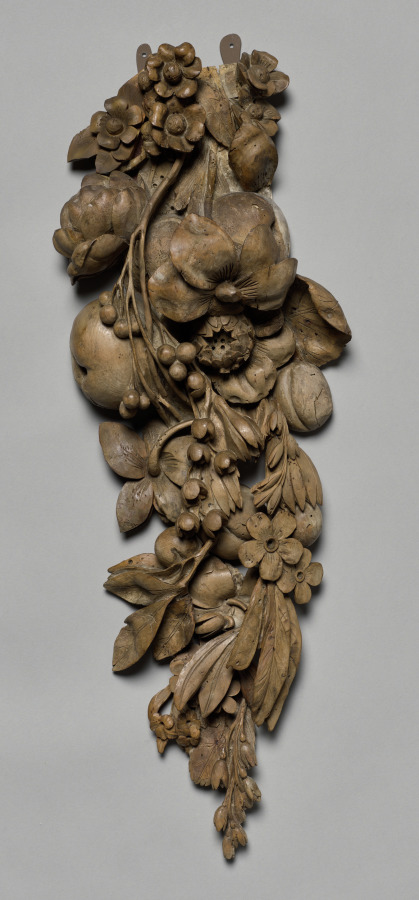
Technical Analysis: The Carved Silhouette – From Overmantel to Executive Architecture
The provided internal DNA, a profound meditation on the dialectic between the soft containment of Wangchuan Villa and the hard signification of the Three-Perforated Ceremonial Blade, presents not merely an aesthetic reference but a complete philosophical framework for sartorial construction. For the 2026 executive silhouette, this translates into a precise and rigorous exploration of Tailored form. The core directive is 器以载道—the garment as a vessel for contemporary doctrine, where every seam, dart, and plane is imbued with intention. The designated color, Slate, serves as the foundational pigment: a complex, mineral grey possessing the muted, atmospheric depth of ink-wash mountains and the cool, implacable sheen of aged bronze. It is neither black nor grey, but the color of resolved tension, of form emerging from ambiguity.
Structural Poetics: The Dialogue of Containment and Incision
The geometric integrity of the proposed silhouette is derived from a synthesis of the two archetypal "vessels." From Wangchuan Villa, we extract the principle of “Nested Horizontality.” The silhouette is not a single, monolithic shape, but a series of interlocking, horizontal planes—a sartorial landscape. This is achieved through precise tailoring that emphasizes the broad, calm line of the shoulder, flowing into a defined yet non-constricting torso barrel. Seaming is deployed not merely for fit, but to create visual pathways, akin to the painting’s winding streams and paths. A double-breasted closure becomes a "ridge line"; strategic horizontal seam lines at the mid-chest or upper back act as "terraces," creating subtle layers within the garment’s architecture. The goal is a silhouette that is 可游可居—"traversable and inhabitable"—offering both visual journey and physical ease for the wearer.
Counterpoint is injected from the Three-Perforated Ceremonial Blade through the principle of “Ritualized Incision.” The soft, nested horizontals are punctuated by absolute, vertical gestures of geometric clarity. This manifests as precise, laser-sharp plackets, perfectly perpendicular pocket placements that function as symbolic "perforations" in the fabric plane, and severe, unadorned seam lines that cut through the form with ceremonial intent. The armhole is engineered to be a clean, exact socket—a joint of power, not mere articulation. These elements are the sartorial equivalent of the blade’s three perforations: not decorative, but codified, laden with meaning. They introduce a note of 刚显—the "hard revelation"—of authority and precision within the encompassing, softer form.
Urban Materiality: The Substance of Silence
The material execution is where this philosophical dialogue becomes tactile reality. The Slate color demands fabrics of supreme sophistication and inherent narrative. The primary materiality will be a high-twist, wool-cashmere blend with a dry, mineral hand-feel, its surface possessing a micro-texture that captures light like mist on stone. This fabric provides the "canvas" for the nested horizontality, holding a clean line while allowing for subtle, body-conscious drape—the 柔翰 or "soft brush" of the silhouette.
Contrasting this, and embodying the blade’s 青铜寒光 ("bronze’s cold gleam"), are inserts or accents of technical fabrics. Imagine a matte, nano-coated jacquard with a subliminal geometric grid, used for under-collar stands, internal facings, or as stark paneling along the garment’s prime vertical seams. This material introduces a cold, modern permanence—the urban counterpart to ancient bronze. Its functional resistance to the elements and its visual austerity reinforce the silhouette’s ceremonial rigor. Fastenings become critical: zippers are sheathed, buttons are crafted from darkened horn or brushed palladium, appearing as seamless, integral components of the form—the modern ritual objects.
The 2026 Executive Silhouette: A Vessel for Contemporary Doctrine
The resulting silhouette for the Addison executive is one of authoritative containment. It is a garment that constructs a powerful, calm presence—a mobile 别业 (villa) for the urban landscape. Its geometry is resolved and confident, speaking through implication rather than proclamation. The broad, stable shoulder and controlled torso create a platform of authority, while the nested horizontal lines suggest depth, strategy, and layered thought. The sharp, ritualized verticals communicate decisiveness, precision, and an adherence to a personal, internalized code.
This is the essence of the 2026 silhouette: it is both a sanctuary and a statement. It offers the wearer the psychic space of "dwelling" (栖居) within its considered architecture, while its precise incisions command the "respect" (遵从) of the external gaze. It moves beyond fashion into the realm of designed environment—a second skin that is both protective and projective. In the lexicon of Addison, this is Architectural Poetics realized: where the soft scroll of inhabited space meets the hard glyph of ritual order, all rendered in the sophisticated, silent, and utterly consequential hue of Slate. The garment becomes the ultimate contemporary vessel, carrying the doctrine of nuanced, formidable, and intellectually grounded power.