Urban Form: The Age of Bronze
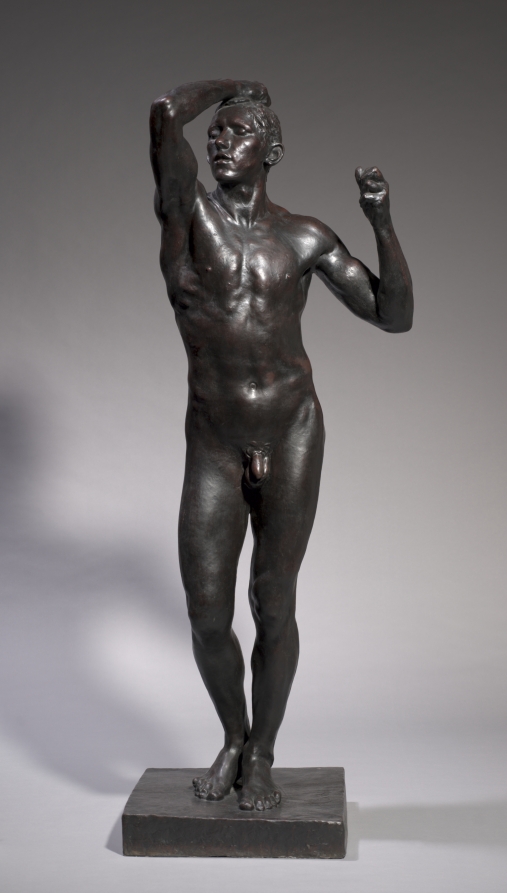
The Age of Bronze: Silhouette as Residue, Garment as Vessel
I. Preliminary Thesis: The Executive Wardrobe as Curated Fragment
The Addison Fashion NYC 2026 executive wardrobe does not begin with the body. It begins with the negative space the body refuses to occupy. Our research into two artifacts—the Mold Fragment with Musicians and the Square Mirror with Two Phoenixes and Floral Sprays—reveals a singular operational logic: the silhouette is not a container but a residue of movement. The fragment, broken and incomplete, carries the acoustic trace of a performance that has already ended. The mirror, whole and reflective, freezes an eternal choreography of phoenix and flora. Between these two poles—the interrupted and the infinite—we locate the precise coordinates for the Fall/Winter 2026 executive collection.
This is not a nostalgic exercise. It is a structural deconstruction. The modern executive does not need another suit. She needs a system of visual governance that performs authority through restraint, presence through absence, and permanence through the deliberate acknowledgment of transience.
II. Formal Analysis: Line as Operational Discipline
The Mold Fragment presents a critical formal problem: how does a line function when it is not describing volume? The musician's figure is rendered through filament-thin incisions—what the Chinese tradition terms you si miao, or "swimming-silk line." This is not contour. It is kinetic notation. The line captures the micro-rotation of a wrist, the tilt of a torso mid-breath, the ghost of a finger pressing a string. There is no shading, no mass, no sculptural ambition. The line is a temporal index, not a spatial boundary.
Translate this to tailoring. The Addison 2026 executive blazer abandons the traditional shoulder pad as a volumetric device. Instead, we introduce a single continuous seam that travels from the nape of the neck, across the scapula, and down the anterior arm—a you si miao in wool and silk. This seam does not build structure. It records posture. When the wearer moves, the seam shifts, creating a dynamic line that is never static, never fully resolved. The garment becomes a fragment of motion, perpetually incomplete, perpetually in performance.
The Square Mirror offers the counterpoint. Here, line is not interrupted but recursive. The phoenix feathers are not depicted as feathers; they are interlocking arcs that spiral inward and outward, generating a closed system of eternal return. The floral sprays are not botanical illustrations; they are rhythmic intervals that punctuate the circular logic of the phoenix. The mirror's square format—fang, the symbol of earth and stability—contains a circular, celestial dance. This is geometry as cosmology.
For the executive wardrobe, this translates into a modular architecture of repetition. The Addison 2026 collection introduces a phoenix pleat: a single, continuous fold that originates at the left hip, travels diagonally across the torso, and terminates at the right shoulder. This pleat is not decorative. It is structural recursion. It can be released (creating volume for movement) or compressed (creating a sharp, linear silhouette for boardroom presence). The wearer controls the degree of cosmological openness she wishes to project.
III. Color as Acoustic Residue: The Onyx Protocol
The fragment's clay body is a muted, earthen bronze—the color of oxidized sound. The mirror's surface is a polished, reflective bronze—the color of eternal return. Neither is purely decorative. Both are chromatic temperatures that modulate the viewer's perception of time.
For 2026, Addison Fashion NYC adopts Onyx as the foundational chromatic register. Onyx is not black. Black is an absence. Onyx is a compressed presence—a color that absorbs light but refuses to disappear. It has depth without reflection, weight without opacity. In the context of the fragment, Onyx is the void between broken edges. In the context of the mirror, Onyx is the ground against which the phoenix turns.
We pair Onyx with two secondary registers: Slate (the color of the fragment's shadow) and Ivory (the color of the mirror's unpainted ground). The executive suit is constructed in a tricolor gradient: Onyx at the shoulders and hem, Slate at the midsection, Ivory at the collar and cuffs. This is not color-blocking. It is chromatic archaeology—a stratification that mimics the fragment's broken surface and the mirror's layered patina.
IV. The 2026 Executive Silhouette: Between Fragment and Mirror
The resulting silhouette is neither fitted nor oversized. It is calibrated. The Addison 2026 executive jacket features a reduced shoulder line (no padding, no extension) and an elongated torso that terminates at the mid-thigh. The waist is not cinched but implied through a single, diagonal you si miao seam. The trousers are straight-legged but not voluminous, with a single pleat that echoes the phoenix recursion of the mirror.
The critical innovation is the asymmetric closure. The jacket does not button at the center. It closes at the left hip, creating a diagonal line of tension that travels upward to the right clavicle. This line is never fully resolved. It is a fragment of a larger gesture—a gesture that the wearer completes through movement, through posture, through presence.
This is the Addison proposition for 2026: the executive wardrobe as a vessel for incomplete sound. The garment does not announce authority. It withholds it, releasing it only through the wearer's kinetic intelligence. The silhouette is not a statement. It is a residue—the trace of a performance that continues, invisibly, in the negative space between fabric and flesh.
V. Conclusion: The Executive as Curator of Absence
The Mold Fragment and the Square Mirror are not historical curiosities. They are operational manuals for a wardrobe that refuses the tyranny of the complete. The 2026 Addison executive does not dress to be seen. She dresses to be read—as a text of interruptions, recursions, and chromatic residues. Onyx is her ground. Slate is her shadow. Ivory is her silence. And the silhouette she wears is not a shape but a question: what remains when the music stops, and how do we wear that remainder with authority?
The answer is not in the garment. It is in the gap—the broken edge, the unfinished line, the breath between notes. Addison Fashion NYC does not sell clothing. It sells the architecture of that gap.