Urban Form: Miss Loïe Fuller
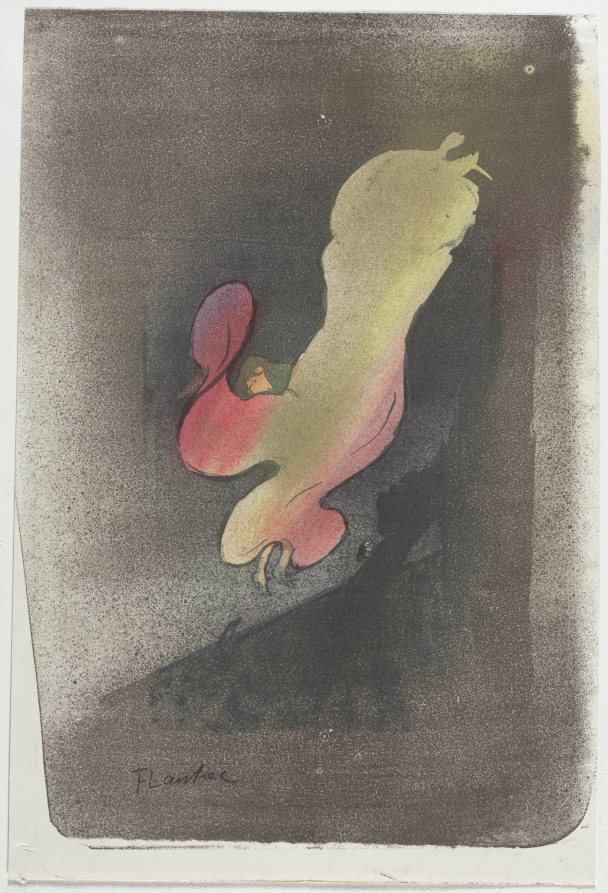
Urban Silhouette Research: The Dialectics of Void and Form in the Loïe Fuller Archetype
I. Preliminary Structural Assessment
The Addison Fashion atelier has identified within the Loïe Fuller dossier a rare convergence of philosophical gravity and kinetic potential. This is not a subject to be treated with decorative indulgence. The internal DNA presents a binary architecture: the Socratic vessel—a body containing poison, yet radiating rational serenity—and the Eastern Jar—a void that generates utility through absence. Both objects are containers. Both negotiate the threshold between presence and dissolution. For the 2026 executive silhouette, this dialectic demands a garment that functions as a philosophical apparatus: structured enough to contain the body's authority, porous enough to admit the void's quiet power.
II. Geometric Integrity: The Amphora and the Hemlock Cup
Examine the primary geometry. The Socratic figure in David's composition is constructed upon a triangular armature—the raised hand, the seated torso, the grounded foot form a stable isosceles. This is the geometry of conviction. The Addison interpretation translates this into a shoulder-to-hem taper that is severe but not punitive: a tailored blazer with a suppressed waist and an extended, architectural shoulder line that references the philosopher's upward gesture without literal quotation. The lapel is narrow, almost surgical, cutting a clean diagonal across the chest—a vector of rational clarity.
Conversely, the Jar presents a rotational symmetry that is deceptively simple. Its power resides in the negative space—the interior volume that defines the exterior curve. For the 2026 silhouette, we extract this principle into the draped column skirt or wide-leg trouser that falls from a defined waistband with no visible closure. The fabric must possess sufficient weight to hang in a continuous, unbroken line—a cylinder of cloth that suggests containment without rigidity. The void between the legs is not empty; it is activated space, the same space that allows a jar to hold water or a philosopher to hold silence.
III. Structural Poetics: The Tension Between Ascension and Gravity
The Socratic death is an ascension—the soul departing the body's prison. The jar's utility is a descent—the vessel grounding itself in the mundane, the daily, the broken shard returning to earth. Addison Fashion's 2026 executive wardrobe must embody this vertical tension. We propose a columnar silhouette that elongates the figure without distortion: a long, unlined coat in slate wool, its hem falling just below the knee, its shoulders constructed with a single layer of horsehair canvas to maintain a crisp horizontal line. The coat is worn open, revealing an ivory silk shell beneath—a flash of lightness within the dark architecture, the soul within the prison.
The poetics here are not decorative. They are operational. The executive who wears this garment must feel the weight of the cloth as a grounding force, and the freedom of the open front as an intellectual aperture. The sleeve is cut on a slight curve, allowing for the gesture of the hand—whether pointing to the heavens or reaching for a glass of water. The cuff is finished with a single, concealed button: no ostentation, only function.
IV. Urban Materiality: Slate, Onyx, and the Patina of Use
The palette is dictated by the subject's internal logic. Slate—the color of the hemlock cup, the color of the Athenian stone, the color of a winter sky over a modern metropolis—serves as the foundation. It is a color that absorbs light without disappearing into black. It has surface tension. We specify a double-faced wool crepe, matte on one side, with a faint, almost imperceptible sheen on the other. The garment can be reversed, revealing a different relationship to light—a nod to the Socratic duality of body and soul.
Accents arrive in Onyx: a belt buckle, a single button at the throat, the interior lining of a pocket. These are not embellishments; they are punctuation marks. The onyx is polished but not reflective—it absorbs rather than broadcasts. This is the urban materiality of the 2026 executive: a surface that does not demand attention but rewards scrutiny. The fabric must age. It must develop a patina. A scratch on the slate wool is not damage; it is biography. The jar in the Eastern tradition is valued for its cracks, its repairs, its history. The Addison garment must be built to accumulate meaning.
V. The 2026 Executive Silhouette: A Synthesis
The final silhouette is a vertical column with a horizontal interruption. The column is the body, extended and clarified by the long coat and the wide trouser. The interruption is the waist—defined not by a cinch but by a change in material density: a silk sash, a leather obi, a folded panel of the same slate wool. This waist is the point of decision, the moment where the philosopher chooses to drink and the jar chooses to hold. It is the event horizon of the garment.
The shoulders remain the primary architectural element. They are not padded into aggression but shaped into presence. The sleeve head is set slightly forward, encouraging a posture that is both relaxed and alert—the posture of someone who has made peace with mortality and therefore moves through the world without haste. The hem of the coat is weighted with a thin chain, invisible to the eye but perceptible in the movement: a gravitational anchor that prevents the garment from floating away, from becoming mere fashion.
This is not a collection about death. It is a collection about containment—the containment of the body, the containment of silence, the containment of a philosophy that does not need to announce itself. The Addison executive of 2026 does not wear her convictions on her sleeve. She wears them in the cut of the shoulder, the fall of the hem, the weight of the cloth. She is the jar and the philosopher. She is the void and the voice. She is, in the coldest and most sophisticated sense, present.