Urban Form: Transenna Post
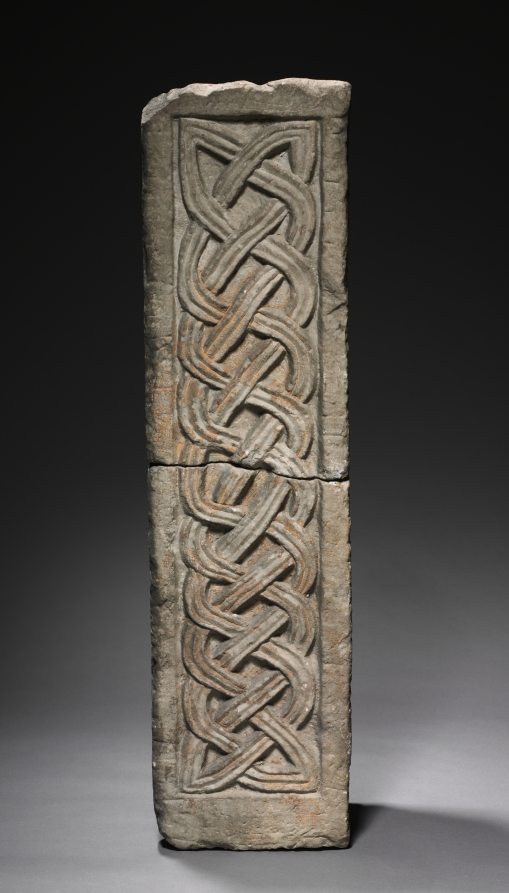
Urban Silhouette Research: Transenna Post — Geometric Integrity and the 2026 Executive Form
I. The Architectural Premise: Binary Tension as Structural Grammar
The Transenna Post does not present itself as a garment. It presents itself as a geometric proposition—a spatial argument conducted in clay, bronze, silk, and gold thread. For Addison Fashion, the relevance is not decorative but tectonic. The 2026 executive silhouette demands precisely this: a form that resolves opposing structural logics without collapsing into compromise. The pastoral vessel and the monastic vestment are not merely aesthetic counterweights; they are load-bearing conceptual columns upon which the entire urban silhouette can be erected.
Consider the pastoral vessel first. Its geometry is organic and compressive—a rounded, low-center-of-gravity mass that distributes weight outward from a grounded base. The water buffalo's dorsal line is a shallow arc; the boy's posture is a counter-arc. Together they form a lenticular volume, thick at the center and tapering at the extremities. This is the geometry of the fluid category, but rendered in a material vocabulary—unglazed clay, oxidized bronze—that belongs to the minimalist register. The surface is not polished; it is tactile and stratified, bearing the memory of hand pressure and kiln atmosphere. In urban terms, this translates to a silhouette that is soft in contour but dense in mass: a wool-cashmere overcoat with a dropped shoulder and a compressed waist, its surface treated with a matte, almost mineral finish.
Now consider the monastic vestment. Its geometry is radial and hierarchical—a series of concentric fields expanding from a central axis, each ring encoded with symbolic precision. The gold thread does not decorate; it articulates. It draws boundaries, establishes hierarchies, and creates a grid of legibility across an otherwise fluid ground. This is the geometry of the tailored category, but executed with the material richness of the fluid register. The vestment's silhouette is columnar and enveloping, its volume determined not by the body beneath but by the ritual function it must perform. In urban terms, this translates to a structured cape or duster with a high, closed neckline and a hem that falls in a precise, unbroken line—a garment that frames the wearer as an object of contemplation rather than mere utility.
II. The Geometric Integrity: From Binary to Continuum
The critical insight for 2026 is that these two geometries are not opposites. They are phases of a single continuum. The pastoral vessel's arc, when extended, becomes the vestment's radial field. The vestment's grid, when compressed, becomes the vessel's surface texture. The Transenna Post demonstrates that organic mass and ritual order are mutually constitutive—each requires the other to achieve structural stability.
For the executive silhouette, this means the abandonment of the false dichotomy between soft and hard, between drape and structure. The 2026 Addison wardrobe will be built on hybrid tectonics: a single garment that contains both a compressive, low-slung volume and a radial, high-collar frame. Imagine a coat whose body is cut from a double-faced wool in Onyx—matte, dense, light-absorbing—while its shoulder and neck are reinforced with a laser-cut leather yoke that mimics the vestment's symbolic grid. The yoke does not sit on top of the wool; it emerges from it, as if the garment's structural logic has become visible at its most critical load-bearing points.
The materiality must follow the same logic. The pastoral vessel's clay is porous and receptive; the vestment's silk is smooth and reflective. In urban terms, this suggests a layered material system: an inner layer of brushed cashmere or yak wool (porous, warm, tactile) and an outer layer of bonded technical silk or matte polyamide (smooth, wind-resistant, light-reflective). The contrast is not decorative but functional: the inner layer manages thermal regulation and tactile intimacy; the outer layer manages spatial presence and environmental resistance.
III. Urban Materiality: The City as Kiln and Cloister
The Transenna Post's deepest lesson for Addison Fashion is that the city is both kiln and cloister. The executive moves through spaces of intense friction—transit, negotiation, confrontation—and spaces of ritual stillness—the boardroom, the gallery, the private office. The 2026 silhouette must be equally at home in both. This requires a garment that can shift its geometric register without changing its material identity.
Consider a modular overcoat in Onyx bonded wool. In its default state, it hangs as a columnar volume, its hem falling in a precise, unbroken line—the vestment's radial order. But when the wearer moves, the coat's internal articulated seams—placed along the spine, the shoulder blades, and the outer thigh—allow the fabric to expand into a lenticular mass, the pastoral vessel's compressive arc. The coat does not change shape; it reveals a different phase of its geometric potential. This is not transformation; it is phase transition—the same material system expressing two distinct structural logics.
The surface treatment must reinforce this duality. A matte, mineral-dyed finish on the outer face absorbs light, creating a dense, grounded presence—the clay vessel. A subtle, tonal jacquard on the inner face—visible only when the coat is open or the sleeve is turned—catches light in a radial, symbolic pattern—the gold thread. The wearer controls which phase is visible. The garment is both/and, never either/or.
IV. Conclusion: The 2026 Executive as Transenna
The Transenna Post is not a relic. It is a prototype. Its geometric integrity—the resolution of organic mass and ritual order into a single, load-bearing form—defines the 2026 executive silhouette. The Addison wardrobe will not choose between the pastoral and the monastic, between the fluid and the tailored, between the clay and the gold. It will engineer their coexistence in a single, Onyx-clad volume. The executive of 2026 will not wear a garment. They will wear a structural argument—one that moves through the city as both kiln and cloister, its geometry shifting, its materiality constant, its presence absolute.
This is the urban silhouette. This is the Transenna Post. This is Addison.