Urban Form: Helmet Mask
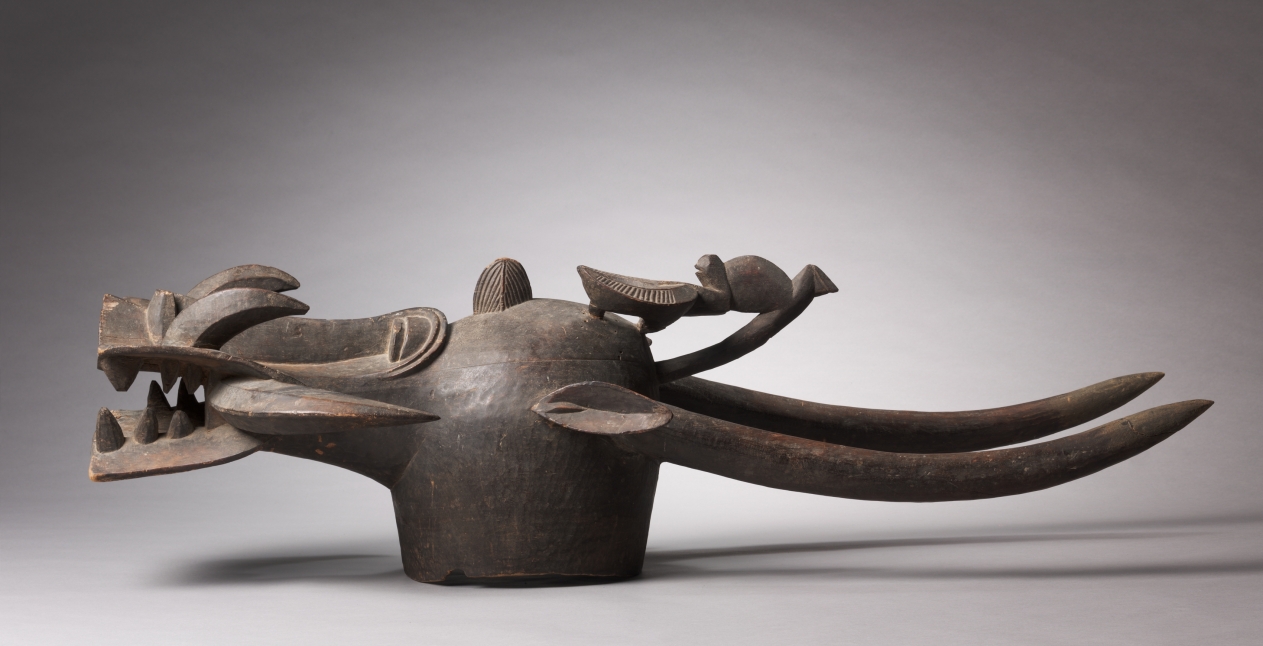
Urban Silhouette Research: The Helmet Mask as Post-Socratic Armor
I. The Death of the Face: A Formal Introduction
The Helmet Mask enters the Addison Fashion design lexicon not as an accessory but as an architectural intervention—a deliberate foreclosure of the facial real estate that has, for two decades, dominated urban luxury's communicative logic. Where the post-millennial executive silhouette privileged the face as the primary site of legibility—the jawline as authority, the brow as intent—the Helmet Mask proposes a radical subtraction. It is, in the most literal sense, a formal refusal. The face, that unreliable narrator of the boardroom, is placed under erasure.
This is not concealment as cowardice. It is concealment as strategy—and here the DNA source proves instructive. Jacques-Louis David's The Death of Socrates (1787) presents us with a body rendered impossibly luminous, impossibly composed, at the precise moment of its undoing. The philosopher's flesh is painted as though death were a formality, a mere administrative transition. David's brush performs what we might call the aesthetic management of catastrophe: the poison cup gleams like spring water; the disciples' grief is choreographed into neoclassical geometry; the dying man's gesture toward the heavens is, above all, legible. The painting does not depict death. It depicts death's brand identity.
The Helmet Mask operates on the inverse principle. It does not aestheticize the face; it withdraws it from circulation. In doing so, it acknowledges what David's canvas suppresses: that the body is unreliable, that composure is a performance, that the executive countenance—however disciplined—remains a site of leakage, fatigue, and involuntary disclosure. The mask is the sartorial equivalent of the Jar: silent, rounded, unadorned, content to exist without narrating itself. It does not argue for immortality. It simply holds.
II. Form as Argument: The Geometry of Withdrawal
Technically, the Helmet Mask is constructed from a single continuous panel of bonded Slate micro-suede, heat-molded over a rigid internal armature of recycled polycarbonate. The silhouette is ovoid—not spherical, which would read as protective gear, nor angular, which would signal aggression—but a soft, elongated ellipse that extends from the crown to the clavicle, terminating in a flush seam that disappears into the neckline of the accompanying garment. There is no visible fastening. No zipper. No Velcro. The closure is magnetic, recessed, and operates on a torsional hinge that allows the mask to be donned with a single upward rotation of the wrist—a gesture that reads, in motion, as a kind of secular benediction.
The surface treatment is where the DNA source exerts its most precise pressure. David's Socrates is lit from above and left, a cold, directional luminosity that carves the philosopher's torso into zones of moral clarity. The Helmet Mask replicates this logic through a matte Slate finish that absorbs rather than reflects ambient light. In the fluorescent grid of a Midtown conference room, the mask does not gleam. It recedes. It creates a localized zone of visual silence around the wearer's head—a negative space that forces the interlocutor's gaze downward, to the shoulders, the hands, the garment's architectural line. The face is no longer the message. The silhouette is.
This is a deliberate inversion of the Socratic gesture. Socrates points upward, toward the realm of forms, toward the eternal. The Helmet Mask points inward, toward the body's own boundedness, toward the jar-like facticity of the self. It does not promise transcendence. It promises containment.
III. The 2026 Executive Wardrobe: Slate as Operational Color
For the 2026 NYC executive wardrobe, the Helmet Mask in Slate functions as the chromatic anchor of a system built on tonal restraint. Slate—that blue-grey median between Onyx's finality and Silver's optimism—is the color of infrastructure: bridges, server racks, the granite bedrock beneath Manhattan. It is neither warm nor cold. It is operational.
Paired with a Minimalist category silhouette—a single-breasted, unstructured wool coat in Ivory, its lapels suppressed, its hem falling to mid-calf—the Helmet Mask creates a vertical column of muted contrast that elongates the body while erasing the face's distracting asymmetries. The effect is not dehumanizing but rehumanizing in a different register: the wearer becomes a mobile architecture, a walking perimeter, a self-contained institution. In a city where every surface competes for attention, the mask's refusal to compete becomes its most aggressive statement.
For evening, the mask transitions to a bonded Slate silk variant, its surface slightly more reflective, its armature thinner, its silhouette fractionally narrower. Worn with a floor-length column dress in Onyx, it reads as a secular veil—not modesty, but sovereignty. The wearer has chosen, deliberately, not to be read. She has chosen, instead, to be encountered.
IV. Conclusion: The Jar and the Mask
The Jar accepts its own fracture. The Helmet Mask postpones it. Between these two positions lies the entire spectrum of contemporary executive anxiety—the desire to be seen, the fear of being known, the knowledge that the body is a temporary container. Addison Fashion's 2026 proposition is not a resolution of this tension but a formal articulation of it. The mask does not hide the face. It replaces it with a question: What remains of authority when the face is removed?
The answer, in Slate, in Minimalist, in the cold light of a Midtown morning, is: everything that matters. The posture. The pace. The silence between sentences. The mask is not a retreat from presence. It is presence, redefined—stripped of the face's involuntary betrayals, armored in the quiet geometry of a jar that knows, without saying so, that it will one day break.