Urban Form: Christ the Redeemer (Salvator Mundi)
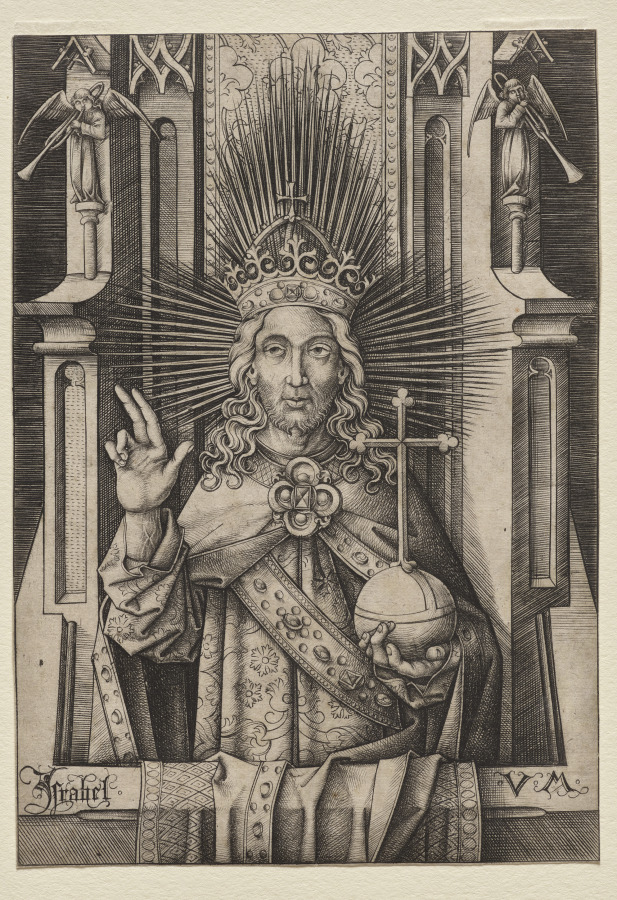
Urban Silhouette Research: Christ the Redeemer as Architectural Precedent for the 2026 Executive Form
I. The Iconographic Armature: Open-Arm Geometry as Structural Doctrine
The Christ the Redeemer statue in Rio de Janeiro is not, strictly speaking, a figurative sculpture. It is a cruciform architectural event—a 38-meter Art Deco monolith whose outstretched arms span 28 meters, producing a horizontal axis that reads, from the urban grid below, as a benediction rendered in reinforced concrete and soapstone. For Addison Fashion’s 2026 executive silhouette, this is the governing precedent: the body is not adorned; the body is framed. The Redeemer’s arms do not embrace—they demarcate. They create a void beneath them, and that void is the true subject of the work. The garment, likewise, must function as a negative-space generator. The executive does not wear a jacket; the executive wears the aperture the jacket creates.
This is the first principle of the 2026 silhouette: the armature precedes the body. Where mid-century tailoring sought to follow the deltoid and the trapezius, the Addison approach borrows from the Redeemer’s structural logic—a rigid, symmetrical, cruciform scaffold that imposes its geometry upon the wearer rather than yielding to anatomy. The shoulder line is not padded; it is engineered. The sleeve does not drape; it cantilevers. The result is a silhouette that reads, at ten paces, as an architectural elevation: a vertical spine, a horizontal shoulder, and a void between them that the eye completes.
II. The Udumbara Plaque and the Aesthetics of Withheld Volume
The internal DNA of this collection—the Udumbara flower plaque, with its faint ink contours and its parasitic white clusters clinging to dead wood—supplies the countervailing force. The Udumbara is a Buddhist metaphor for the rarest of events: a flower that blooms once every three thousand years. In East Asian visual culture, it is never rendered with botanical realism. It is rendered as absence made legible—a few brushstrokes, a wash of pale ink, and an enormous field of unpainted silk. The plaque does not depict a flower. It depicts the conditions under which a flower might appear.
Translated into tailoring, this yields the second principle: the garment must withhold volume in order to concentrate presence. The 2026 Addison executive silhouette is not oversized in the streetwear sense—it is architecturally evacuated. A wool crepe column dress with a single, asymmetrical seam that runs from clavicle to hem. A double-faced cashmere coat whose lapels are pressed flat, almost erased, so that the wearer’s sternum becomes the focal point. The Udumbara logic dictates that the most powerful gesture is the one that nearly disappears. The plaque’s white clusters are tiny; the wood is vast; the silence is total. The executive wardrobe must operate at the same ratio: ninety percent void, ten percent signal.
III. The Hunt and the Problem of Kinetic Tailoring
Against this stillness, The Hunt—whether Rubens’s Baroque convulsions or the neoclassical chase scenes—introduces the opposing pole: the body as velocity. The hunting canvas is a field of diagonal forces, of straining muscle, of blood and saliva and torn earth. Its aesthetic is not contemplative but compulsive. The eye cannot rest; it is dragged from hound to stag to spear to sunset. This is the visual language of the trading floor, the boardroom confrontation, the quarterly earnings call. It is the language of the executive in motion.
The 2026 silhouette must therefore reconcile the Redeemer’s stillness with the Hunt’s violence. The solution is kinetic tailoring: garments whose geometry is stable when the wearer is stationary but whose seams and darts are engineered to release under movement. A tailored jacket with a hidden gusset at the underarm, allowing the arm to rise without disturbing the shoulder line. A pencil skirt with a single inverted pleat at the back, invisible when standing, expansive when striding. The Hunt does not demand that the garment be loose; it demands that the garment be strategically discontinuous—that it break along predetermined fault lines when the body accelerates.
IV. Urban Materiality: Soapstone, Concrete, and the New Executive Palette
The Redeemer is clad in soapstone, a material that is soft enough to carve but weathers into a matte, chalky surface that absorbs light rather than reflecting it. This is the material logic of the 2026 Addison executive: matte surfaces, mineral textures, and a chromatic range drawn from the monolith itself. Slate greys with a green undertone. Onyx blacks that are not glossy but dense. Ivory wools that read as bone rather than cream. The palette is not decorative; it is geological.
The Udumbara plaque contributes a second material register: aged wood, faint ink, the patina of centuries. This translates into hand-finished surfaces—raw-edged silk organza, undyed linen with visible slubs, cashmere that has been washed to a near-felted density. The Hunt contributes the third: tension. Leather that is stretched rather than tanned. Wool that is tightly woven but never pressed. The garment should feel, to the hand, like something that has been held under pressure and released.
V. Conclusion: The Executive as Cruciform Void
The definitive 2026 Addison silhouette is neither the Redeemer’s static benediction nor the Hunt’s kinetic violence. It is the dialectical product of the two: a garment that stands still with the authority of concrete and moves with the inevitability of a predator. The Udumbara plaque reminds us that the rarest aesthetic event is not the bloom but the space prepared for the bloom. The Hunt reminds us that that space, once prepared, will be filled—by the body, by the stride, by the will. The executive who wears this silhouette does not choose between stillness and motion. She is the cruciform void through which both pass.