Urban Form: Virgin and Child
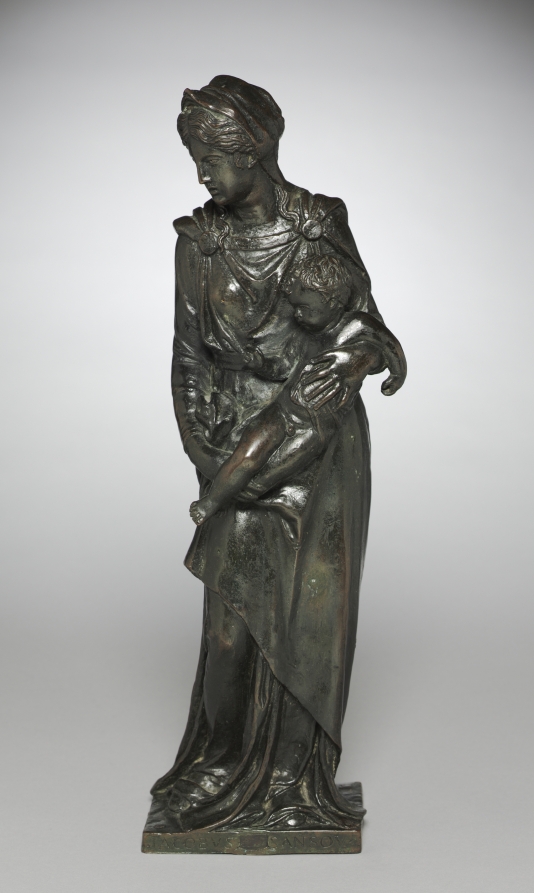
Urban Silhouette Research: The Dialectics of Concealment and Manifestation in the Virgin and Child Archetype
I. Preliminary Framework: The Eastern Aesthetic as Structural Precedent
The Virgin and Child motif, when filtered through the lens of Eastern aesthetic philosophy, ceases to function as mere iconographic representation. It becomes, instead, a study in ontological tension—a dialectical relationship between spiritual void (空) and material fullness (满). This research examines two artifacts from the Japanese canon: the Udumbara plaque housed at Myōshin-ji in Kyoto, and the Tang dynasty bronze mirror Divine Beasts, Imperial Chariot, and White Tiger from the Shōsōin repository. Both objects, though divergent in function—one monastic, one secular—converge upon a singular proposition: that the ultimate truth is expressed not through direct depiction but through strategic concealment and calculated revelation.
For the Addison Fashion NYC 2026 executive wardrobe, this philosophical framework offers a rigorous methodology for silhouette construction. The question is not what the garment shows, but what it withholds—and how that withholding generates authority.
II. The Udumbara Plaque: The Poetics of Absence in Tailored Form
The Udumbara plaque operates on a principle of radical reduction. The flower—udumbara, the legendary blossom that appears once every three thousand years—is never depicted. The wooden surface bears only calligraphic characters, linguistic signifiers that summon the concept of the flower without ever rendering its form. This is 以言破相—the use of language to dismantle visual attachment. The viewer, denied the satisfaction of recognition, is compelled inward, toward contemplation of rarity and enlightenment.
Translated into sartorial terms, this principle manifests as the Minimalist silhouette: a form that achieves presence through absence. The 2026 executive blazer, for instance, should not announce its construction through visible darts or aggressive shoulder padding. Instead, it should suggest structure through negative space—a slightly extended shoulder line that implies authority without demanding it, a lapel that curves inward rather than projecting outward. The garment becomes a conceptual container, much like the plaque: the wearer's body is the unseen flower, and the clothing is the linguistic frame that summons it into being.
Color, in this register, must operate as Onyx—not merely black, but a black that absorbs light rather than reflecting it. Onyx possesses depth without sheen, a matte density that reads as intellectual rather than decorative. It is the chromatic equivalent of the plaque's weathered wood: a surface that invites projection rather than dictating interpretation.
III. The Tang Bronze Mirror: Saturation as Cosmic Order
In diametric opposition to the plaque's austerity, the Tang mirror deploys maximalist density as its operative logic. The circular surface is crowded with high-relief figures: a celestial chariot at center, surrounded by white tigers, dragons, and phoenixes in dynamic circumambulation. Each element is legible, yet the whole resists immediate comprehension. The mirror does not depict a scene; it constructs a cosmos. The white tiger, guardian of the western cardinal direction, anchors the composition in spatial and symbolic order. Polished bronze catches light, creating a surface that seems to open onto a transcendent realm.
This is 以满为显—fullness as revelation. The mirror's density does not obscure meaning; it generates it through accumulation. For the Addison wardrobe, this principle informs the Fluid category: garments whose complexity emerges through layered construction rather than surface ornament. A silk-crepe column dress with internal corsetry, for example, achieves visual simplicity through structural intricacy. The exterior remains serene; the interior is a dense architecture of seams, boning, and interfacing—a hidden cosmos of engineering.
The chromatic counterpart to the mirror's bronze patina is Slate: a grey that shifts between warm and cool depending on light, never settling into a single identity. Slate is the color of ambiguity, of surfaces that reveal different truths from different angles. It is the executive color par excellence—authoritative yet elusive, present yet never fully captured.
IV. The Dialectical Synthesis: Concealment as Authority
The profound insight of these two objects lies not in their opposition but in their mutual implication. The plaque conceals the flower to provoke inner vision; the mirror reveals the cosmos to inspire awe. Both strategies serve the same end: the management of the viewer's attention, the orchestration of a response that transcends the merely visual.
For the 2026 executive wardrobe, this dialectic resolves into a single directive: authority is a function of controlled disclosure. The most powerful silhouette is not the most revealing nor the most concealing, but the one that oscillates between these poles with deliberate precision. A double-faced cashmere coat in Onyx, worn open over a Slate silk column, achieves this oscillation: the coat's austerity (plaque logic) frames the dress's fluidity (mirror logic). The wearer becomes both signifier and signified, both the calligraphic character and the flower it summons.
The Virgin and Child motif, stripped of its religious specificity, becomes a template for this dynamic: the mother as container, the child as content; the void as potential, the fullness as manifestation. In Addison's 2026 collection, the executive woman occupies both positions simultaneously. She is the plaque and the mirror, the concealment and the revelation, the silence and the cosmos it contains.
V. Technical Specifications for the 2026 Executive Wardrobe
Silhouette: Minimalist, with controlled volume at shoulder and hem; no waist suppression; columnar or A-line primary forms.
Palette: Onyx as base; Slate as secondary; Ivory as accent (limited to 10% of any ensemble).
Fabrication: Double-faced cashmere, silk crepe, matte wool suiting; no sheen, no print, no visible hardware.
Construction: Internal complexity, external simplicity; hand-finished seams; concealed closures.
Philosophy: The garment as conceptual frame—not a depiction of power, but a condition for its emergence.
This is the Addison method: to dress the executive woman not as she is, but as she might become—through the disciplined interplay of void and fullness, concealment and revelation, silence and the cosmos it holds.