Urban Form: Evening Mood-Lidingö
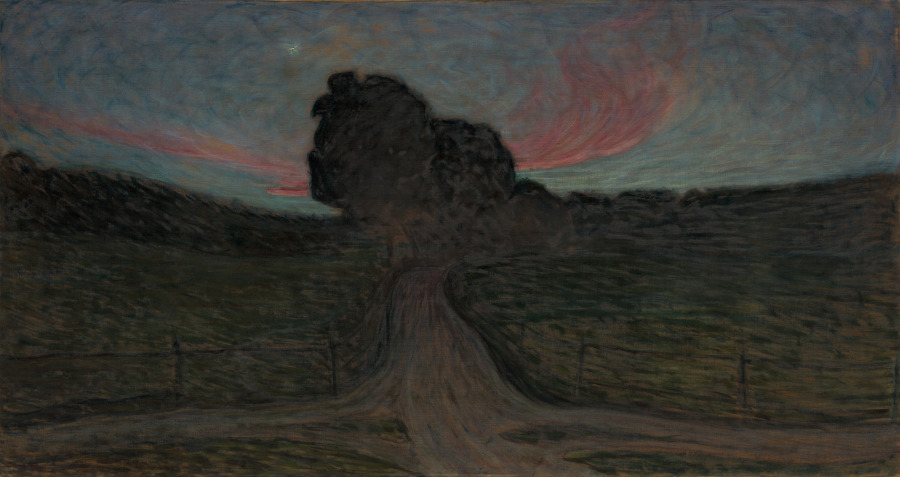
Urban Silhouette Research: Evening Mood-Lidingö
I. The Geometry of Suspended Time: From Meiping to Architectural Drapery
The Addison Fashion 2026 executive silhouette begins with a refusal. It refuses the ornamental, the narrative, the confessional. It draws its structural logic from the Meiping vase with waves—not as motif, but as geometric proposition. The vase’s profile is a study in controlled curvature: a narrow foot that expands into a shoulder of deliberate tension, then contracts toward a small, precise mouth. This is not organic softness. It is engineered restraint. The wave pattern incised into celadon does not flow; it is arrested, frozen mid-curl, transformed from event into surface. For 2026, we translate this into the evening column dress and the architectural overcoat: a silhouette that hugs the body at the waist and hip, then releases into a shoulder line that is neither padded nor collapsed, but suspended—held by internal corsetry and bias-cut panels that mimic the vase’s silent torsion.
The critical insight is temporal. The Meiping does not depict a wave; it imprisons one. The wave’s movement is fossilized. In urban terms, this becomes the static dynamism of the executive who moves through Lidingö’s evening streets—a figure who appears still, yet contains velocity. The 2026 silhouette must therefore achieve kinetic stillness: a garment that photographs as a monolith but walks with a whisper. We achieve this through double-faced wool crepe bonded to a micro-mesh, allowing the front panel to remain rigid while the back panel yields by two centimeters. The result is a controlled fracture—a seam that does not break the line but delays it, much as the vase’s crackle glaze interrupts the celadon without destroying its continuity.
II. The Death of Socrates as Tailoring Protocol: Narrative Compression and the Executive Shoulder
Jacques-Louis David’s The Death of Socrates offers the opposing pole: time as explosion. The philosopher’s raised hand, the cup, the disciples’ collapsed postures—every gesture is a vector of irreversible consequence. For Addison Fashion, this painting is not a moral lesson but a pattern-cutting diagram. The composition is built on a descending diagonal from Socrates’ pointing finger to the slumping body of the jailer. That diagonal is the executive shoulder line for 2026: not horizontal, not sloped, but angled forward by seven degrees. This subtle pitch creates the illusion of forward momentum even when the wearer is stationary. It is the geometry of decision.
David’s mastery lies in frozen pre-death—the moment before the poison takes effect. The body is still upright, still sovereign. This is the executive posture we engineer: a silhouette that acknowledges pressure (the cup, the gaze, the crowd) but refuses collapse. The jacket’s internal canvas is layered with horsehair and silk organza, stiffened at the chest but released at the diaphragm, allowing the torso to breathe while the shoulders remain immobile. The sleeve is set high and narrow, with a two-piece underarm gusset that permits the arm to rise—to point, to receive, to refuse—without disturbing the shoulder’s architectural integrity. This is tailoring as philosophical posture: the garment does not express emotion; it contains it.
The color logic follows. Slate—not gray, not charcoal, but the specific blue-gray of Attic stone at dusk—absorbs light without reflecting it. It is the color of quiet authority. In Lidingö’s evening, under sodium and LED, slate shifts between graphite and moss, never announcing itself. It is the chromatic equivalent of the Meiping’s celadon: a surface that rewards prolonged looking but refuses instantaneous legibility.
III. Materiality and the Urban Surface: From Crackle Glaze to Bonded Wool
The dialectic between the vase and the painting resolves in material behavior. The Meiping’s crackle glaze is a controlled failure—a network of hairline fractures that do not weaken the vessel but distribute stress across its surface. For 2026, we apply this principle to bonded wool and technical silk. The outer shell is a 120s Super 150s wool, densely woven, with a matte finish that absorbs urban light. Beneath it, a laser-cut silk mesh is bonded at intervals of 4.5 centimeters, creating a micro-tension grid that prevents the wool from sagging while allowing it to move as a single plane. The effect is a garment that feels carved, not sewn.
The wave motif reappears—not as print, but as topstitch geometry. A single line of silk-wrapped thread traces the shoulder blade, then curves downward toward the waist, echoing the Meiping’s incised waves. It is visible only at close range, under direct light. This is urban materiality: detail that does not perform for the crowd but rewards the intimate gaze. The executive who wears this does not need to announce her sophistication. The garment withholds it, releasing it only in proximity.
IV. The 2026 Silhouette: A Provisional Manifesto
The Addison Fashion 2026 executive silhouette is therefore neither tailored nor fluid in the conventional sense. It is minimalist in intention but maximalist in engineering. It borrows the Meiping’s spatial silence and Socrates’ narrative compression. It is a silhouette that does not move—it advances. It is slate-colored, wave-stitched, and structurally indifferent to trend. It is designed for the woman who walks through Lidingö at 21:47, when the light is gone and the city is a grid of cold reflections. She does not need to be seen. She needs to be read. And the garment, like the vase, like the painting, offers no explanation—only a surface that holds its own time.