Urban Form: Tea Service
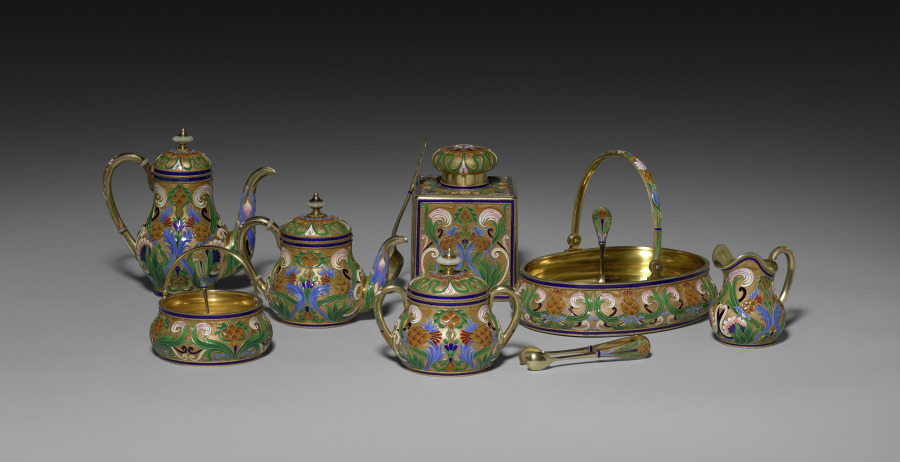
Urban Silhouette Research: Tea Service — Structural Poetics of the Fragment and the Ring
I. The Architectural Premise: Two Geometries of Containment
The Addison Fashion 2026 executive silhouette is not derived from the runway. It is excavated from the archaeological unconscious of the object. The two artifacts under examination—the Mold Fragment with Musicians and the Fluted Ring with Dragon Head (Huan)—operate as opposing yet complementary structural paradigms. One is a negative space, a matrix of production. The other is a positive loop, a closed circuit of symbolic permanence. Together, they define a silhouette that is neither purely tailored nor purely fluid, but minimalist in its refusal to resolve the tension between the two.
The mold fragment is a vessel of absence. Its geometry is defined by what has been removed—the cast object, the finished bronze, the public ritual. What remains is the residue of gesture: the musician’s arm, the fold of a robe, the pressure of a thumb. This is the first principle of the 2026 executive silhouette: the garment as a record of its own making. The shoulder line is not padded into a heraldic crest. It is a soft, slightly irregular curve—the memory of a hand pressing clay. The sleeve is not a tube but a fluted channel, echoing the mold’s concave interior. The wearer does not occupy the garment; the wearer completes a negative space that was always waiting.
II. The Fluted Ring: Circularity as Executive Discipline
The Huan ring introduces the second geometric axis: the closed loop with a point of rupture. The dragon head breaks the perfect circle, not as a flaw, but as an intentional aperture—a site where the infinite becomes specific, where the abstract becomes animal. In the 2026 silhouette, this translates to the collar and the cuff. The collar is not a stand-away band. It is a continuous curve that begins at the nape, travels forward, and terminates in a single, asymmetrical point of release—a dragon’s snout, a lapel that does not fold but emerges. The cuff is similarly fluted, its interior circumference lined with a narrow, polished edge that catches light like jade. The executive does not wear a suit. The executive wears a circuit of intention, broken only where the body needs to breathe.
This is not ornament. This is structural poetics. The ring’s fluting—those parallel grooves that run around its circumference—are not decorative ridges. They are tectonic seams, the visible logic of a material that has been compressed and turned. In the Addison 2026 silhouette, fluting appears as topstitching that follows the body’s axial lines: down the spine, around the ribcage, along the outer thigh. It does not embellish. It articulates load paths. The garment behaves like a jade ring: rigid in its geometry, yet warm and continuous in its contact with the skin.
III. Materiality: From Clay to Slate
The mold fragment is coarse, porous, matte. The ring is smooth, dense, reflective. The 2026 executive silhouette demands a fabric that can hold both states simultaneously. Slate—the color of wet stone, of unglazed ceramic, of storm light on a jade surface—is the only chromatic resolution. It is not black. It is not grey. It is a mineral neutral that absorbs light in the fluted channels and releases it along the raised edges. The textile itself must be a double-faced wool-silk: one side brushed and matte (the mold), the other side compact and faintly lustrous (the ring). The garment is reversible in theory but never reversed in practice. The executive chooses a face. The other remains hidden, like the musician’s song inside the clay.
Urban materiality for 2026 is not about performance fabrics or technical sheen. It is about the honesty of the surface. The mold fragment does not pretend to be bronze. The ring does not pretend to be soft. The Addison silhouette does not pretend to be casual. It is a minimalist architecture of the body: a negative space for the shoulder, a positive loop for the waist, a fluted channel for the arm. The executive does not dress for the office. The executive inhabits a fragment of a larger, invisible whole.
IV. The Silhouette as a Theory of Time
Finally, the two artifacts propose a theory of time that the 2026 silhouette must embody. The mold fragment captures a moment—the musician’s breath, the clay’s dampness, the instant before the bronze is poured. The ring captures eternity—the dragon that never leaves, the circle that never ends. The executive silhouette is neither momentary nor eternal. It is durational. It is designed to be worn for a decade, not a season. Its seams are fluted, not frayed. Its collar is broken, not buttoned. Its slate surface will patina, not fade.
This is the definitive urban silhouette for Addison Fashion: a minimalist containment of two ancient geometries—the fragment that remembers the hand, and the ring that forgets the end. The executive who wears it does not signal authority. The executive performs the quiet, cold, and sophisticated act of holding a shape that was always there.