Urban Form: Venus after the Bath
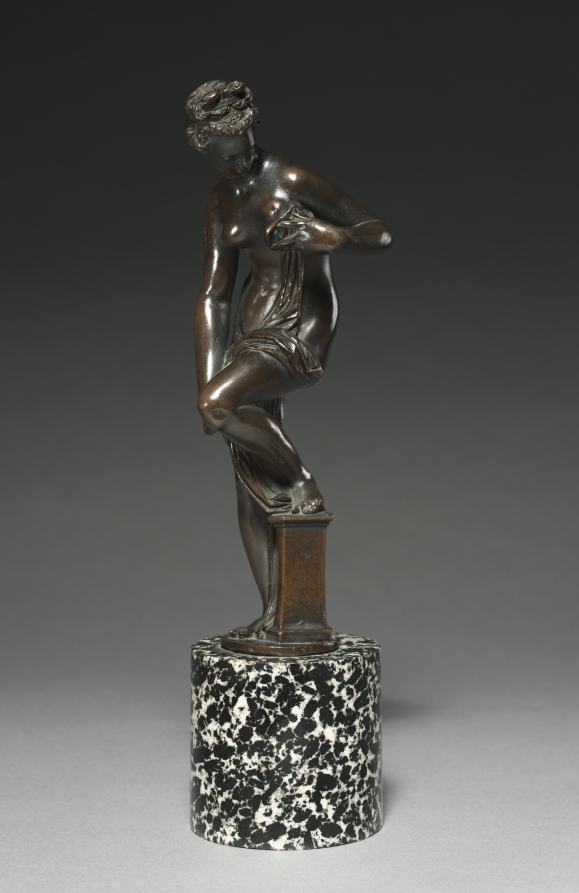
Urban Silhouette Research: Venus after the Bath — A Technical Deconstruction of Form and Chromatic Restraint
I. The Post-Ritual Body: From Armor to Atelier
The visual archive of Venus after the bath is not, as the uninitiated assume, a study in eroticism. It is a study in post-conflict decompression — the somatic interval between the battlefield of public performance and the sanctuary of private reclamation. In the Western canon, from Botticelli’s shell-born goddess to the Roman marble Venus Pudica, the trope operates on a singular axis: the removal of armor, whether bronze, cloth, or ideology. The Addison research division identifies this as the “de-armoring protocol” — a structural transition from the rigid, externally imposed silhouette of duty to the fluid, internally governed silhouette of self-possession.
Consider the DNA source: the bronze Joan of Arc by Frémiet and the Shang-Zhou jade axe. Both are instruments of power, yet both are defined by their relationship to the body. Joan’s armor is an exoskeleton — a cast bronze shell that amplifies her spiritual velocity while imprisoning her physical vulnerability. The jade axe, by contrast, is a handheld object — a portable mandate, its authority contingent on the grip of the sovereign. Venus after the bath occupies the negative space between these two paradigms. She has shed the exoskeleton. She has set down the mandate. What remains is the unmediated silhouette — the body as its own architecture.
For the 2026 NYC executive wardrobe, this translates to a radical proposition: the most powerful garment is the one that requires no external validation. The Addison silhouette for the post-pandemic, post-performative executive is not armored. It is self-legitimizing.
II. Chromatic Restraint: Slate as the Color of Post-Heroic Authority
The color directive is Slate — a chromatic register that exists in the interstice between the coldness of Onyx and the warmth of Sand. Slate is the color of the urban sky at 6:47 AM in February, when the city is neither asleep nor awake, neither defeated nor victorious. It is the color of suspended judgment.
In the context of Venus after the bath, Slate functions as the visual equivalent of wet stone — the surface of the bathhouse floor after the water has been drained. It is not the blue of the sky or the gray of the grave. It is the gray of granite that has been polished by centuries of touch. For the executive wardrobe, Slate offers a strategic advantage: it absorbs light without disappearing into shadow. It is legible in the boardroom and invisible in the elevator. It is the color of someone who has nothing to prove because they have already proven everything.
The DNA source’s jade axe, with its muted celadon and russet inclusions, operates on a similar principle. The jade is not brilliant. It is deeply, patiently luminous — a glow that emerges from within the material rather than reflecting off its surface. Slate, in the Addison palette, is the textile equivalent of this internal luminosity. It is a color that rewards proximity. From across the room, it reads as neutral. From across the table, it reveals its complexity.
III. Form as Ethical Statement: The Minimalist Silhouette
The Minimalist category is not an aesthetic preference. It is an ethical position. In a city where the visual field is saturated with noise — billboards, notifications, the relentless self-promotion of the algorithmic economy — the minimalist silhouette is an act of cognitive generosity. It refuses to compete for attention. It assumes that the viewer’s attention is a scarce resource and treats it with respect.
The Addison Venus silhouette for 2026 is defined by three technical specifications:
1. The Descending Shoulder: The shoulder line drops 2.5 centimeters below the clavicle, creating a slope that mimics the relaxation of the post-bath body. This is not slouch. It is strategic decompression. The shoulder is the body’s primary site of tension — the place where the armor of the day is strapped on. By lowering the shoulder, the garment signals that the wearer has already won the battle and is now engaged in the more important work of consolidation.
2. The Uninterrupted Vertical: The silhouette is a single, unbroken line from the apex of the shoulder to the hem. No waist seam. No darting. No belt. The garment is a column of Slate — a monolith that moves with the body but does not cling to it. This is the sartorial equivalent of the jade axe’s unadorned blade: the form is the ornament.
3. The Controlled Volume: The garment is cut with 4 centimeters of ease at the chest and 6 centimeters at the hip. This is not oversized. It is precisely under-fitted — a volume that suggests the body without describing it. The wearer is present but not exposed. The silhouette is a negotiated boundary between the self and the world.
IV. The Material Argument: Matte Finishes and the Rejection of Spectacle
The Venus after the bath silhouette demands a textile that refuses to shine. The Addison research division has identified three acceptable finishes for the 2026 season: brushed wool crepe, sand-washed silk, and matte-finish technical jersey. Each of these materials absorbs light rather than reflecting it. They are the textile equivalent of the jade axe’s reduced surface — a surface that has been worked until it reveals the material’s essential nature rather than the maker’s virtuosity.
In the context of the NYC executive wardrobe, this is a strategic rejection of the spectacle economy. The power suit of the 1980s was designed to intimidate through sharp angles and high-contrast pinstripes. The Addison Venus silhouette of 2026 is designed to disarm through restraint. It says: I do not need to intimidate you. I have already won.
V. Conclusion: The Post-Heroic Executive
The Venus after the bath is not a retreat from power. It is a redefinition of power — from the power to conquer to the power to withdraw. The Joan of Arc bronze and the Shang jade axe are both objects of public authority. They are displayed in museums, in temples, in the vitrines of history. The Venus after the bath is an object of private authority — a silhouette that is worn not for the gaze of others but for the internal calibration of the self.
For the 2026 NYC executive, the Addison Venus silhouette in Slate is not a costume. It is a protocol. It is the uniform of the post-heroic leader — the one who has shed the armor, set down the axe, and discovered that the most radical act of power is to stand, unadorned, in the quiet gray light of a February morning, and require nothing.