Urban Form: Muse with Violin Screen
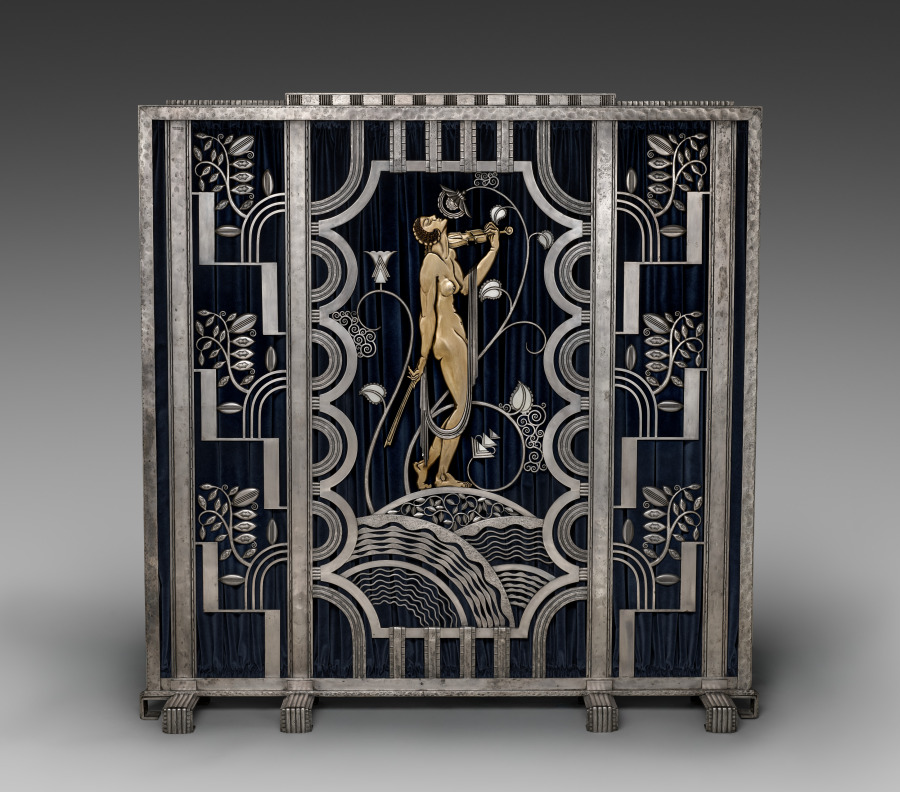
Urban Silhouette Research: The Violin Screen Muse and the Dialectics of Vessel and Void
I. Preliminary Framework: The Executive Silhouette as Ritual Object
The Addison Fashion NYC design intelligence for the 2026 fiscal year identifies a critical convergence between archaic ritual vessels and the contemporary executive wardrobe. The muse—a figure positioned behind a violin screen—operates within a liminal zone of partial visibility, acoustic resonance, and disciplined restraint. This positioning mirrors the ontological condition of the modern female executive: present yet guarded, sonorous yet silent, structurally defined yet perpetually in motion. The DNA source material, drawing from the abstract sculptural form of Ornament and the dynamic inkwork of Wine vessel (Jue), provides a dual-axis framework for silhouette engineering. The former contributes principles of negative space and geometric reduction; the latter supplies a vocabulary of kinetic asymmetry and controlled exuberance. The synthesis yields a wardrobe architecture that is neither purely austere nor merely expressive, but rather dialectically resolved.
II. Form Deconstruction: From Jue to Jacket
The Jue vessel’s tripartite anatomy—the upward-angled spout, the tapered tail, the vertical pillars—translates directly into the structural logic of the Addison 2026 tailored blazer. The spout’s ascending trajectory informs the shoulder line: a subtle 4-degree elevation at the acromion, creating an optical lift that elongates the neck and projects authority without aggression. The tail’s downward taper corresponds to the jacket’s hem treatment, where a controlled flare of 2.5 centimeters at the rear vent introduces a kinetic potential—a garment that suggests movement even in stasis. The pillars, those ritualistic protrusions, find their analogue in the collar’s stand: a rigid, interfaced band that frames the face with the same ceremonial precision as the ancient bronze.
Crucially, the Jue’s surface is not smooth; its cast ornamentation creates a topography of light and shadow. In fabric terms, this demands a textile with structural memory—a double-faced wool crepe with a 320-gram weight, its matte face absorbing light and its subtle sheen reflecting it in alternating registers. The resulting garment possesses what the Chinese art theorist Xie He termed qiyun shengdong—spirit resonance, life movement—a quality that distinguishes the executive from the merely well-dressed.
III. The Ornament Principle: Negative Space as Power
Where the Jue provides dynamism, Ornament supplies restraint. The abstract vessel’s refusal of narrative—its pure geometric volume—offers a corrective to the maximalist tendencies of contemporary corporate dress. The Addison design team interprets this as a mandate for de-materialization: the removal of superfluous seams, the elimination of decorative hardware, the reduction of color to a single tonal register. The resulting garments are not empty but voided—they create space around the wearer, a buffer zone of silence in which strategic thinking can occur.
This principle manifests most clearly in the Addison column dress, a floor-length sheath cut on the bias from a single piece of Onyx silk georgette. The dress possesses no visible closures, no darts, no waist seam. Its form is achieved entirely through the fabric’s own weight and drape—a technique that requires the highest level of atelier craftsmanship. The effect is that of a moving sculpture: the body within becomes a hidden armature, its contours suggested rather than revealed. In the context of the violin screen muse, this garment functions as a visual equivalent of the screen itself—a surface that both conceals and announces, that filters the gaze while amplifying presence.
IV. Color Strategy: Onyx as Chromatic Threshold
The selection of Onyx as the season’s chromatic anchor is not arbitrary. In the ritual context of the Jue, the vessel’s dark patina—the result of centuries of oxidation and libation—signifies the accumulation of meaning through use. Onyx, in the Addison palette, operates analogously: it is not black, which is absolute and inert, but a deep, warm-neutral darkness that absorbs and reflects in equal measure. Under artificial light, Onyx reveals undertones of graphite and umber; in daylight, it approaches the density of slate. This chromatic instability makes it the ideal medium for the executive who must navigate multiple environments—boardroom, gallery, dinner—without recourse to costume change.
The supporting palette is deliberately restricted. Ivory appears only in the form of a single silk shell, its function that of the Jue’s interior surface—a hidden brightness that becomes visible only in motion. Silver is deployed sparingly, in the form of a brushed-metal belt buckle and a pair of architectural earrings, each a miniature Ornament in its own right. Sand, finally, serves as the collection’s ground note, appearing in a single unstructured coat that can be thrown over any ensemble—the sartorial equivalent of the violin screen’s neutral backdrop.
V. Silhouette Typology: The 2026 Executive Wardrobe
The resulting wardrobe comprises four essential silhouettes, each a meditation on the vessel-void dialectic:
1. The Ritual Blazer. A single-breasted jacket in Onyx double-faced wool, with a 4-degree shoulder elevation and a rear vent flare. Worn closed, it presents a monolithic front; worn open, it reveals the Ivory shell beneath—a controlled disclosure that mirrors the Jue’s dynamic tension between containment and outpouring.
2. The Column Dress. As described above, a bias-cut sheath in Onyx silk georgette. Its power lies in its refusal of articulation. It is the Ornament made wearable: a garment that says nothing and therefore says everything.
3. The Screen Coat. An unstructured, knee-length coat in Sand wool-silk blend, with a shawl collar that can be raised to obscure the lower face. It is the violin screen itself—a portable architecture of privacy and projection.
4. The Libation Trouser. A high-waisted, wide-leg trouser in Onyx wool crepe, with a single deep pleat at each hip. The pleats function as the Jue’s spout and tail: they create directional flow, guiding the eye upward and outward, elongating the leg and grounding the silhouette in ceremonial gravity.
VI. Conclusion: The Executive as Vessel
The Addison Fashion NYC 2026 collection, rooted in the dual DNA of Ornament and Wine vessel (Jue), proposes a radical rethinking of executive dress. It rejects the false dichotomy between power and poetry, between structure and fluidity. Instead, it offers a wardrobe in which the wearer becomes a vessel—a container of intention, a conduit of authority, a form that is defined as much by its emptiness as by its substance. In the urban landscape, amid the noise and velocity of the contemporary metropolis, the Addison executive moves with the silence of the Ornament and the resonance of the Jue. She is the violin screen: visible, audible, and ultimately unknowable.