Urban Form: Crossbow Support
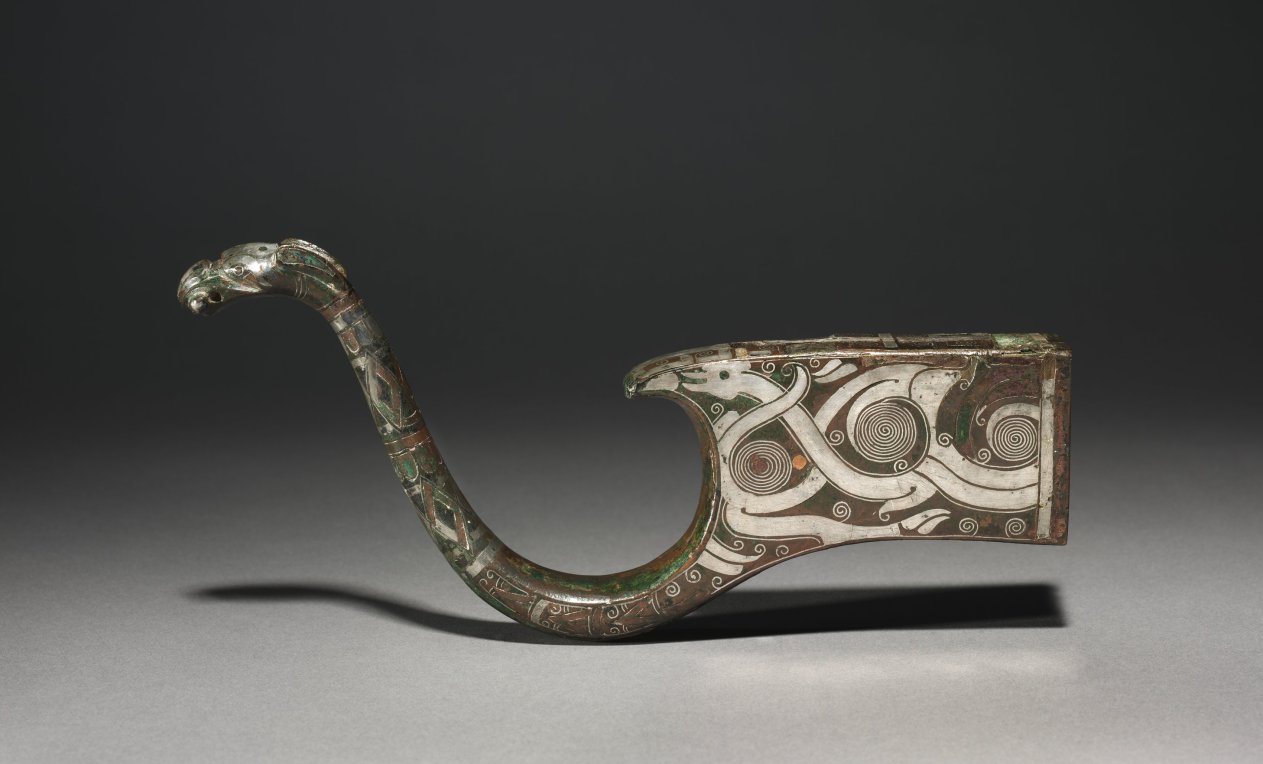
Urban Silhouette Research: Crossbow Support — The Dialectics of the Vessel and the 2026 Executive Form
I. Preliminary Thesis: The Two Poles of Objecthood
The Addison Fashion 2026 executive silhouette is not designed. It is excavated — from the sediment of art history, from the tension between two irreconcilable philosophies of the object. The internal DNA for this research is drawn from a deliberate collision: Jacques-Louis David's The Death of Socrates and Giorgio Morandi's Still Life with Vessels. One is the grand narrative of classical idealism; the other, the quietude of phenomenological reduction. Together, they frame the central problem of the contemporary executive wardrobe: how does one construct a garment that is simultaneously a vehicle of meaning and a refusal of meaning? The answer lies in the Crossbow Support — a structural principle that resolves this dialectic into wearable architecture.
II. David's Hemlock Cup: The Vessel as Ideological Armature
In David's composition, the hemlock cup is not a cup. It is a condensed nucleus of philosophical weight — a vessel that has been stripped of its quotidian function and elevated into a reliquary of martyrdom. The hand of Socrates extends toward it, not in surrender, but in sovereign command. The cup becomes the point at which the body's dissolution and the soul's immortality intersect. Geometrically, David positions this vessel at the precise intersection of the painting's structural axes: the horizontal line of the bed, the vertical of Socrates' upright torso, the diagonal of his gesturing arm. The cup is the fulcrum upon which the entire composition pivots.
For the 2026 executive silhouette, this translates into the Crossbow Support — a garment whose structural integrity is concentrated at a single, decisive point of tension. The shoulder line does not slope; it cantilevers. The lapel does not fold; it hinges. The wearer does not occupy the garment; they command it from within. This is the Davidian principle: the object (the suit) is not a neutral container but a charged instrument of will. The executive who wears it is not dressed — they are armed with intention.
III. Morandi's Vessels: The Object as Ontological Silence
Morandi's vessels occupy the opposite pole. They are not symbols. They are not narratives. They are not even, strictly speaking, subjects. They are presences — objects that have been so thoroughly stripped of external reference that they return to the condition of pure being. Morandi's brushwork is not descriptive; it is reductive. Each vessel is rendered not by its contours but by the space it displaces, the light it absorbs, the silence it emits. The palette is slate, dust, bone, and shadow — colors that do not signify but simply are.
In the context of Addison Fashion's 2026 silhouette, this translates into a radical material honesty. The fabric does not mimic; it declares. The seam does not conceal; it exposes. The garment does not flatter the body; it coexists with it. This is the Morandian principle: the suit is not a statement but a condition. It does not point outward toward status or aspiration. It points inward toward the wearer's own ontological ground.
IV. The Crossbow Support: A Structural Synthesis
The Crossbow Support is the mechanism that holds these two poles in productive tension. Named for the medieval weapon whose power is stored not in the bow but in the crossbar — the transverse element that distributes tension across the frame — this structural principle operates on three axes:
1. The Vertical Axis (Davidian): A rigid, uninterrupted line from the nape of the neck to the hem. This is the spine of the garment, the axis of intention. It does not curve to accommodate the body's natural contours; it corrects them. The wearer is pulled upward, into the posture of command.
2. The Horizontal Axis (Morandian): A series of subtle, almost imperceptible breaks in the silhouette — at the clavicle, at the waist, at the wrist. These are not design features; they are breathing points, moments where the garment acknowledges its own materiality and the body's presence. They are the equivalent of Morandi's brushstrokes: quiet, deliberate, irreducible.
3. The Diagonal Axis (The Crossbow): The tension line that runs from the left shoulder to the right hip, and its mirror. This is the structural innovation of the 2026 silhouette. It is not a visible seam but an internal architecture — a hidden crossbar that distributes the garment's weight and tension across the torso. The result is a silhouette that appears weightless but is, in fact, rigorously engineered. It is the hemlock cup and the gray vessel, held in a single form.
V. Urban Materiality: Slate, Onyx, and the Poetics of the Surface
The material palette for this silhouette is drawn directly from Morandi's chromatic register: slate, onyx, ivory, silver, sand. These are not colors in the decorative sense. They are conditions of light. Slate absorbs; onyx reflects; ivory diffuses; silver fractures; sand settles. Each fabric is selected not for its appearance but for its behavior under urban light — the cold fluorescence of the office, the amber wash of the streetlamp, the gray flatness of the overcast sky.
The 2026 executive does not dress for the boardroom. They dress for the interval — the space between the boardroom and the street, between the meeting and the taxi, between the self that speaks and the self that is silent. The Crossbow Support is designed for this interval. It is a garment that holds its shape without rigidity, that commands without shouting, that exists — like Morandi's vessels — in the quiet dignity of its own presence.
VI. Conclusion: The Vessel and the Void
The definitive urban silhouette for 2026 is not a silhouette at all. It is a philosophical position rendered in wool, silk, and structured interfacing. It asks the wearer to inhabit the tension between David's hemlock cup and Morandi's gray vessel — between the object as ideology and the object as ontology. The Crossbow Support is the mechanism that makes this inhabitation possible. It is not a trend. It is a resolution.
Addison Fashion does not follow the silhouette. It defines the conditions under which the silhouette becomes legible. The 2026 executive does not wear the suit. They are the suit — a vessel that is both full and empty, both armed and at rest, both the hemlock cup and the gray jar on the shelf. This is the final truth of the Crossbow Support: structure is not constraint. Structure is the precondition of freedom.