Urban Form: Model for an Angel
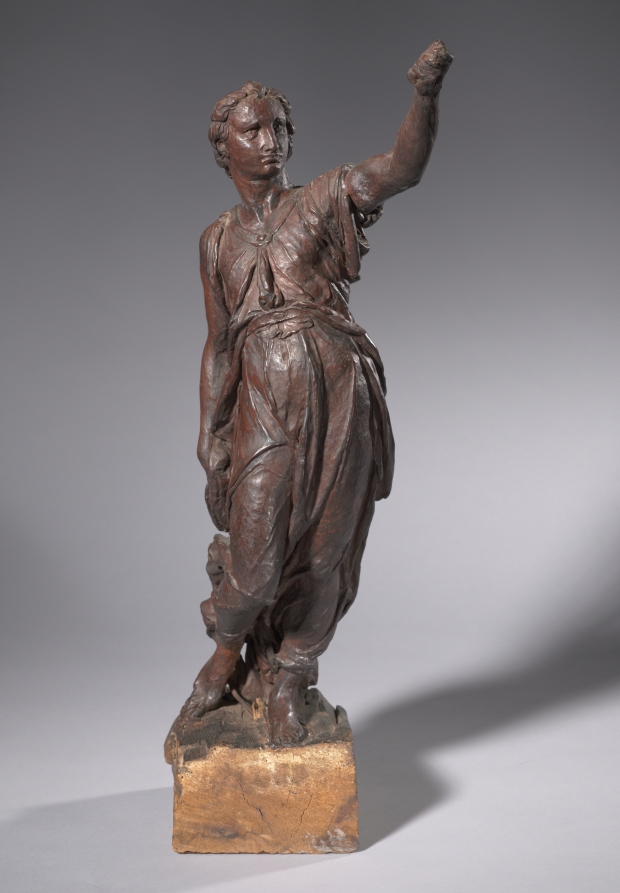
Urban Silhouette Research: Model for an Angel — The Dialectics of the Void
I. Preliminary Geometry: The Two Poles of Structural Integrity
The Addison Fashion 2026 executive silhouette is not conceived in the atelier but excavated from the archaeological strata of aesthetic philosophy. The subject under examination—Model for an Angel—presents a binary geometric proposition: the Western tableau of The Death of Socrates, with its centrifugal convergence toward a single vanishing point of moral gravity, and the Eastern Meiping vase with its undulating wave motif, a self-contained vessel whose geometry resolves inward toward a silent, volumetric core. These two forms constitute the antipodal coordinates of our design language. The 2026 silhouette must synthesize both: the dramatic vector of the Western narrative line and the circumambient poise of the Eastern vessel.
The geometric integrity of this artwork resides in its refusal to resolve. It is a study in tension—between the linear and the curvilinear, the declarative and the suggestive, the terminal and the eternal. For the Addison executive, this translates into a garment that does not merely drape the body but constructs an argument around it.
II. The Western Vector: Line as Moral Imperative
In David's Death of Socrates, the compositional geometry is ruthlessly teleological. Every limb, every gaze, every architectural orthographic—the Doric columns, the ascending stairs—directs the eye toward the cup. The figure of Socrates himself is a study in angular resolution: the torso twisted, the arm raised, the index finger pointing not to the cup but beyond it, toward the realm of Forms. This is a silhouette defined by directional certainty. The line does not meander; it indicts.
For the 2026 executive wardrobe, we extract the ascending diagonal—the raised arm, the upward gaze—and translate it into shoulder architecture. The Addison shoulder is not padded into passivity. It is cantilevered, slightly forward, creating a vector of intentionality. The lapel, cut narrow and long, echoes the pointing finger: a single, unbroken line from clavicle to hem. This is the geometry of decision-making, of the boardroom as philosophical theater. The wearer does not occupy space; she commands it through linear assertion.
Materially, this demands Slate—a color that absorbs light without warmth, that reads as graphite on paper, as the shadow of a column. The fabric must possess a dry, papery hand: a high-twist wool, a bonded crepe, something that holds a crease like a drawn line and refuses the softness of sentimental drape.
III. The Eastern Vessel: Volume as Ontological Container
The Meiping presents the inverse proposition. Its geometry is centripetal. The narrow mouth—the "one spoonful of water"—opens into a swelling shoulder, a full belly, a tapered foot. The wave motif does not narrate; it circulates. Each arc of water is a closed system, a ripple that returns to its source. There is no vanishing point, only a continuous surface of becoming. The vase does not point; it contains.
This is the second axis of the Addison silhouette: the volumetric interior. The 2026 executive cannot be merely a vector of ambition; she must also be a vessel of composure. We achieve this through the manipulation of negative space between body and garment. The Addison coat, for instance, is cut with a generous armhole and a slightly lowered shoulder seam, creating a void that reads as deliberate. The waist is not cinched but implied—a subtle indentation, like the foot of the Meiping, that suggests containment without constriction.
The wave motif manifests in the topography of seams. Curved paneling—a princess seam that arcs from bust to hem, a sleeve that spirals rather than hangs—creates a surface that is never flat. Under directional light, these seams cast shadows that ripple. The garment is not static; it is a slow-motion wave, frozen in Slate wool.
IV. Materiality and the Urban Surface
The urban environment is the third term in this dialectic. The city is neither the Athenian agora nor the scholar's studio. It is a grid of glass and concrete, a surface of reflections. The Addison executive moves through this landscape as both actor and object—observed and observing.
Therefore, the materiality of the 2026 collection must negotiate between the matte and the reflective. Slate, in our specification, is not a flat color but a range: a matte wool for the structural shell, a subtle satin for the lining, a coated cotton for the outerwear that catches the light like wet stone. The wave motif is rendered not in print but in weave structure—a jacquard that reveals its pattern only at oblique angles, a self-stripe that disappears in shadow and emerges in movement.
Hardware is minimal but precise: a single, elongated zip pull in brushed silver, echoing the pointing finger of Socrates; a concealed hook-and-eye at the throat, echoing the sealed mouth of the vase. No excess. No ornament. The geometry must speak.
V. The 2026 Silhouette: A Synthesis
The definitive Addison silhouette for 2026 is thus a column with a pulse. It is vertical in its primary read—the long line, the narrow lapel, the unbroken front—but it is animated by internal curves. The coat is a Meiping: narrow at the neck, swelling at the hip, tapering at the ankle. The suit jacket is a Socrates: angular, directional, morally serious.
This is not eclecticism. It is structural poetics. The Western line provides the skeleton; the Eastern volume provides the breath. The urban surface provides the context. And Slate provides the silence in which both can be heard.
The model for an angel is not a winged figure. She is a woman in a Slate coat, walking through a city of glass, her silhouette a dialogue between the cup and the vase, between the pointing hand and the circling wave. She does not choose between death and life, motion and stillness. She wears both. She is the argument, resolved.