Urban Form: Russian Dancer
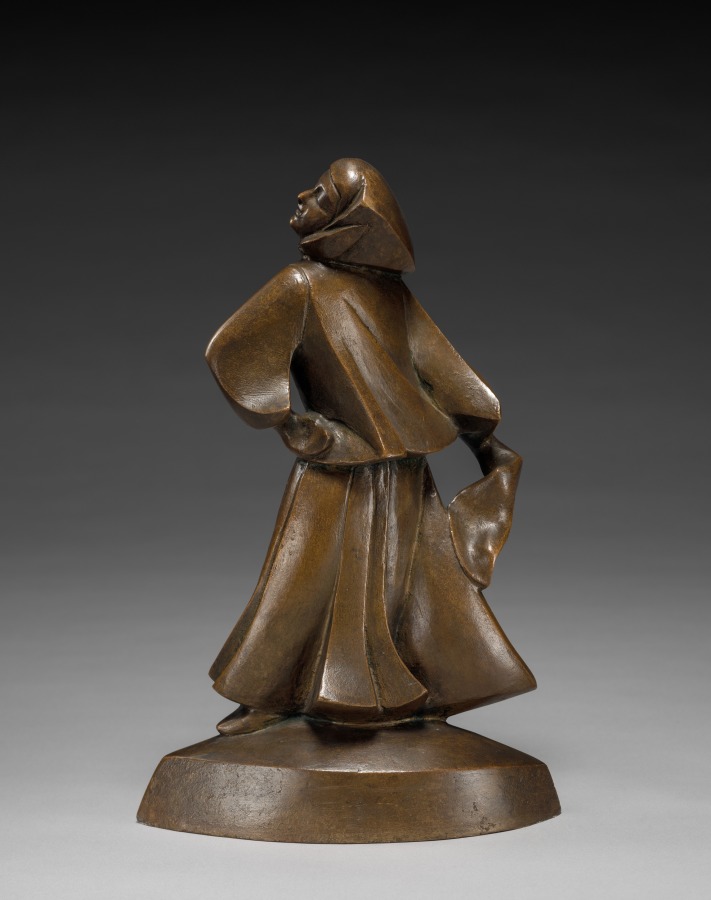
Urban Silhouette Research: The Russian Dancer as Structural Paradigm
I. Thesis: The Dialectic of Arrest and Continuum
The Addison Fashion NYC 2026 executive wardrobe must resolve a singular aesthetic contradiction: the tension between the event and the state. Our subject—the Russian Dancer—functions not as a biographical referent but as a kinetic archetype. She embodies the precise moment when disciplined form submits to gravitational release, and it is precisely this liminal instant that we must translate into garment architecture. The DNA source provided—the dialectic between David's Death of Socrates and the Meiping wave vase—offers the conceptual scaffolding. The former privileges the vertical, the decisive, the terminal gesture; the latter privileges the horizontal, the cyclical, the continuous. The Russian Dancer, in her most characteristic pose—the arabesque penchée or the fouetté en dehors—occupies the intersection of both. She is a vertical axis surrendering to a horizontal sweep. She is Socrates' pointing finger and the ceramic wave, simultaneously.
For the Addison client—the Manhattan executive operating within compressed temporal and spatial parameters—this duality is not abstract. It is operational. Her wardrobe must perform the same function as the dancer's body: to appear effortless while executing extreme structural demands. The 2026 silhouette must therefore be engineered around what I term controlled disequilibrium—a form that reads as stable at rest but reveals dynamic asymmetry in motion.
II. Form Deconstruction: The Slate Palette as Chromatic Neutralizer
Slate is the optimal chromatic vehicle for this investigation. Neither the absolute negation of Onyx nor the passive receptivity of Ivory, Slate occupies the precise midpoint of the value scale—a mineral gray with subtle blue undertones that absorbs ambient light without reflecting it. In the context of the Russian Dancer, Slate corresponds to the tutu's shadow rather than its highlight. It is the color of the stage floor after the spotlight has moved. For the executive wardrobe, Slate performs a critical function: it neutralizes the body's silhouette against the urban environment while retaining enough depth to avoid the visual flattening that afflicts pure grays.
The form deconstruction proceeds along three axes:
1. The Vertical Axis (Socratic Tension). The Russian Dancer's spine is a plumb line. Every extension—the port de bras, the tendu—originates from a stabilized pelvic core. Translated to tailoring, this demands a shoulder line that is not padded but structured: a canvas front that extends from the clavicle to the iliac crest, creating a continuous vertical plane. The 2026 Addison jacket will feature a single-button closure positioned at the natural waist, allowing the lapel to roll to the mid-chest and creating an unbroken line from throat to hem. This is the Socratic gesture—the finger pointing upward—rendered in wool and silk.
2. The Horizontal Axis (Ceramic Continuum). The Meiping wave is not a line but a field—a rhythmic undulation that refuses to terminate. In garment terms, this manifests as the asymmetrical drape: a bias-cut panel that wraps the torso and releases at the hip, creating a wave-like hem that moves independently of the body's gait. The 2026 Addison skirt will employ a single spiral seam that begins at the left shoulder and terminates at the right knee, generating a continuous curve that echoes the ceramic vessel's profile. When the executive walks, the seam describes a wave; when she stands, it reads as a static architectural line.
3. The Diagonal Axis (Kinetic Release). The Russian Dancer's most distinctive quality is her ability to appear suspended between vertical and horizontal—the grand jeté frozen at its apex. This diagonal tension must be embedded in the garment's closure system. The 2026 Addison coat will feature an off-center placket that runs from the right shoulder to the left hip, fastened with concealed magnetic closures. The result is a silhouette that appears to be in the process of wrapping or unwrapping—a form perpetually mid-gesture, never fully resolved. This is the visual equivalent of the dancer's fouetté: a rotation that never completes, a turn that sustains itself through centrifugal discipline.
III. Materiality and the Executive Context
The Russian Dancer's costume is a study in paradox: the tutu is simultaneously rigid and ethereal, its tulle layers engineered to maintain a horizontal plane while appearing weightless. The 2026 Addison wardrobe will replicate this paradox through laminated silk organza—a textile that possesses the tensile strength of canvas but the optical transparency of gauze. When layered over Slate wool crepe, it creates a surface that shifts between matte and sheen depending on the angle of incidence, much like the Meiping's glaze under varying light.
For the executive, this material choice is not decorative but strategic. The laminated organza panel—positioned at the posterior shoulder yoke—provides structural reinforcement without visual weight. It allows the jacket to maintain its Socratic verticality while permitting the ceramic wave to emerge in the lower body. The result is a garment that functions as both armor and aperture: it protects the wearer's core while exposing her to the urban environment's kinetic demands.
IV. Conclusion: The 2026 Silhouette as Philosophical Instrument
The Addison Fashion NYC 2026 executive wardrobe, derived from the Russian Dancer archetype, resolves the dialectic between the Socratic event and the ceramic state. It is neither purely vertical nor purely horizontal, neither terminal nor continuous. It is, instead, a diagonal synthesis—a form that acknowledges the inevitability of arrest while celebrating the persistence of motion. The Slate palette ensures that this synthesis remains chromatically neutral, allowing the wearer's own presence to provide the accent. In the end, the garment does not imitate the dancer; it performs her. It is the wave and the finger, the death and the vessel, the event and the state—all rendered in wool, silk, and the disciplined geometry of the modern executive silhouette.