Urban Form: Dubia Fortuna
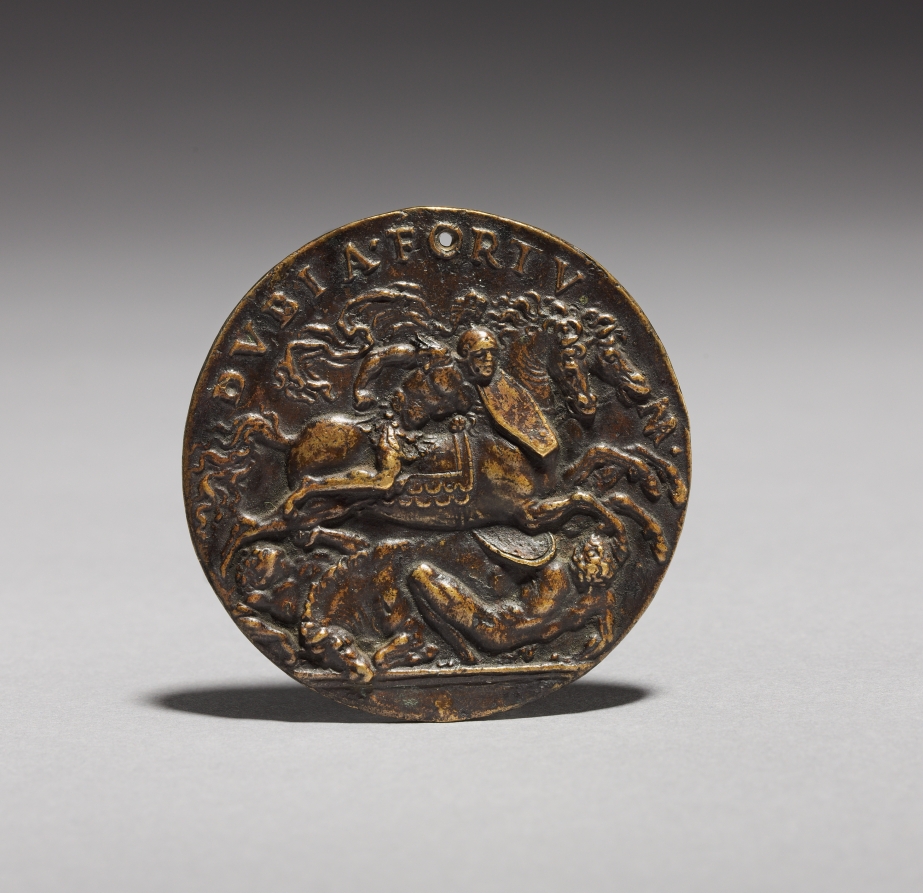
Urban Silhouette Research: Dubia Fortuna — The Vessel and the Void
I. Preliminary Taxonomy: Two Modes of Monumentality
The Addison Fashion atelier operates on a principle of structural poetics—the conviction that a garment, like a building or a burial urn, is defined not by its surface but by the negative space it commands. For the 2026 executive silhouette, we turn to an unlikely dialectic: Jacques-Louis David's The Death of Socrates and an anonymous Greek ceramic Jar. These two objects—one a painting of maximal narrative density, the other a vessel of minimal formal utterance—constitute the twin poles of our design language. The painting presents the body as a rhetorical instrument; the jar presents the body as a silent container. The Addison woman does not choose between them. She wears both.
David's composition is a study in controlled theatricality: the philosopher's torso is a column, his gesture a vector, the cup a fulcrum. Every fold of drapery is engineered. Every gaze is directed. This is the architecture of the grand gesture—a silhouette that announces itself before it is seen. The jar, by contrast, is an architecture of withdrawal. Its curve is continuous, its lip unadorned, its volume self-evident. It does not perform. It contains. For 2026, we synthesize these impulses into a single proposition: the executive silhouette must possess the geometric integrity of the vessel while retaining the dramatic poise of the tableau.
II. Geometric Integrity: The Jar as Structural Prototype
Examine the Jar as a geometric system. Its profile is a continuous ovoid—a form that resists interruption. There is no waist, no shoulder seam, no articulation of limb. The vessel's integrity derives from its unbroken curvature, a single revolution around a central axis. In tailoring terms, this translates to a silhouette that eliminates the conventional break at the waist. The Addison 2026 jacket is cut as a monolithic shell: a single, unlined plane of double-faced cashmere or bonded wool that falls from the clavicle to the mid-thigh without a horizontal seam. The armhole is set deep and low, allowing the sleeve to emerge as a natural extension of the torso rather than an attached appendage. The result is a columnar volume that echoes the jar's ovoid logic—a body that is simultaneously armor and aperture.
The jar's lip—that slight, deliberate flare at the opening—is the only interruption in its geometry. It is a functional necessity: a rim for pouring, a ledge for a lid. In our silhouette, this translates to the collar. For 2026, the Addison collar is not a fold or a lapel but a raised, self-fabric rim—a two-centimeter band that stands away from the neck, creating a precise gap between garment and skin. This gap is the void of the jar made wearable. It is the space where air circulates, where the body breathes, where the silhouette asserts its independence from the flesh it contains.
III. The Davidian Counterpoint: Tension and the Executive Gesture
If the jar provides the container, David's painting provides the tension. The Death of Socrates is a composition of vectors: the philosopher's raised arm, the downward gaze of the disciples, the horizontal plane of the bed, the verticality of the prison wall. These vectors create a field of forces that holds the eye in a state of suspended animation. The painting is not static; it is arrested. For the 2026 executive silhouette, we translate this into asymmetric tension. The monolithic shell of the jacket is interrupted by a single diagonal—a razor-sharp fold that runs from the left shoulder to the right hip, achieved through a concealed internal strap or a bias-cut panel. This fold does not decorate; it destabilizes. It introduces the Davidian drama of the raised arm and the pointing finger into an otherwise silent vessel.
The trousers follow the same logic. They are not wide, not narrow, but columnar—a straight fall from the high waist to the ankle, with a single knife pleat pressed to a razor edge. The pleat is the vector; the column is the jar. When the executive walks, the pleat opens and closes like a breath, revealing the void between fabric and leg. This is the urban materiality of the silhouette: a garment that is both shelter and signal, both container and gesture.
IV. Materiality: The Fired Clay and the Painted Surface
The jar is terracotta—fired earth, transformed by heat into a permanent record of its own making. Its surface is matte, slightly porous, marked by the potter's wheel and the kiln's breath. David's painting, by contrast, is oil on canvas—a surface of illusion, a skin of varnish and pigment that simulates depth. For 2026, Addison proposes a material hybridity: the matte density of fired clay in the outer shell (bonded wool, double-faced cashmere, dense cotton drill) and the luminous depth of oil paint in the lining (silk crepe, cupro, or a high-twist viscose in Onyx). The exterior is the jar: silent, structural, enduring. The interior is the painting: narrative, sensual, hidden. The executive who wears this garment carries both the vessel and the tableau against her skin.
The color is Onyx—not black, but the deep, blue-tinged darkness of a Greek sky at midnight, the color of the jar's silhouette against a white gallery wall. It is a color that absorbs light and returns nothing, a color that makes the geometry legible without decoration. In Onyx, the void of the jar and the shadow of the painting become indistinguishable.
V. Conclusion: The Silhouette as Vessel
The Addison 2026 executive silhouette is not a costume. It is a philosophical instrument. It takes the jar's geometric integrity—the unbroken ovoid, the raised lip, the silent volume—and subjects it to the Davidian tension of the diagonal fold and the arrested gesture. The result is a garment that does not describe the body but contains it, as the jar contains water, as the painting contains death. The executive who wears it does not perform authority; she occupies it. She is the vessel and the void. She is the silence and the gesture. She is Dubia Fortuna—the uncertain fortune of the urban silhouette, held in perfect, geometric suspension.