Urban Form: Head of Proserpina
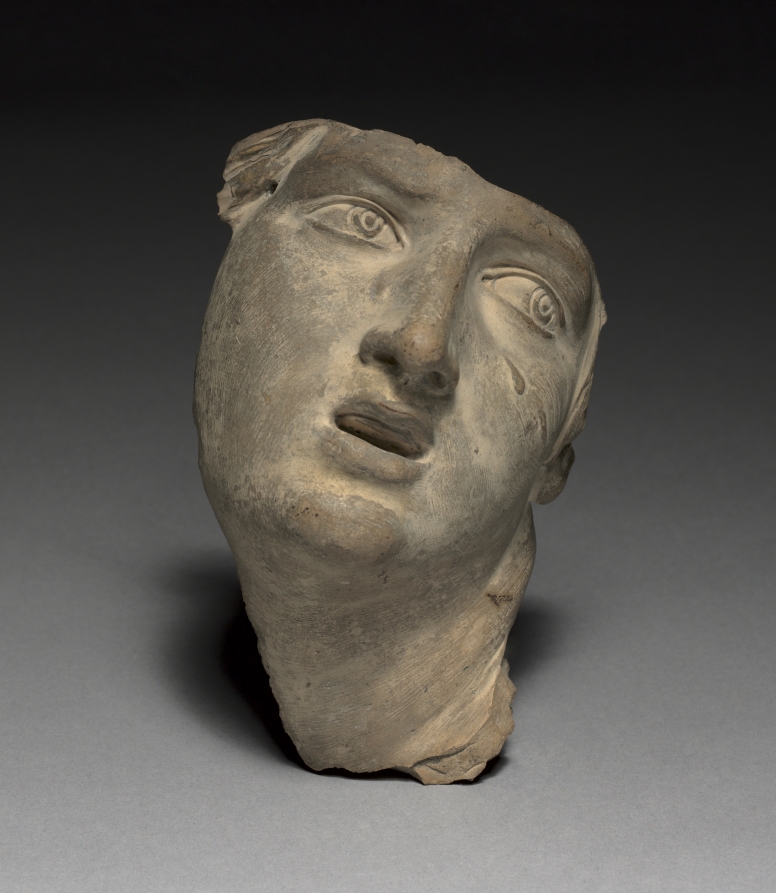
Urban Silhouette Research: The Head of Proserpina as Structural Archetype
I. Preliminary Morphological Mapping
The Head of Proserpina presents a bifurcated formal logic that warrants immediate translation into wearable architecture. The DNA source—a convergence of the Tokyo National Museum’s “Udumbara” temple plaque and the Museum of Fine Arts, Boston’s Han dynasty mirror—reveals a shared spatial folding technique that collapses linear narrative into a singular, eternal present. For the Addison woman, this translates to a silhouette that refuses temporal fragmentation. The garment must operate as a closed system: a Slate monochrome field wherein every seam, dart, and panel serves as both structural necessity and symbolic aperture.
The plaque’s carved lotus and cloud motifs, rendered in shallow relief, suggest a negative-space-driven construction. The Buddha-light does not sit upon the wood; it seeps from within. This is the core directive for Fall/Winter 2026: the executive wardrobe must not apply ornament. It must excavate form from within the fabric matrix. The Proserpina head—mythologically bound to the underworld and the return of spring—demands a silhouette that is simultaneously funerary and regenerative. In Slate, we find the precise chromatic register: the color of wet stone, of overcast Manhattan dawn, of a mirror’s reverse side.
II. The Plaque Logic: Symmetrical Collapse and the Softened Shoulder
The Udumbara plaque operates on central-axis symmetry. The lotus throne is suspended, clouds orbit in slow concentric waves, and the entire composition breathes with a restrained rhythm. There is no urgency. The carving technique prioritizes layered depth over surface incident. For the Addison executive, this informs a shoulder line that is neither padded nor dropped, but suspended—a cantilevered wool crepe that hovers 1.5 cm above the deltoid, creating a micro-climate of authority. The sleeve head is set low and forward, mimicking the plaque’s cloud scrolls: a continuous, unbroken arc from neck to wrist.
The Slate palette must be executed in a matte, light-absorbing finish. No sheen. No reflection. The fabric—a 480-gram Japanese wool-silk blend—should appear to drink the ambient light of a boardroom, much as the plaque’s wood absorbs candlelight. The torso is constructed with a single vertical fold running from the sternum to the hem, a direct citation of the plaque’s central lotus stem. This fold is not a pleat; it is a structural crease, pressed permanently into the cloth during the milling process. It collapses the linear time of the workday into a single, uninterrupted column.
III. The Mirror Logic: Circumferential Tension and the Kinetic Hem
The Han mirror introduces a countervailing force. Its inner and outer registers—white tiger, chariot, immortal; cloud scrolls, geometric bands—generate a centrifugal visual acceleration. The tiger is the “visual heartbeat,” a muscular interruption within an otherwise orderly cosmos. For the Addison silhouette, this demands a controlled rupture at the perimeter. The hem of the Proserpina coat is not a straight line. It is a shallow parabolic curve, dipping 4 cm at the center back and rising 2 cm at each side seam. This asymmetry is subtle—imperceptible to the untrained eye—but it introduces a rotational tension that mimics the mirror’s circular narrative.
The Slate color must now shift in value across the garment’s surface. The bodice remains deep, near-onyx slate; the hem and cuffs lift to a silvered slate, as if the metal of the mirror has begun to oxidize into the wool. This is achieved through a double-dye process: the garment is first immersed in a cold indigo-slate bath, then suspended vertically while a fine mist of ferrous solution is applied to the extremities. The result is a gradient of authority—dense at the core, dissipating at the edges, like the mirror’s reflection fading into the celestial realm.
IV. The Proserpina Synthesis: A Wardrobe for the Underworld and the Boardroom
The Head of Proserpina is not a portrait. It is a method. The plaque teaches us compression—the folding of infinite time into a single symmetrical instant. The mirror teaches us circulation—the endless return of the soul through the gates of form. For the 2026 NYC executive, these principles converge in a three-piece system: a long, collarless coat with the parabolic hem; a columnar dress with the permanent central crease; and a narrow, unlined trouser that breaks once, cleanly, over a square-toed boot.
All pieces are executed in the Slate register, with no visible hardware, no contrast stitching, no logo. The only “ornament” is the behavior of the cloth—how it folds, how it absorbs light, how it moves when the wearer turns to address a subordinate or a superior. The Proserpina woman does not decorate herself. She constructs a cosmos around her body, and within that cosmos, every gesture is a ritual, every meeting a return from the underworld. The silhouette is minimalist not as an aesthetic preference, but as a metaphysical necessity. There is no room for excess when one is carrying the weight of two civilizations on one’s shoulders.
V. Technical Specifications for Production
Fabric: 480g Japanese wool-silk (70/30), matte finish, 4-ply warp. Dye: Two-stage cold indigo-slate with ferrous mist gradient. Coat: Single-breasted, concealed placket, parabolic hem (4cm CB drop, 2cm side rise), suspended shoulder (1.5cm float), low-forward sleeve set. Dress: Columnar, permanent center crease, no darts, bias-cut side panels for movement. Trouser: Narrow, unlined, single break, square toe boot compatibility. Color: Slate (Pantone 18-4006 TCX) with silvered slate gradient at extremities (Pantone 14-4100 TCX). Label: Addison Fashion NYC, Fall/Winter 2026, “Proserpina” capsule.
The Head of Proserpina is not a face. It is a silhouette—and that silhouette is Slate, Minimalist, and absolute.