Urban Form: Jonah Cast Out by the Whale onto the Shore of Nineveh
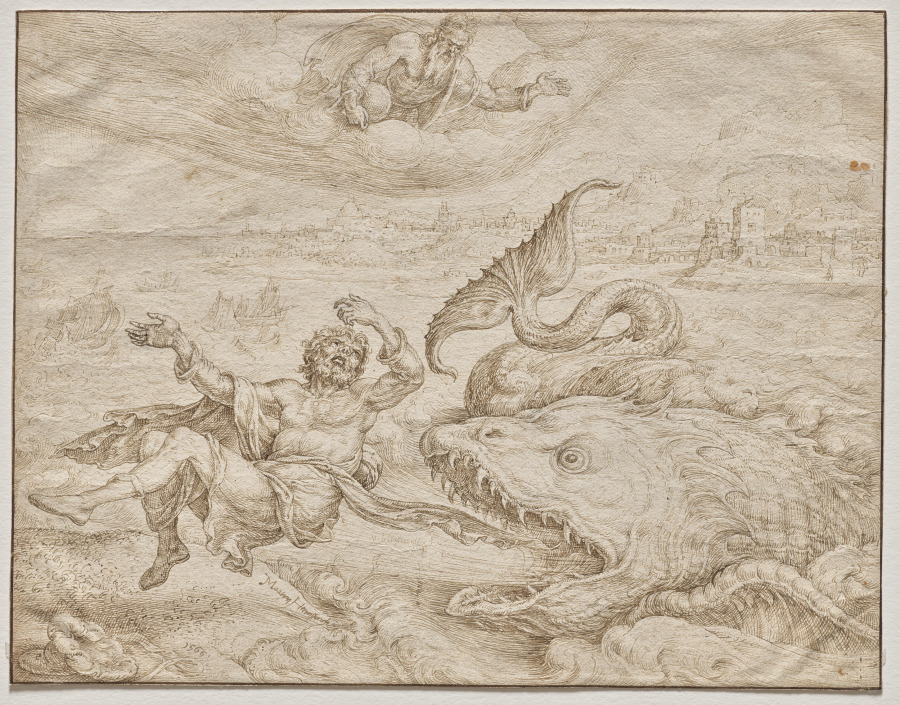
Urban Silhouette Research: The Cast Shore as Structural Protocol
I. Geometric Integrity: The Diagonal of Expulsion
The compositional armature of Jonah Cast Out by the Whale onto the Shore of Nineveh operates on a single, brutal diagonal—the trajectory of the body from leviathan to littoral. This is not a graceful arc but a vector of displacement, a line drawn by force majeure. For the 2026 executive silhouette, this diagonal becomes the governing axis: a shoulder that sits fractionally forward of the hip, a lapel that cuts not vertically but at a seven-degree lean, a hemline that refuses the democratic horizontal. The geometry is uncompromising. It speaks of arrival without consent, of being deposited rather than placed.
The whale itself—that dark, vaulted mass—functions as negative architecture. Its mouth is a portal, its ribs a cage of compression. In Addison terms, this translates to the cocoon coat: a volume that swallows the body whole before releasing it, transformed, onto the urban shore. The shore is not a beach but a threshold—the liminal zone between the abyss and the city wall. The silhouette must acknowledge this threshold. It must be neither aquatic nor terrestrial, but amphibious in its formal logic.
II. Structural Poetics: The Body as Reluctant Monument
Jonah's posture is the fulcrum of the image. He is not standing; he is not falling; he is being deposited—a passive architecture, a column toppled by divine hydraulics. The limbs splay with the inelegance of a marionette whose strings have been cut mid-gesture. This is the anti-heroic pose, and it is precisely this that the 2026 executive silhouette must absorb. The era of the power stance is over. The new posture is the receptive collapse: a shoulder dropped, a wrist turned inward, a spine that curves not from weakness but from the weight of having been through something.
The garment must facilitate this. Consider the unstructured blazer in slate wool—its shoulder unpadded, its sleeve cut wide at the elbow to allow the forearm to hang with that same exhausted grace. The trouser, too, must break not at the ankle but at the instep, pooling slightly, as if the wearer has just been set down and has not yet remembered how to stand. This is not sloppiness. This is the poetry of the aftermath.
III. Urban Materiality: Salt, Stone, and the Weathered Surface
The palette of the original narrative is one of erosion: the whale's hide, slick and abraded; the shore's stones, rounded by tide; Jonah's skin, salted and raw. For Addison, this demands a materiality that is pre-weathered—fabrics that arrive already bearing the memory of exposure. Slate, as a color, is not a flat gray but a spectrum: the blue-gray of wet basalt, the green-gray of oxidized copper, the brown-gray of storm clouds over Nineveh. The 2026 collection will treat slate as a living surface, not a neutral.
Textiles must follow. Dry-handle wool with a chalky finish. Paper-touch leather that creases like ancient parchment. Raw silk that catches light not with sheen but with a dull, mineral glow. The goal is not luxury as smoothness but luxury as resilience—the beauty of a surface that has been through the whale and the water and the waiting.
Hardware must be minimal and functional: a single matte-black hook at the throat, a concealed zip that runs the length of the spine, a belt that is not a belt but a strap—the kind that might have bound a prophet's wrists. No gold. No shine. Only the dull authority of things that have been tested.
IV. The Silhouette Defined: From Expulsion to Executive
How does this define the 2026 executive silhouette? It defines it through asymmetry of intent. The left side of the body is the whale—voluminous, dark, enclosing. The right side is the shore—exposed, linear, receiving. A single garment must negotiate this duality. The solution is the split-volume coat: a cocoon back that balloons from the shoulder blades, paired with a sharply tailored front that falls in a single, unbroken line from clavicle to knee. The wearer is simultaneously swallowed and spat out. She is both the beast and the beach.
The hemline is critical. It must not be level. It must dip at the back—a coda of fabric that trails like seaweed—and rise at the front, exposing the shin, the ankle, the foot. This is the geometry of arrival: the body has been deposited, and the ground beneath it is not yet familiar. The shoe, therefore, is a flat boot in slate nubuck, its sole thin, its shaft collapsing around the calf. No heel. No lift. Only contact.
V. Conclusion: The Shore as Runway
The Jonah narrative is not a story of salvation. It is a story of being moved against one's will—from the whale to the shore, from the shore to the city, from the city to the prophecy. The 2026 executive does not choose her silhouette; she is deposited into it by forces larger than herself: the market, the algorithm, the Anthropocene. Addison's task is to make that deposition beautiful. Not pretty. Not comfortable. Beautiful in the way a storm-battered cliff is beautiful—because it has survived.
The urban silhouette, then, is not a shape but a record of pressure. It is the whale's mouth and the shore's edge and the prophet's exhausted limbs, translated into wool and leather and silk. It is slate. It is minimal. It is the uniform of those who have been through something and have not yet decided what to say about it. The runway is the shore. The collection is the cast. The wearer is the one who rises, slowly, and walks toward Nineveh.