Urban Form: Bell (Lai Zhong)
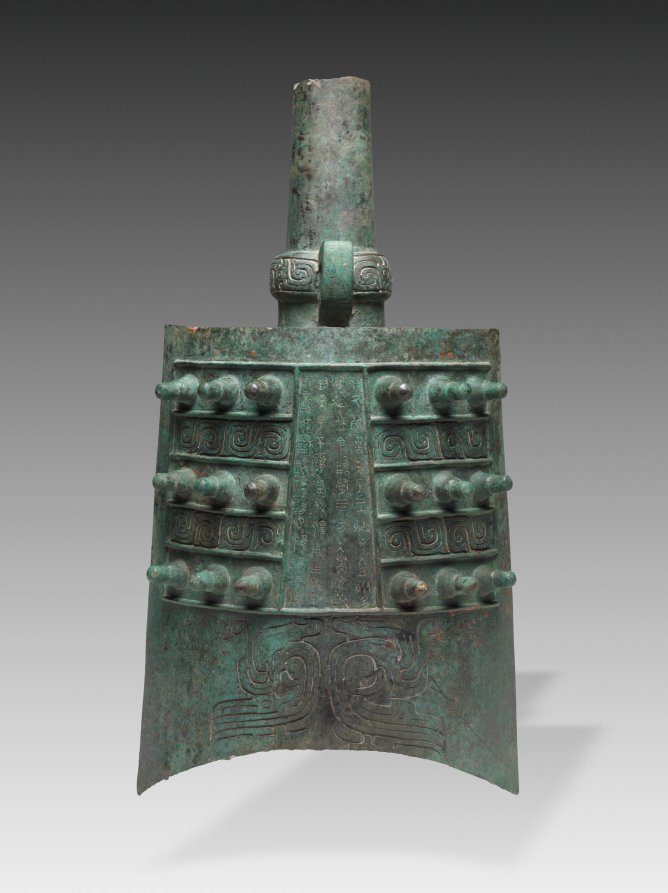
Urban Silhouette Research: The Archaeology of Form
I. The Negative Space as Architectural Instrument
The Mold Fragment with Musicians presents a fundamental proposition for the 2026 executive wardrobe: absence is not void but volume. The ceramic shard, fractured and incomplete, generates its authority precisely through what it withholds. For Addison Fashion, this translates into a tailoring philosophy where the negative space between garment and body becomes the primary design material—not the fabric itself, but the architecture of air it contains.
The 2026 silhouette must be conceived as a controlled excavation. Where the mold fragment preserves the ghost of a musician's hand pressure in fired clay, our garments must preserve the ghost of the wearer's movement in structured wool and bonded leather. The shoulder line, therefore, does not sit upon the body but hovers—a deliberate 2.5-centimeter suspension that creates a tactile negative space, allowing the executive form to breathe within its own architectural envelope. This is not oversized; this is excavated.
II. Geometric Integrity: The Bovine Axis and Rotational Symmetry
The Mortuary Figure of the Zodiac Sign: Ox offers a countervailing geometric principle. The Taurus figure operates on a vertical axis of rotational symmetry—a columnar mass that distributes weight evenly across its base while directing kinetic energy upward through the horns. This is the geometry of contained force: the animal's muscular potential is compressed into a ritual object, its power domesticated by astronomical function.
For the 2026 executive silhouette, we appropriate this columnar integrity. The Addison coat must function as a load-bearing structure—a single continuous plane from shoulder to hem, interrupted only by the precise articulation of the waist. The seam placement follows the logic of the zodiac figure's carved musculature: not anatomical but symbolic. A single vertical seam at center back, offset by two diagonal darts at the scapula, creates a triangulated tension field that references both the ox's yoke and the architectural principles of Brutalist concrete formwork.
The geometric integrity of this artwork lies in its refusal of ornament. The Taurus figure does not decorate; it occupies. Similarly, the 2026 Addison silhouette must occupy space with the same gravitational certainty—a presence that is felt before it is seen.
III. Materiality: From Fired Clay to Urban Armor
The mold fragment's material journey—from plastic clay to vitrified ceramic—mirrors the transformation we seek in urban textiles. The 2026 collection employs bonded technical wool with a surface treatment that mimics the micro-fissures of aged terracotta: a matte, slightly irregular hand that absorbs light rather than reflecting it. This is not distress; this is material memory.
For outerwear, we introduce laminated leather with a slate mineral finish—a surface that references the Mortuary Figure's patinated glaze while providing the weather resistance required by the executive commute. The leather is bonded to a wool-cashmere substrate, creating a composite material that behaves like the ceramic shard: rigid enough to hold architectural form, yet capable of recording the thermal imprint of the wearer's body.
The color palette is strictly controlled: Slate as the dominant tone—a grey that shifts between the blue of fired clay and the green of oxidized bronze. This is not a neutral; it is a chromatic archive, a color that carries the weight of geological time into the urban present.
IV. Structural Poetics: The Silhouette as Mortuary Architecture
The deepest lesson of these two artifacts is their shared function as vessels for the intangible. The mold fragment holds music; the zodiac figure holds a soul. The 2026 Addison silhouette must hold authority—not through aggressive sharpness, but through the quiet monumentality of the tomb figure and the fragmentary suggestiveness of the ceramic shard.
The executive coat, therefore, is designed as a portable architecture of remembrance. Its interior construction—fully canvassed, hand-padded lapels, a floating chest piece—creates a negative space around the heart, a cavity that echoes the mold fragment's missing musician. The wearer becomes the absent presence: the one who fills the void with movement, with breath, with the quiet authority of someone who understands that power is not displayed but contained.
The hemline falls precisely at the mid-calf—a length that references the Mortuary Figure's base while allowing for the striding gait of urban negotiation. The sleeve is cut on a curved axis, following the ox's horn trajectory: a subtle outward flare at the wrist that suggests directed force rather than passive drape.
V. Conclusion: The Silhouette as Eternal Return
The Mold Fragment with Musicians and the Mortuary Figure of the Zodiac Sign: Ox are not historical curiosities. They are prototypes for the 2026 executive silhouette—a silhouette that must negotiate between the ephemeral (the meeting, the transaction, the fleeting gesture) and the eternal (the reputation, the legacy, the architectural presence).
Addison Fashion's Urban Silhouette for 2026 is therefore defined by three structural imperatives: the excavated shoulder that creates negative space; the columnar integrity that distributes weight with zodiacal certainty; and the material memory of slate-toned technical fabrics that record the wearer's passage through the city.
This is not fashion as decoration. This is fashion as funerary architecture for the living—a wardrobe that acknowledges the transience of the urban moment while constructing a form durable enough to outlast the body it contains. The executive who wears Addison in 2026 does not simply dress. They inhabit a fragment of eternity, carved in slate, suspended in air, moving through the city with the quiet gravity of a zodiac figure and the resonant silence of a broken mold.