Urban Form: Je T'aime (No. 632)
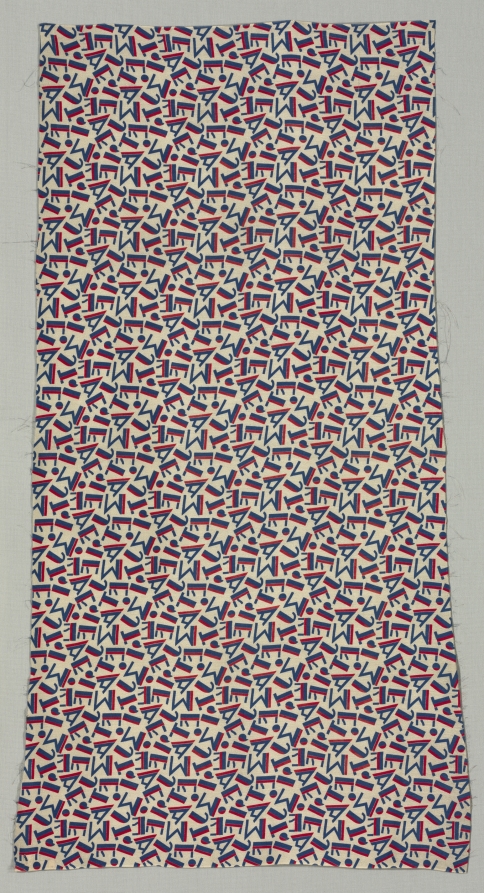
Urban Silhouette Research: Je T'aime (No. 632)
I. Geometric Integrity: The Container as Silhouette
The Addison Fashion atelier does not interpret references. It dissects them. Je T'aime (No. 632) is not a garment derived from art history; it is a structural proposition extracted from two objects that, at first glance, share nothing but their status as vessels. Jacques-Louis David's The Death of Socrates and a Yuan-dynasty Meiping painted with waves operate on opposing aesthetic axes—one narrates, the other resonates. Yet both are containers. One holds the body of a philosopher at the threshold of death; the other holds the void that permits the ocean to breathe. Je T'aime (No. 632) is the third container: the executive body, suspended between conviction and flux.
The geometric integrity of this artwork—and by extension, the silhouette it generates—rests on a single structural tension: the vertical axis of the Meiping's profile against the diagonal thrust of Socrates' outstretched arm. The Meiping is a study in controlled proportion. Its shoulder swells at precisely the point where the eye expects restraint; its foot tapers with the severity of a column base. The silhouette is not decorative. It is architectural. The vase does not ornament space; it defines it. In the same manner, Je T'aime (No. 632) establishes the executive torso as a load-bearing element. The shoulder line is not softened. It is engineered—a clean, horizontal plane that extends the clavicle into a structural cantilever, allowing the garment to hang from the body rather than cling to it.
II. Structural Poetics: The Diagonal and the Void
David's Socrates is a composition of diagonals. The philosopher's body reclines, his hand reaches upward, the cup descends. Every line is a vector of intention. The sculpture does not depict death; it depicts the decision to die—the moment when the will becomes form. This is the poetics of the diagonal: movement arrested, energy crystallized. Je T'aime (No. 632) translates this into the urban silhouette through a single, decisive gesture: the asymmetric closure. The left front panel of the jacket extends into a diagonal drape that crosses the torso at the precise angle of Socrates' raised arm. It is not a lapel. It is a vector. It directs the eye downward and inward, compressing the visual field into a narrow corridor of intention.
Against this, the Meiping's waves introduce the counter-principle: the void. The vase is not full. It is a volume of emptiness around which the painted sea circulates. The waves do not occupy the vessel; they inhabit it. In Je T'aime (No. 632), this translates into the treatment of negative space. The garment is cut to create a continuous channel of air between the body and the fabric—a deliberate architectural gap that allows the silhouette to breathe. The sleeve is not fitted; it is a cylinder of movement, a contained turbulence. The hem does not fall; it hovers, suspended by the internal structure of the seam. This is the urban materiality of the piece: the fabric is not a surface but a membrane, mediating between the body's heat and the city's friction.
III. Urban Materiality: Slate as the Color of Decision
The color slate is not a neutral. It is the color of stone that has been shaped by water, of sky before rain, of the moment between conviction and doubt. In Je T'aime (No. 632), slate operates as both ground and figure. The matte finish absorbs the ambient light of the urban environment—the gray of pavement, the silver of glass, the low hum of fluorescent corridors—and returns it as a subdued, mineral sheen. This is not a color that announces itself. It is a color that withholds. It is the chromatic equivalent of Socrates' gaze: present, penetrating, but ultimately unknowable.
The materiality of the garment follows the same logic. The primary textile is a bonded wool-silk composite with a dry, paper-like hand. It does not drape in the conventional sense; it folds with the precision of origami. The seams are taped, not sewn, creating a flat, architectural edge that resists the body's softness. The interior is lined in a matte cupro that mimics the coolness of glazed porcelain—a hidden luxury, invisible to the observer but registered by the wearer as a constant, tactile reminder of the garment's dual nature: vessel and void, armor and air.
IV. The 2026 Executive Silhouette: A Definition
The 2026 executive silhouette, as defined by Je T'aime (No. 632), is neither tailored nor fluid. It is engineered. It rejects the binary of power dressing and soft dressing in favor of a third proposition: the structural container. The shoulder is a plane. The torso is a volume. The hem is a horizon. The garment does not follow the body; it frames it, in the same way the Meiping frames the sea and David's marble frames the soul. The executive who wears this silhouette does not occupy space; she defines it. She is the vessel and the void, the diagonal and the vertical, the decision and the wave. She is, in the coldest and most sophisticated sense, a work of architecture in motion.
This is the Addison Fashion proposition for 2026: not a trend, but a tectonic. Not a look, but a law. Je T'aime (No. 632) is its first articulation—a garment that asks not what you wear, but what you contain.