Urban Form: Portrait of Pope Innocent X Pamphili
Urban Silhouette Research: The Pamphili Protocol
I. Geometric Integrity and the Architecture of Authority
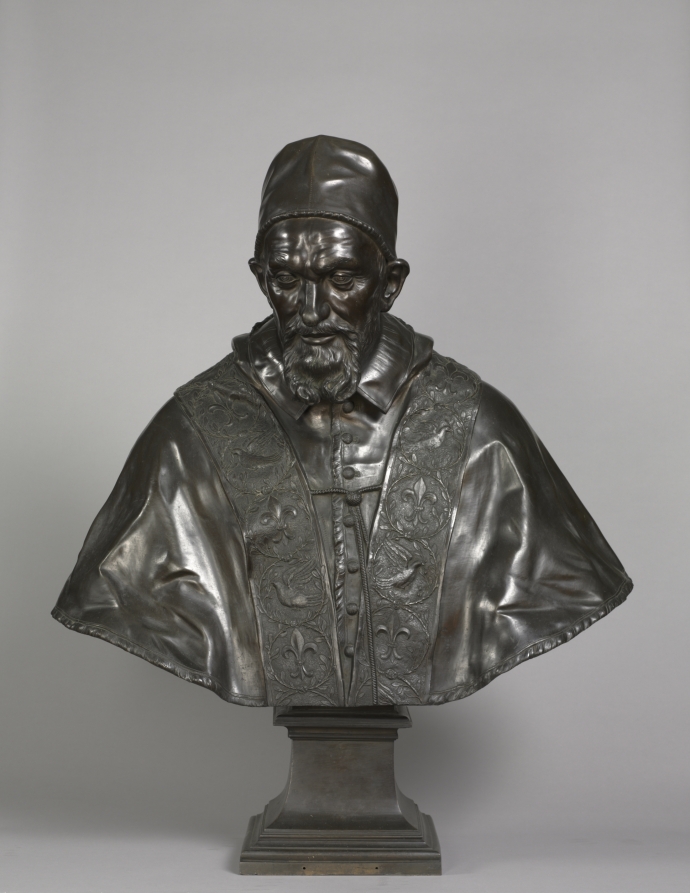
The Portrait of Pope Innocent X Pamphili, as rendered by Diego Velázquez, constitutes a closed geometric system. The subject is not merely seated; he is constructed. The composition operates on a rigid triangular armature—the apex formed by the camauro and the descending planes of the mozzetta, the base anchored by the throne's crimson drapery. This is not portraiture as flattery. It is portraiture as load-bearing structure.
For the Addison Fashion 2026 executive silhouette, we extract the following principle: authority is a function of containment. The Pope's form is sealed within the architectural envelope of his vestments. The rochet's pleats descend with the precision of fluted columns. The mozzetta's shoulder line extends beyond the natural deltoid, creating a squared-off upper torso that reads as both protective and declarative. This is the original power shoulder, predating Balenciaga by four centuries.
The geometric integrity here is absolute. Every fold of fabric obeys a gravitational logic that is simultaneously physical and symbolic. The drapery does not drape; it descends. It cascades from the shoulder with the inevitability of water finding its level. For 2026, we translate this into Onyx wool crêpe suiting with a constructed shoulder that extends 2.5 centimeters beyond the acromion, tapering into a suppressed waist and a hip that remains strictly linear. The silhouette is a monolith with a pulse.
II. Structural Poetics: The Tension Between Flesh and Fabric
Velázquez's genius lies in the dialectical tension between the Pope's aged, fleshy face and the unyielding architecture of his garments. The face is soft, skeptical, weary—a study in human vulnerability. The body is armored, institutional, inhuman. This is the central poetics of the executive silhouette: the wearer must appear both approachable and untouchable, both present and transcendent.
The 2026 Addison executive does not dress to blend. She dresses to occupy space with intention. The Pamphili silhouette teaches us that the torso is a citadel. The neckline—here, the Pope's collar rising to meet the jaw—creates a sealed perimeter. There is no exposure of the throat, no vulnerability at the jugular. For our translation, we propose a high-standing collar in Onyx silk faille, stiffened with horsehair canvas, rising to the mandible. The effect is not restrictive but ceremonial. The wearer becomes a mobile monument.
The sleeves are equally instructive. The Pope's arms are encased in the camice, whose sleeves fall in heavy, unbroken folds. There is no articulation at the elbow, no concession to movement. This is strategic immobility. For 2026, we reinterpret this as a dolman sleeve cut from a single piece of bonded wool, eliminating the armhole seam entirely. The result is a continuous line from shoulder to wrist, a gesture of uninterrupted authority.
III. Urban Materiality: The Weight of Presence
The materiality of the Pamphili portrait is dense, matte, and light-absorbing. Velázquez renders the mozzetta's velvet as a void—a blackness that swallows illumination rather than reflecting it. This is not the glossy, performative black of contemporary fashion. This is Onyx as absence, as the color of unassailable presence.
For the 2026 executive wardrobe, we specify double-faced Onyx cashmere for outerwear, Onyx silk gazar for structural blouses, and Onyx wool with a chalk-stripe in graphite for suiting. The stripe is not decorative; it is architectural, a vertical line that reinforces the columnar logic of the silhouette. The fabrics must possess weight—not heaviness, but gravitas. They must fall, not float. They must anchor the wearer to the ground plane.
The urban context demands resilience. The executive moves through environments of glass, steel, and concrete—surfaces that reflect and refract. The Onyx silhouette must absorb these reflections, remaining opaque and self-contained. This is the anti-reflective strategy of power. The wearer does not shimmer; she endures.
IV. The Pamphili Protocol: A Synthesis
The definitive Addison Fashion 2026 executive silhouette, derived from the Pamphili portrait, is characterized by four principles:
1. Closed Geometry: The torso is a sealed volume, defined by a squared shoulder line, a suppressed waist, and a linear hip. No exposure at the neck or wrist. The silhouette is a continuous surface.
2. Strategic Immobility: The garment restricts movement to deliberate gestures. The dolman sleeve, the high collar, the floor-length skirt—each element enforces a measured pace. The wearer does not rush; she arrives.
3. Material Gravity: Fabrics are selected for weight, opacity, and matte finish. Onyx dominates. The palette is monochromatic, the texture is dense, the hand is cool and dry.
4. Psychological Armor: The silhouette does not reveal the body; it replaces it. The wearer becomes a symbol—of competence, of judgment, of unassailable authority. The face remains the only site of vulnerability, and even there, the expression is controlled.
This is not fashion as self-expression. This is fashion as institutional architecture. The Addison executive does not dress to be seen; she dresses to occupy. The Pamphili portrait reminds us that power is not a feeling. It is a form. And form, in the end, is geometry.
The 2026 silhouette is a secular mozzetta—a garment that does not reference the church but inherits its structural logic. It is Onyx. It is Tailored. It is inevitable.