Urban Form: Hercules and the Nemean Lion
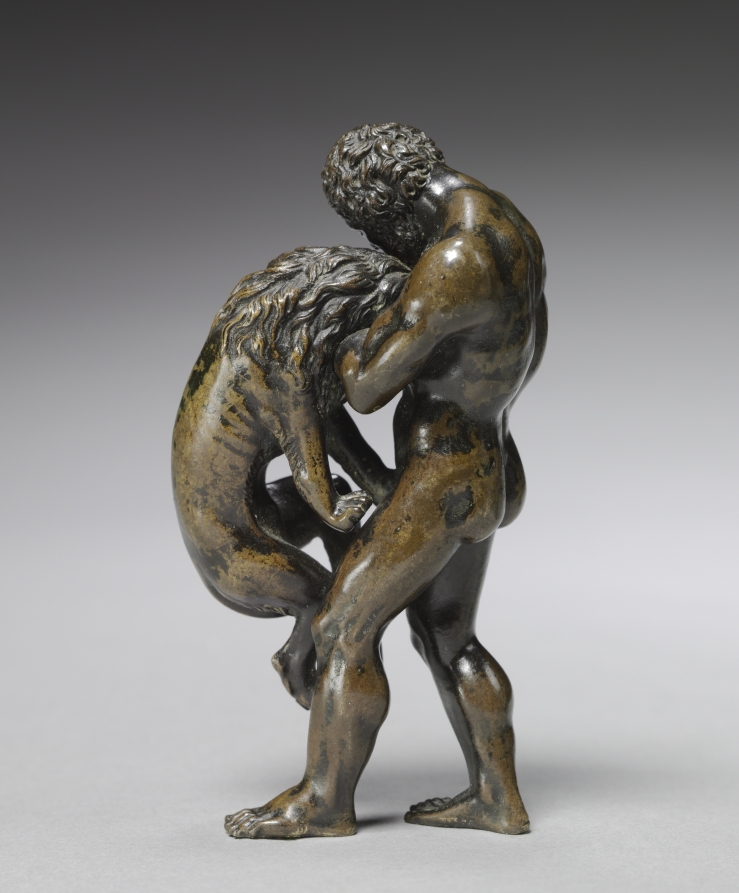
Urban Silhouette Research: Hercules and the Nemean Lion — The Udumbara Protocol
I. The Binary Foundation: Udumbara and The Hunt
The Addison Fashion 2026 executive silhouette draws its structural DNA from a deliberate collision of two visual languages: the Udumbara Flower temple plaque — an Eastern meditation on void, latency, and the sacred interval — and The Hunt, the Western secular tradition of corporeal pursuit, muscular tension, and violent immediacy. These are not decorative references. They are opposing gravitational fields that, when held in suspension, generate the precise tension required for a garment to function as both armor and aperture.
The Udumbara plaque operates through subtractive poetics. Its carved surface is nearly empty — a thin, almost abstract contour of clustered white umbels against weathered wood, the fungal parasitism elevated to metaphysical symbol. The aesthetic strategy is one of hua xu wei shi: transforming the void into presence. The plaque does not depict a flower; it depicts the possibility of a flower, a three-thousand-year interval compressed into a single carved gesture. The Hunt, by contrast, operates through additive violence. Its canvas is saturated — sinew, mane, blood-orange sky, the diagonal thrust of the spear. Every centimeter is occupied by the pressure of life resisting death.
For Addison Fashion, these two modes define the 2026 executive silhouette as a garment that must simultaneously withhold and reveal. The Udumbara principle dictates that the shoulder line be carved, not built — a subtraction of excess volume until only the structural necessity remains. The Hunt principle demands that the torso retain a kinetic potential, a latent muscularity that reads as capability rather than decoration.
II. Geometric Integrity: The Carved Shoulder and the Suspended Waist
The geometric integrity of this collection rests on a single architectural proposition: the shoulder as plaque, the waist as canvas. The Udumbara plaque is a rectangular field of restraint — its power lies in what it refuses to depict. Translated to tailoring, this yields a shoulder that is planar rather than padded, a clean horizontal that extends from the cervical spine to the acromion without interruption. The seam is invisible. The armhole is a negative space, a carved void that allows the arm to move as if through a temple doorway.
The waist, conversely, absorbs the logic of The Hunt. It is not cinched; it is suspended. The Addison patternmaker achieves this through a bias-cut internal corselet that follows the oblique abdominals, creating a diagonal tension line that echoes the spear thrust in Rubens' composition. The result is a silhouette that appears static from the front — a monolithic column of Onyx wool — but reveals a kinetic asymmetry in motion. The executive who wears it does not walk; she advances.
This is the core of structural poetics: the garment must contain both the silence of the plaque and the velocity of the hunt. The shoulder is the eternal; the waist is the instant. Together, they form a wearable dialectic.
III. Urban Materiality: Onyx Wool, Silver Hardware, and the Patina of Restraint
The material palette for 2026 is deliberately narrow. Onyx — a black that absorbs rather than reflects, the color of lacquered temple wood and midnight asphalt — serves as the ground. The primary textile is a double-faced wool crepe, woven in Biella, with a matte finish that resists the sheen of corporate lighting. It is a fabric that does not announce itself; it waits.
Against this ground, hardware is minimal and surgical. Silver appears only at points of articulation: a single exposed zipper at the left hip, a concealed hook-and-eye at the throat, a thin bar of brushed metal at the cuff. These are not embellishments; they are punctuation. They mark the transition between the Udumbara zone (the upper body, the shoulder, the neck) and the Hunt zone (the hip, the thigh, the stride).
The urban context demands that this garment perform across environments — from the glass atrium of a financial district tower to the wet granite of a subterranean transit concourse. The Onyx wool is treated with a nano-ceramic finish that repels water without altering the hand of the fabric. The silver hardware is PVD-coated to resist scratching. This is urban materiality: luxury that does not require protection, but rather absorbs the city's abrasion as patina.
IV. The 2026 Executive Silhouette: A Conclusion
The Addison Fashion 2026 executive silhouette is not a compromise between Eastern and Western aesthetics. It is a synthesis that refuses synthesis. The Udumbara plaque teaches us that emptiness is a structural material. The Hunt teaches us that the body in motion is the only true subject of art. The garment that emerges from this collision is a long, lean column — a tailored coat or a column dress — with a carved shoulder, a suspended waist, and a hem that falls precisely at the mid-calf, creating a vertical line that elongates the figure without artifice.
It is a silhouette for the executive who understands that power is not volume. Power is precision. Power is the ability to stand still in a room and be felt. Power is the Udumbara flower: three thousand years of waiting, compressed into a single, silent bloom.
The Nemean Lion is not defeated by strength. It is defeated by the geometry of the hold. Addison Fashion dresses the executive who knows the difference.