Urban Form: The Annunciation
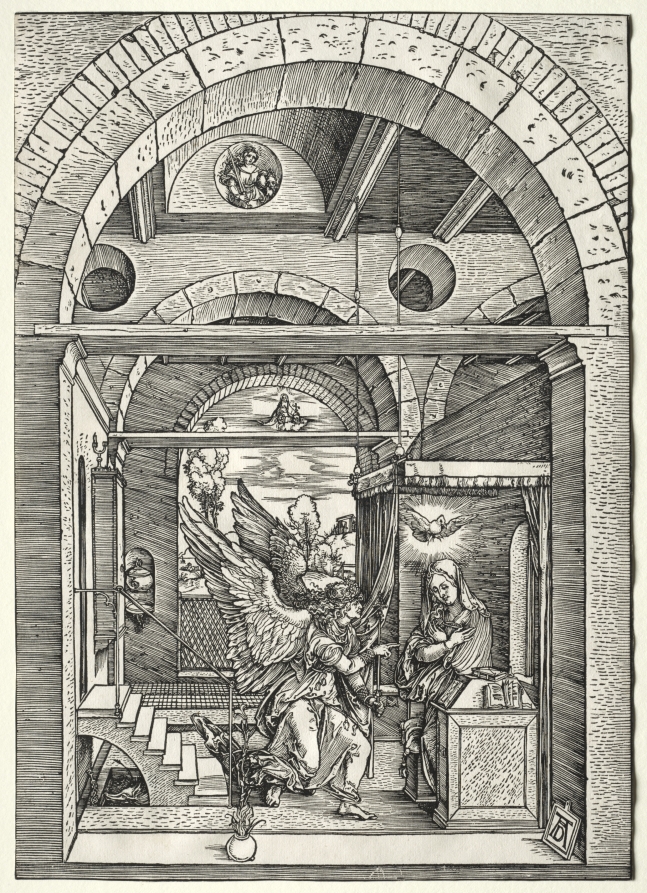
Urban Silhouette Research: The Annunciation — Geometric Integrity and the 2026 Executive Form
I. Preliminary Geometry: The Binary Axis
The Addison Fashion 2026 executive silhouette is not derived from trend forecasting. It is excavated from the archaeological tension embedded in The Annunciation—a dialectic between the kinetic fragmentation of the Mold Fragment with Musicians and the immutable symmetry of the Mortuary Figure of the Zodiac Sign: Ox (Taurus). These two artifacts constitute a structural binary: the rhythm of the living hand against the geometry of the eternal. For the 2026 collection, we translate this binary into a wearable architecture that operates simultaneously as vessel and monument.
The geometric integrity of the artwork resides in its refusal to resolve this opposition. The musician fragment is asymmetrical, compressed, its negative space charged with implied sound. The Taurus figure is radially balanced, its mass distributed with the cold precision of a star chart. The 2026 silhouette must embody both conditions without compromise. This is not eclecticism. This is structural poetics.
II. The Musician Fragment: Kinetic Asymmetry as Tailoring Principle
Examine the mold fragment’s compositional logic. The musicians are not arranged hierarchically. Their bodies overlap, their instruments intersect at oblique angles, and the clay’s residual thumbprints introduce a controlled irregularity—a material memory of the maker’s hand. The silhouette this generates is one of compressed dynamism: shoulders that rotate forward, a torso that leans into implied sound, a hemline that fractures at the knee.
For 2026, we translate this into a single-breasted jacket with an offset placket, cut from a bonded wool-silk that retains the impression of pressure—not unlike the potter’s fingerprint. The lapel is narrow, almost vestigial, allowing the shoulder line to carry the visual weight. The sleeve is drafted with a forward-pitched elbow, creating a permanent gesture of performance. This is not a garment for sitting still. It is a garment for the executive who understands that authority is a form of rhythm.
The fragment’s incompleteness is equally instructive. The broken edges of the mold are not flaws; they are apertures for the imagination. In the 2026 silhouette, this manifests as deliberate interruptions: a raw-edged seam at the waist, a cuff that terminates before the wrist, a collar that stands away from the neck rather than enclosing it. These are not deconstructions. They are invitations to completion—the wearer supplies the missing cadence.
III. The Taurus Mortuary Figure: Radial Symmetry as Armature
The Taurus figure operates under an entirely different geometric regime. Its contour is continuous, unbroken, a closed curve that resists penetration. The horns curve inward, the head lowers, the body swells into a sphere. This is geometry as guardianship—the form does not express emotion; it enforces order. The zodiacal context reinforces this: Taurus is a fixed sign, a constellation that rotates but does not wander.
The 2026 executive silhouette absorbs this principle through radial construction. The outerwear—a floor-length coat in Onyx double-faced cashmere—is cut on a circular arc, with no side seams. The fabric falls from the shoulder in a single unbroken plane, its volume controlled by a hidden internal harness that distributes weight across the clavicle and scapula. The result is a silhouette that appears monolithic but moves with the wearer’s axis. It does not drape. It orbits.
The Taurus figure’s de-life-ification—the removal of muscular tension, the suppression of anatomical detail—is translated into surface minimalism. There are no visible buttons, no exposed zippers, no decorative stitching. Closure is achieved through magnetic seams and precision-cut overlapping panels. The garment is not adorned. It is calibrated.
IV. Materiality: Clay, Stone, and the Urban Surface
The artwork’s materiality is fundamental to its geometric integrity. The mold fragment is terracotta—porous, warm, responsive to touch. The Taurus figure is stone—dense, cold, resistant to erosion. The 2026 collection operates at the intersection of these material states.
We introduce Onyx-bonded technical wool with a matte, mineral surface that absorbs light rather than reflecting it. The hand-feel is dry, almost chalky, evoking the unfired clay of the musician fragment. For the Taurus-inspired outerwear, we employ compressed felted cashmere with a density of 780 grams per linear meter—a fabric that holds its shape like carved stone but yields to the body’s warmth. The lining is sand-washed silk, a private luxury invisible to the observer, a reminder that the executive’s interior life is not subject to public audit.
The color palette is restricted to Onyx, Slate, and Ivory—the colors of shadow, basalt, and bone. There are no accents. There is no contrast. The silhouette relies entirely on tonal depth and geometric precision to articulate its authority.
V. The 2026 Executive Silhouette: A Provisional Manifesto
The Addison Fashion 2026 executive does not dress for the boardroom. She dresses for the excavation site—the place where power is unearthed, catalogued, and displayed. Her silhouette is a dual artifact: the kinetic asymmetry of the musician, the radial symmetry of the bull. She moves with rhythm. She stands with geometry. She is neither alive nor dead in her clothing. She is archived.
The Annunciation is not a theme. It is a method. The method is this: take the broken and the eternal, the hand and the star, and cut them into a single pattern. The pattern will not fit everyone. It is not designed to. It is designed for the executive who understands that silhouette is argument, and that the most persuasive argument is the one that refuses to resolve.
The 2026 collection will be presented in Onyx. It will be worn in silence. It will be remembered as structure.